It’s basically a foregone conclusion that Nvidia is launching new Super GPUs next week at CES. We have no official announcement from Nvidia, outside of a keynote presentation at the event, but a mountain of evidence shows that Team Green may be gearing up to launch three new graphics cards. But what about Team Red?
We have heard murmurs that AMD is set to launch a budget-focused RX 7600 XT soon, but the rumor mill has been quiet about a slate of new graphics cards. Even with a pile of graphics cards in stock at reasonable prices and few indications that AMD is going to upend its GPU lineup, it’s best to wait a couple of weeks before picking up a new AMD GPU.
Super AMD GPUs? Unlikely

I don’t suspect AMD is getting ready to release a bunch of new graphics cards. AMD itself said it isn’t planning on releasing new GPUs, in fact. During Gamescom last year, AMD’s Scott Herkelman said “the RDNA 3 portfolio is now complete.”
But wait just a minute. Herkelman continued, saying, “we may have some different versions, but they are not a new ASIC.” Translation: AMD may release new graphics cards, but it isn’t making new GPUs. Currently, AMD has Navi 31, 32, and 33 GPUs, which are chopped up in different forms for the range of graphics cards AMD currently offers. For instance, the RX 7700 XT and RX 7800 XT both use the Navi 32 GPU. They’re different graphics cards with different versions of the same GPU.
So, we aren’t getting a Navi 34 or a Navi 30, but we could see new graphics cards from AMD. Those would look like overclocked versions of cards we already have, or in-between cards that can fill the gaps in the current lineup. The rumored RX 7600 XT is a prime example. The card is rumored to use the Navi 32 GPU and bridge the gap between the RX 7700 XT and RX 7600.
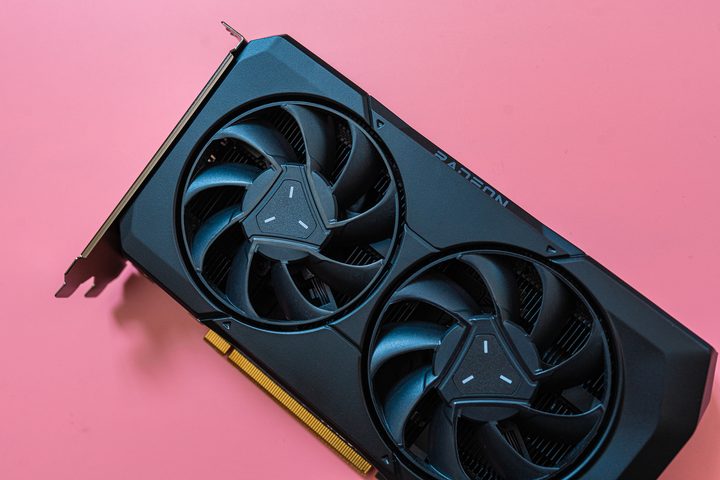
We’ll have to wait for the next generation of AMD GPUs to see a big jump in performance. Unlike Nvidia, where it seems the rumored Super refresh will replace the cards available now, AMD will likely continue with its current RDNA 3 lineup and release GPUs that smooth out the rough edges of its lineup. That means I don’t expect we’ll see significant price drops due to AMD’s own cards.
However, we probably will see price drops due to the Nvidia competition, and that’s exactly why it’s a bad idea buying an AMD GPU right now.
The green monster
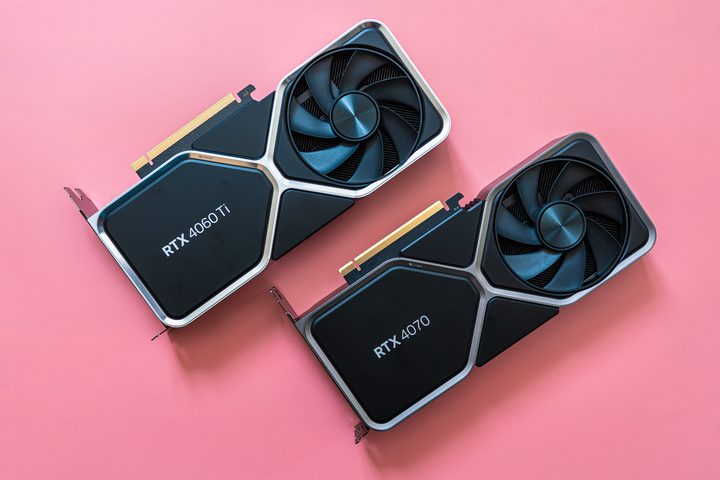
With Nvidia likely releasing new Super graphics cards in just a few weeks, I expect the prices of AMD graphics cards to drop. Regardless of if you’re a fan of AMD graphics cards or not, there’s no denying that Nvidia is the market leader by a significant margin. And AMD’s GPUs are consistently priced in accordance with the competition from Nvidia.
A great example of that is the RX 7800 XT. I praised the card when it released for $500 due to the fact that it could beat Nvidia’s $600 RTX 4070 while costing less. Now that a few months have passed, both cards have stabilized at around $550; Nvidia’s got a little cheaper, and AMD’s a little more expensive. The price of the RX 7800 XT entirely comes down to what it offers in relation to the RTX 4070.
We see this in the opposite direction, too. If you look at the RX 7900 XT, AMD asked $900 for that GPU when it released. When Nvidia released its RTX 4070 Ti at $800, which offers similar performance, AMD dropped the price of its card. Now, you’d be crazy to spend more than $800 on an RX 7900 XT, and you can sometimes even find it for less.
AMD will price its GPUs in accordance with Nvidia, which probably means we’re in for price drops soon. Even if the Super refresh only provides a minor performance increase, AMD will have to drop the price of its existing GPUs to stay competitive.

That’s a pretty big deal, especially if you’re looking at picking up an RX 7700 XT, RX 7800 XT, or RX 7900 XT. There’s going to be a downward pressure on the price of AMD GPUs if the Super refresh is real and it delivers a performance improvement, and that means you’ll probably be able to get a cheaper graphics card.
Even if that doesn’t happen, there isn’t much harm in waiting. AMD’s cards have held at a steady price for the past several months. The worst that could happen is that you have to wait a couple of weeks to get a GPU.