Nvidia’s RTX 4080 didn’t have a warm reception when it first launched, but a series of slow price drops have made it a more attractive option among the best graphics cards. However, stock is quickly drying up, with most retailers offering only a few models at list price. Is now finally the time to pull the trigger?
Stock is likely disappearing due to Nvidia’s Super refresh. The RTX 4080 Super is now official, and Nvidia has confirmed it will replace the RTX 4080 in its current lineup. With the new card arriving shortly, it’s looking like you’ll have to be patient if you want the best bang for your buck.
Pricing and availability
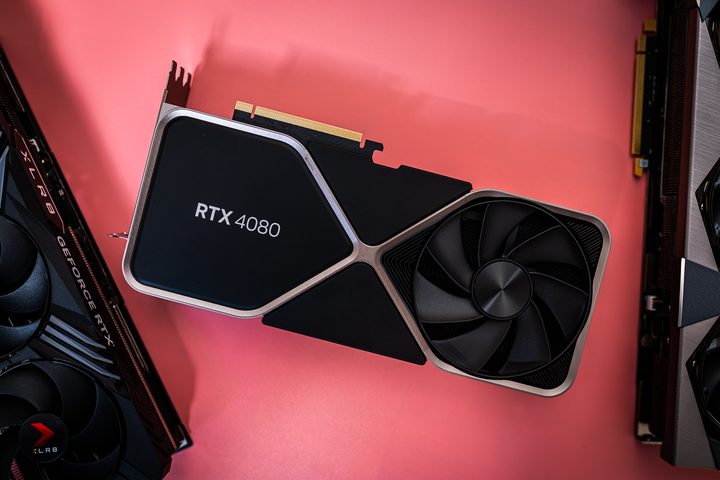
The RTX 4080 has been around for months. Nvidia launched the card over a year ago for a list price of $1,200. It didn’t hold at that price for long, with models available for most of last year between $1,000 and $1,150, but prices have slowly started to creep back up. At the time of writing, the cheapest model I could find was this MSI Ventus RTX 4080 for $1,180 .
Why the sudden price increase? VideoCardz reports that Nvidia has stopped production of the RTX 4080 and RTX 4070 Ti, presumably to clear the way for new Super cards. If that’s the case, retailers are likely trying to get the most out of their small remaining inventory. When the RTX 4080 Super is released, I suspect the last few RTX 4080 models will go for a much cheaper price.
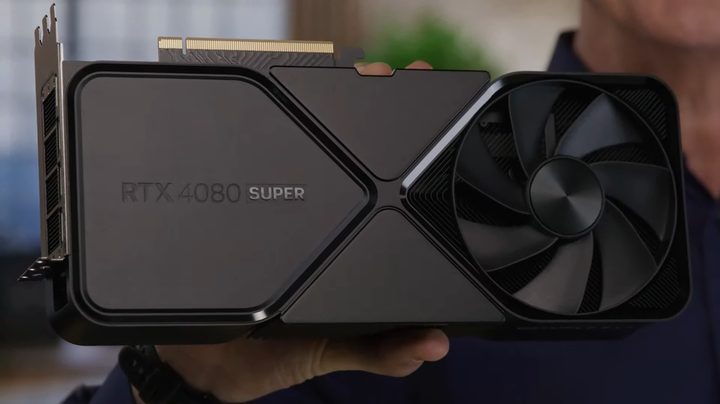
As for the RTX 4080 Super, it’s getting a price cut. Nvidia confirmed the new GPU runs just $1,000, making it a much more attractive option over the RTX 4080. I suspect that once we see the RTX 4080 Super released, the last remaining RTX 4080 models will be blown out at low prices.
We have a bit of time before that happens, however. The RTX 4080 Super launches on January 31, so you have a few weeks left to pick up an RTX 4080 if you find a deal on one.
Specs

The RTX 4080 Super is somewhat of a lateral move for Nvidia. The card comes with 10,240 CUDA cores, which is just a 5% increase over the base RTX 4080. It’s also comes with the same 16GB of GDDR6X memory on a 256-bit bus and with the same power draw of 320W.
Elsewhere, the maximum boost clock speed is getting a 2% bump to 2,550MHz, and the memory speed is going from 22.4 Gbps to 23 Gbps. Out of all of the Super cards, the RTX 4080 Super will receive the smallest bump in specs.
That probably explains the earlier reports about Nvidia stopping production of the base RTX 4080. Based on specs alone, it appears the Super model serves as a way for Nvidia to extend the life of the RTX 4080. Nvidia seems to be pushing the RTX 4070 Ti Super and RTX 4070 Super much harder, suggesting these cards will deliver a larger performance increase over their base models.
Performance
Given the specs of the RTX 4080 Super, it’s hard to imagine it will be much faster than the base RTX 4080. The bump in core count and clock speed will help it hold an edge, but I suspect that edge will be in the lower single digits in most games.
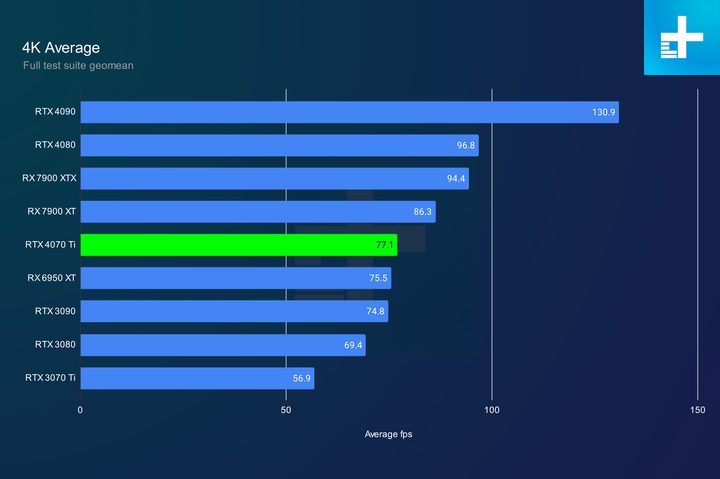
Let’s get some context, though. The RTX 4080 comes with 36% more CUDA cores than the next step down in Nvidia’s current lineup, the RTX 4070 Ti. It also comes with a bump to memory, 100W more power, and a slight bump to clock speed. After adding all of those factors up, the base RTX 4080 ends up about 26% faster than the RTX 4070 Ti at 4K on average.
As you can see, a core count increase doesn’t scale linearly with performance, clock speed, or power demands. In most cases, the performance jump is less than the sum of its parts in real-world performance.
How does that relate to the RTX 4080 Super? Well, we can see from the specs that there probably won’t be a huge jump over the RTX 4080. Given that, the performance improvements will likely be small, and in some games, there may not be performance improvements at all. Nvidia tells me it expects performance improvements of up to 5% overall, with most games landing around a 3% jump.
Should you wait?
With prices of RTX 4080 models holding at around $1,200, I would recommend holding off on picking up a card until we see what the Super refresh has to hold. We know the RTX 4080 Super is coming in at a lower price, so hopefully, that will mean you get slightly better performance for less money.
However, that doesn’t mean the RTX 4080 Super is the better card. As mentioned, prices on remaining RTX 4080 models will likely drop in response to the Super release, and there will be a narrow window to pick up those remaining cards. That might be the best play. It doesn’t appear like the RTX 4080 Super will provide a big advantage over the base RTX 4080, so if you can score a deal on Nvidia’s older card, that’s the way to go.