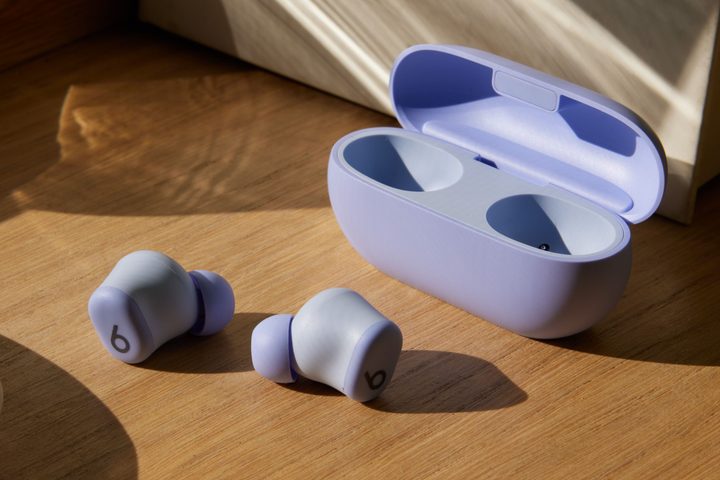
Beats has taken the wraps off its most affordable wireless earbuds yet. The Solo Buds are priced at just $80 — $70 less than the Beats Studio Buds, which the company will now discontinue. Though they look just like the Studio Buds (and Studio Buds+), there’s no battery inside the Solo Buds’ case, which reduces size, weight, and presumably, the price, too.
The Solo Buds were revealed alongside the latest version of Beats’ Solo on-ear headphones, the Solo 4. While the headphones can be ordered right away, Beats says that the Solo Buds won’t be available until June, at which point you’ll be able to buy them in your choice of four colors: Matte Black, Storm Gray, Arctic Purple, and Transparent Red.
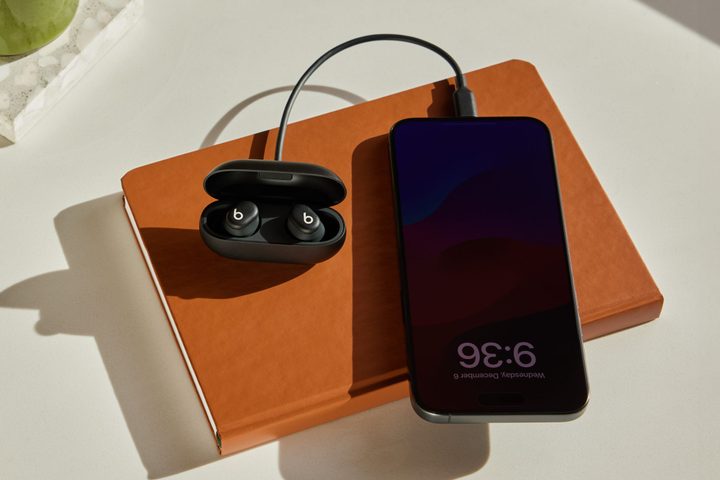
A case without its own battery may seem unorthodox, and yet the Solo Buds aren’t the first to adopt this formula — the Skullcandy EcoBuds also ditch the case-based battery in favor of a battery-less charging dock.
While the lack of a rechargeable battery inside the case might be cause for concern, the Solo Buds possess a claimed 18-hour battery life — an enormous number for a single charge. When you consider that this can be topped up at any time via USB-C charging (virtually all Android phones can do this, along with the iPhone 15), with five minutes of charging yielding an extra hour of playtime, you may find you don’t miss the case battery.
Unfortunately, dropping that battery wasn’t quite enough to get the Solo Buds to their sub-$100 price. They also lack active noise cancellation, Bluetooth Multipoint, wear sensors, head tracking, and hands-free access to “Hey, Siri.” There’s also no official IPX rating for water and dust resistance. Beats told reporters that the Solo Buds had nonetheless been through “engineering validation” for water resistance, but we don’t actually know what that means.
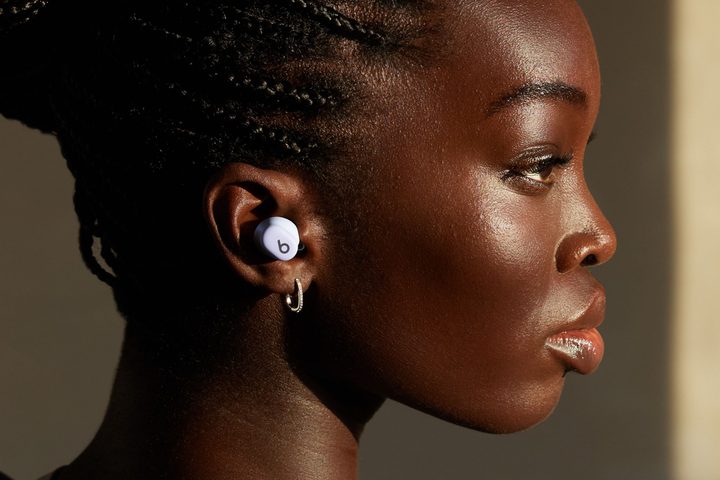
What you’re left with is a custom-built acoustic architecture with dual-layer transducers “designed to minimize micro-distortions across the frequency curve, ensuring high-fidelity sound with uncompromising clarity and detail,” according to Beats. Apparently, these are the same drivers as in the Studio Buds+.
Each bud also incorporates a newly designed mic “powered by an advanced noise-learning algorithm,” which might offer improved outdoor call quality over the Studio Buds.
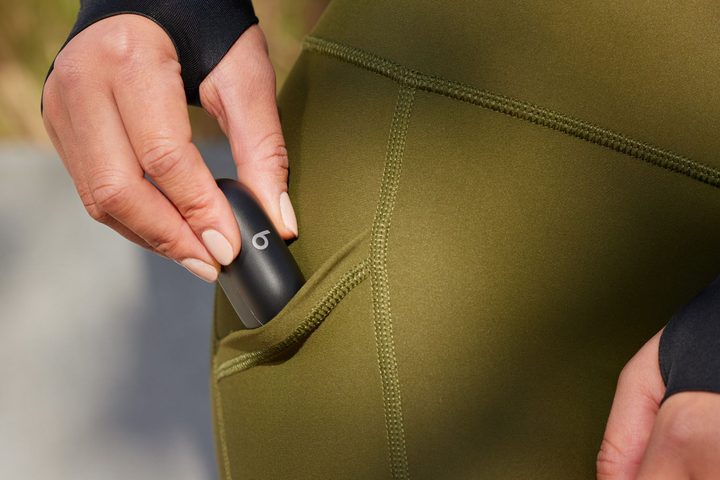
With Google Fast Pair, Beats says the Solo Buds can do one-touch pairing, automatic account setup, and device finding on both Apple and Android ecosystems.
The Beats app for Android lets you customize some of the actions available when you press the “b” buttons, while the same features are offered directly within iOS.
As exciting as the price of the Solo Buds may be, there’s no doubt that Beats has had to strip these earbuds back to the most basic wireless audio experience in order to make them so affordable.
I’m also very curious about the price gap that the Solo Buds create. They start the ball rolling at $80, but then if you stay with Beats, the next level up is the Beats Studio Buds+ at $170 — a $90 jump — and then the Fit Pro at $200. Perhaps we’ll see a replacement for the original Studio Buds in the not-too-distant future, or perhaps Apple simply wants to keep the $100 to $150 price range for its next-gen AirPods 4, which are rumored to be less expensive than the current models.