1. Home
  2. Computing
  3. Deals

This Acer 15-inch laptop is down to $380 from $600 at Best Buy

Add as a preferred source on Google
The Acer Aspire 3's Steam Blue edition.
Acer

It may not look like it, but the Acer Aspire 3 is a thin and light laptop that is surprisingly powerful and would be perfect for those who want something a bit smaller and more mobile. While it may not compete with the likes of the MacBook Air in form factor, it comes pretty close, and with a solid CPU under the hood, it can handle a lot. While the Acer Aspire 3 usually goes for $600, you can snag it for just $380 from Best Buy, which constitutes a large $220 discount.

Buy Now

Why you should buy the Acer Aspire 3

Under the hood, the Acer Aspire 3 has an AMD Ryzen 5 7520U processor, a mid-range option that’s a bit more power-efficient compared to the Intel model, meaning you get a little bit of extra battery life out of it. It also means that you’ll get great productivity performance out of it for work or school, and it’s also pretty great for day-to-day use for browsing and watching stuff online. The 15.6-inch gives you a lot of real estate, and while it only runs an FHD resolution, it is touch-enabled, so you can use it as a tablet, which is a handy bit of extra versatility.

Besides that, you get 8GB of RAM, which is a bit on the lower end but not too bad, and you do get a much larger 512GB of storage to work with, and if you want, you could always increase that with one of these external hard drive deals. As for battery life, you can expect anywhere between 8-10 hours, depending on what sort of work you’re doing, which is actually pretty good when it comes to 2-in-1 laptops. Also, while not necessarily a big thing, this deal comes with a convenient sleeve you can use to put the laptop in to keep it safe from scratch as you carry it around with you.

All in all, the Acer Aspire 3 is an excellent 2-in-1 laptop, and for the discounted $380 from Best Buy, it’s legitimately a steal given its specs. That said, if you’re looking for something a bit different, check out these 2-in-1 laptop deals, as well as our roundup of general laptop deals.

Buy Now

Albert Bassili
Former Deals Writer
Albert’s been a tech and gaming writer for over a decade, writing for websites such as CNET, PopSci, and How-To-Geek, and…
Topics
A new technology teaching drones to feel pain could stop your self-driving car from harming itself
Drones first, autonomous cars next. A pain-sensing system that detects failure before it happens has real stakes for self-driving vehicles.
Transportation, Vehicle, Car

When you sprain your ankle in the middle of a run, your body sends a pain signal to your brain, forcing you to stop. Essentially, the ability to sense pain stops you from pushing through the injury and causing further self-harm.

Researchers at Delft University of Technology and Wageningen University have applied this exact concept to drones, giving them a digital equivalent of a nervous system that recognizes a faulty part and triggers a pain-like warning signal. What's even more interesting is that the technology could find use in self-driving cars.

Read more
Claude Fable 5 is leaving subscriptions, but maybe not for good
High demand is pushing Claude Fable 5 out of subscriptions for now
Claude Fable 5 and Claude Mythos 5 Official Render

Anthropic’s most advanced publicly available Claude model is still leaving standard subscription access after July 7, but the company is now trying to calm fears that the move is permanent.

Fable 5 recently returned to Claude after drawing scrutiny from the U.S. government. Anthropic said it would be included on Pro, Max, Team, and select Enterprise plans for up to 50% of weekly usage limits through July 7. After that date, the model is set to move to usage-credit billing, meaning users will pay for access outside their regular plan limits.

Read more
Yet another research breaks the hype bubble for AI browsers serving serious security flaws
Four popular AI browsers can be exploited to steal your data from other open tabs.
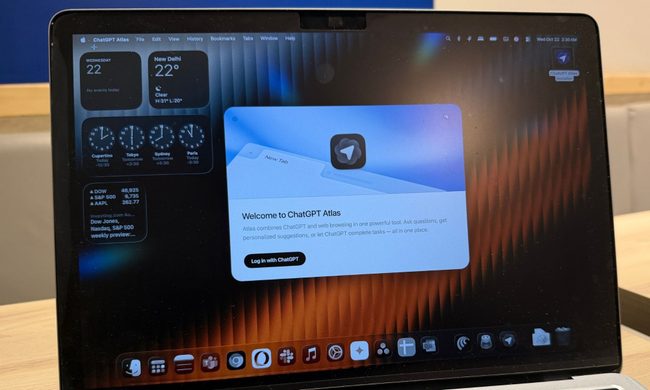
ChatGPT Atlas browser on a MacBook.

AI browsers are being sold as the next big thing. They can summarize pages, book trips, and even make purchases for you. But a new study from the University of Washington found that four of the seven most popular ones come with a security risk serious enough to let malicious websites steal data from other sites you have open. The more capable the browser, the bigger the risk turns out to be.

The 30-year security rule that AI browsers are breaking

Read more