  1. Home
  2. Computing
  3. News

A surprising new competitor in the GPU upscaling wars has entered the ring

Add as a preferred source on Google
Bistro rendering benchmark done using Arm's Accuracy Super Resolution technology.
Arm

Arm is stepping into the graphics upscaling arena with its new Accuracy Super Resolution (ASR) technology, promising significant enhancements for GPU performance on mobile devices.

ASR is a temporal upscaler based on AMD’s open-source FidelityFX Super Resolution 2 (FSR2). This compatibility allows developers to leverage familiar API and configuration options, streamlining integration. AMD’s FSR and Nvidia’s DLSS have primarily boosted graphical fidelity on gaming PCs, enabling higher frame rates and rendering capabilities. Arm’s focus, however, is on the power savings achievable through reduced GPU use, which is crucial for mobile devices where thermal throttling can degrade performance.

Recommended Videos

Peter Hodges, Arm’s Director for Ecosystem Strategy, highlighted ASR’s ability to maintain high-quality visuals at lower temperatures, reducing thermal throttling. This results in a more stable gaming experience and prolonged device engagement. ASR’s optimization for lower memory bandwidth devices, like mobile GPUs with integrated graphics, is a key differentiator. Arm claims ASR uses only a third of FSR2’s GPU resources at equivalent resolutions and scaling factors, delivering 20% to 40% better frame rates on Arm devices.

GPU Performance Analysis of FSR2 and Arm ASR
Arm

Arm used a specific GPU at 2x upscaling resolution. ASR boosts frame rates by 53%, compared to FSR2’s 36%. Tests with MediaTek’s Dimensity 9300 chip reveal that 2x ASR reduces power consumption by over 20% versus native 1080p rendering. This results in longer battery life and reduced overheating, addressing key concerns for mobile gamers.

Once the ASR specification is released, it will be up to OS makers and game developers to adopt it. Apple is expected to continue using its MetalFX upscaling technology, which also stems from AMD’s FSR. Microsoft is promoting Automatic Super Resolution for its Qualcomm-based Arm devices and is working on a vendor-agnostic upscaling API called DirectSR. Qualcomm also introduced its Snapdragon Game Super Resolution just over a year ago.

While this hardware-agnostic technology promises superior image quality and performance on a broad range of devices, it is too early to say if it can set a new standard in mobile graphics upscaling.


Kunal Khullar
Kunal Khullar is a computing writer at Digital Trends who contributes to various topics, including CPUs, GPUs, monitors, and…
Claude’s Sonnet 5 is built to do more on its own and cost you less
Better than its predecessor, nearly as good as the flagship, and meaningfully cheaper than both.
Art, Floral Design, Graphics

Every major AI lab is racing to prove its models can work autonomously with minimal hand-holding; we’re now seeing pricing emerge as the next battleground. 

Anthropic just fired its latest shot, Claude Sonnet 5, a model the company says performs nearly as well as its flagship Opus 4.8 at a fraction of the cost.

Read more
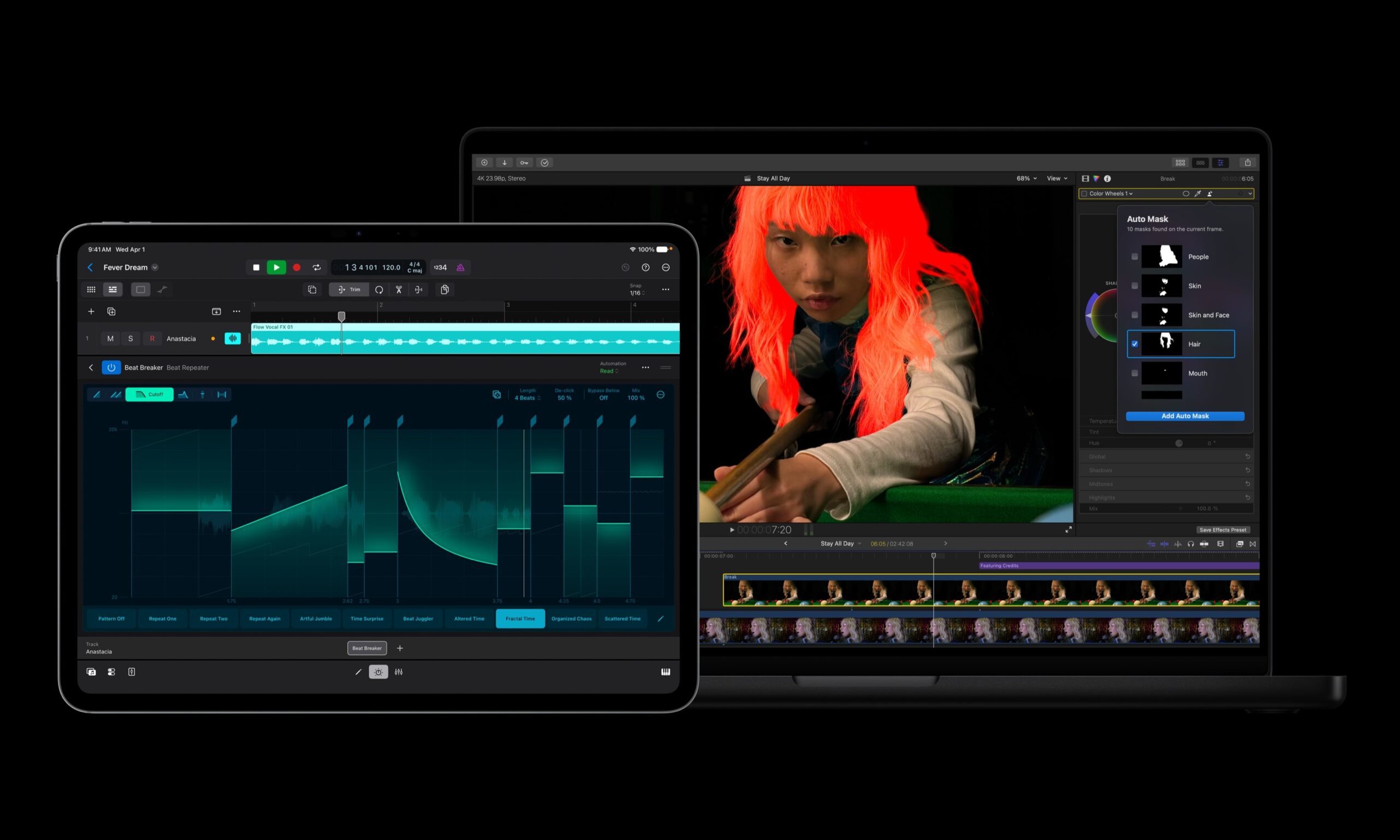
Apple Creator Studio adds AI tools across Final Cut Pro, Logic Pro and Pixelmator Pro
Final Cut Pro gets AI captions, Auto Mask and better Pixelmator Pro workflows in Creator Studio update
Computer Hardware, Electronics, Hardware

Apple has introduced a major update to Apple Creator Studio, adding new AI features, deeper Pixelmator Pro integration, and workflow upgrades across Final Cut Pro, Logic Pro, Keynote, Pages, Numbers, Motion, Compressor, Freeform, and Final Cut Camera.

The update makes Creator Studio more useful across Mac, iPad, and iPhone, especially for people who move between video editing, image editing, presentations, documents, spreadsheets, and music production.

Read more
AI browsers like Perplexity Comet can be tricked into spilling your password through BioShocking exploit
Six AI browsers were found leaking saved passwords and many of them haven't fixed it yet.
MacBook Air in hand, Comet browser loaded—let’s see what Perplexity’s AI can really do

Security researchers just found a strange way to trick AI browsers into handing over your passwords. They managed to trick AI browser agents into exposing sensitive data like saved passwords, session cookies, and private tokens by disguising the theft as part of a harmless "game."

The technique is called BioShocking, named after the popular video game BioShock, where a brainwashed character is manipulated into believing a false reality. Once an AI browser falls for the same trick, it stops following its own safety rules entirely.

Read more