Critics and X-Men fans alike heaped praise upon Logan, the R-rated 2017 superhero drama that was intended as Hugh Jackman’s goodbye to the character that made him a global superstar. With Logan, Jackman, writers Scott Frank and David Green, and director James Mangold delivered a somber and adult story about aging, death, despair, and legacy that feels less like a comic book action film and more like a dark revisionist Western.
However, the cultural narrative that Logan was some sort of saving throw — a correction or apology for the loathed X-Men Origins: Wolverine — ignores the middle chapter in the character’s trilogy of solo films, 2013’s The Wolverine. A product of many of the same creative minds as Logan, The Wolverine gets only a fraction of the praise and is the most underappreciated chapter in the X-Men movie series. It may not have been a massive superhero “event,” but that’s exactly what makes it great.
The Wolverine feels like a solid comics story
Superhero movies are typically big budget blockbusters, and naturally aspire to blockbuster stakes. New ongoing characters are introduced, humanity is placed in jeopardy, and nothing will ever be the same again! But in superheroes’ native medium of monthly comic books, most stories more closely resemble serialized television. Characters regularly face life-threatening challenges, but their world isn’t turned upside-down every single month. The best short arcs or single-issue stories are more about confronting a dilemma and exploring a character than shattering the status quo.
The Wolverine is heavily inspired by a four-issue Wolverine miniseries by writer/artist Frank Miller, released in 1982. While the series was revelatory, being the first solo adventure for the breakout X-Man, its purpose wasn’t to change the character forever, but to explore him on a more intimate level than had been possible as a member of the large X-Men ensemble. The Wolverine takes a similar approach to the movie version of the character. Like most comics stories, it is a Wolverine story, not the Wolverine story, and without the pressure to be groundbreaking or essential, it actually gets to be a lot more interesting.
Minimum fan service, maximum character

The Wolverine finds the titular mutant in a deep depression following the events of X-Men: The Last Stand, in which he was forced to slay fellow X-Man and would-be lover Jean Grey (Famke Janssen). Logan is haunted by dreams of his lost love, beckoning him to join her in death, but with the exception of a post-credits stinger, no other X-Men appear in the film. Instead, Logan is ushered out of retirement by Yukio (Rila Fukushima), a sword-swinging Mutant with the unspectacular ability to predict when someone will die, to visit the deathbed of a Japanese businessman whom Logan befriended during World War II. His visit to Japan pits Logan against the Yakuza, an army of non-Mutant ninjas, one woman with a poison tongue, and one man in big, metal robot armor. There is no flying, no beams-versus-beams showdown, no crumbling cityscape.
Were superhero comics adaptations still a genre that avoided imitating their source material too closely, as they were when the Fox X-Men film series began, this understated approach may have read as self-conscious or underwhelming. But in a climate that had already delivered The Avengers, The Wolverine’s restraint was positively novel.
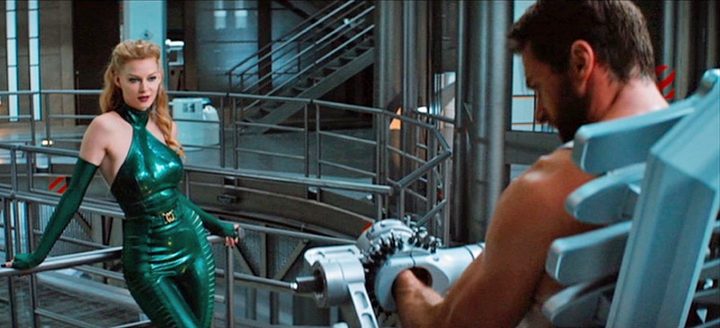
In place of the now-customary bombast, fan service, and universe-building, The Wolverine focuses on the inner journey of its protagonist. He begins the story yearning for death, something that he believes he can never have. Over the course of the story, Logan loses his healing powers, making it possible for him to die, and then must fight for his life in a way he never has before. The stakes of the story never get much higher than the lives of Logan and his allies, but that’s precisely the point. The Wolverine is about Logan learning to value himself again, that there is a life out there for him beyond the X-Men. Maybe Mariko (Tao Okamoto) isn’t the love of his life, but their romance is proof that he can love again.
The Wolverine has the soul of a Bond movie
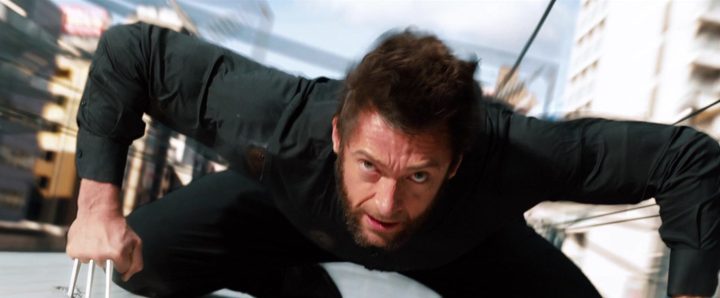
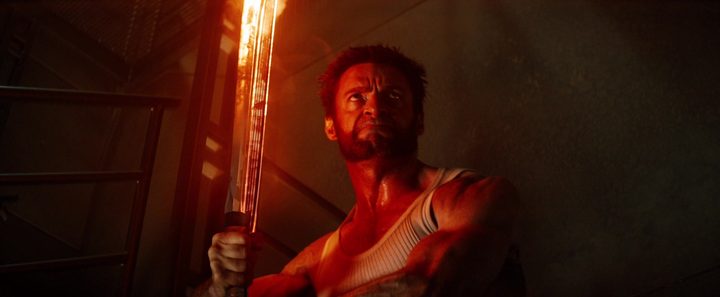
Like Logan, The Wolverine mashes the superhero genre with other styles of action cinema. Where Logan riffs on Westerns, The Wolverine is constructed more like a crime thriller or spy movie, particularly the sort that has heightened action set pieces like Mission: Impossible or the James Bond franchise. These fights and chases may not be as flashy as the group battles seen in Days of Future Past or The Last Stand, but they’re thrilling and imaginative. The sequence in which Logan must defeat a Yakuza squad while clinging to the top of a speeding bullet train is among the most exciting in the X-Men franchise, and who doesn’t love a good samurai sword fight, especially when one of the combatants also sports six adamantium claws?
The Wolverine also has some of the Bond and M:I movies’ appeal as a sort of travelog, taking a familiar protagonist to a new setting and letting the audience explore it vicariously. The film takes Logan through both the glittering cities and peaceful countryside of Japan (connected via their famous high-speed rail), its modern industrial intrigue and its old cultural traditions.
Standalone stories like this, set far from the home base and established ensemble of a long-lived character, help to make their world — and ours — seem bigger. It’s not necessary for the events of The Wolverine to become “important” in a future story. They’re important here, to the characters who live them. They are part of his story, and he’s part of theirs, even if they only overlap for a short time. This further underlines the film’s central message, that even if his grand blockbuster opus is behind him, he can still make a difference, and wherever he goes, everyone will remember the day The Wolverine came to town.
The Wolverine is streaming on Disney+.