1. Home
  2. Audio / Video
  3. News

I couldn’t be more disappointed by the AirPods Max update

Add as a preferred source on Google
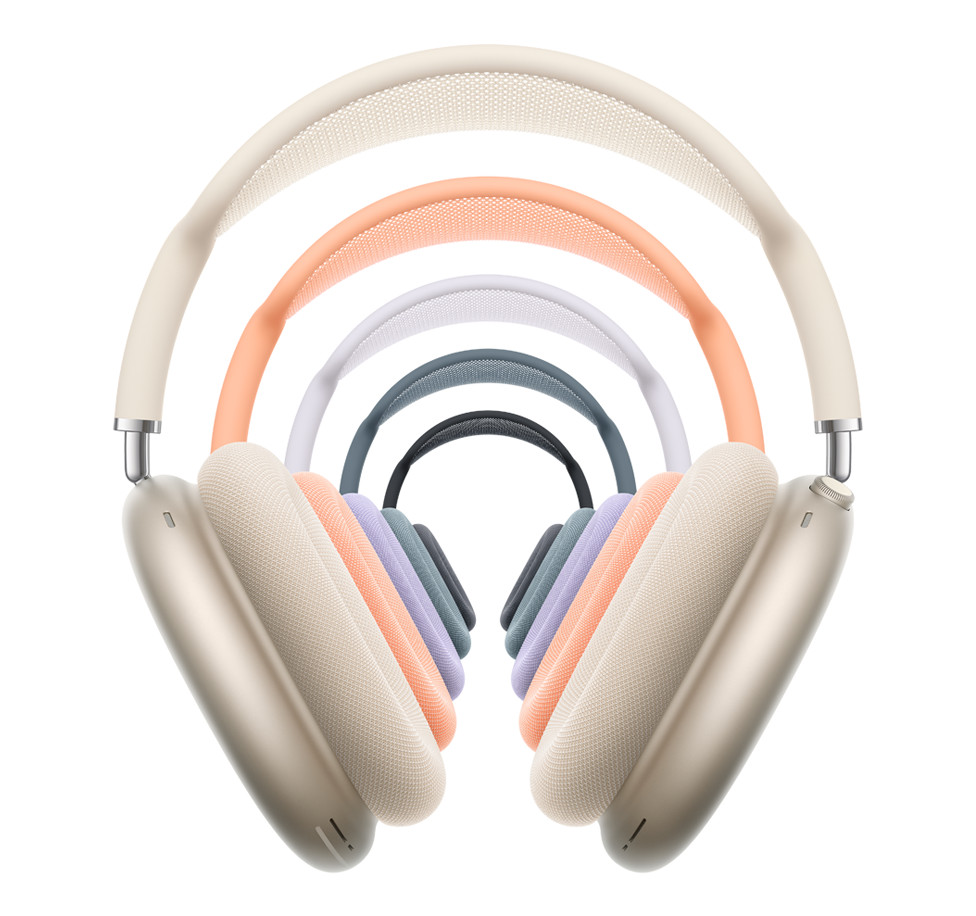
The AirPods Max in orange at the Apple Glowtime event on September 9, 2024.
Meet the new AirPods Max, mostly same as the old AirPods Max. Caleb Denison / Digital Trends

Remember when the iPhone 15 launched in 2023? Remember all of the buzz around the fact that it was the first iPhone to ditch the lightning port in favor of USB-C? Imagine if that had been the only change from the iPhone 14. Now, imagine if the only thing that USB-C port enabled was compatibility with USB-C charging, and you’ll understand why I’m so bummed about Apple’s updated version of the AirPods Max.

It’s been four years since Apple debuted the Max, its first wireless headphones. In that time, the company has launched not just one, but two new versions of the AirPods Pro, both of which received Apple’s latest H2 wireless chip. During the same period, Beats — which is owned by Apple and leverages many of Apple’s technologies — launched the Fit Pro, the Studio Buds, Studio Buds+, Solo Buds, Solo 4 headphones, and Studio Pro headphones.

Recommended Videos

So I guess I just kind of figured that when Apple eventually updated the AirPods Max, we’d at least get a version with the same (or better!) technologies as those products.

Beats Studio Pro with case and accessories.
The Beats Studio Pro does two kinds of wired audio: digital and analog. Simon Cohen / Digital Trends

Both the Beats Studio Pro and the Solo 4 headphones let you use their USB-C port for more than just charging. They can deliver lossless, hi-res audio straight from a Mac or a USB-C-equipped iPhone. They also come with a dedicated analog cable. In the case of the Solo 4, that analog connection works when the battery is dead.

The AirPods Pro 2 (and Pro 2 with USB-C) both got the Apple H2 chip, which by Apple’s own description is capable of some impressive feats of computational audio.

All-New AirPods: First Look at AirPods 4 with ANC, Pro 2 and Max

The updated AirPods Max got none of these features and improvements. And not only does it not ship with a 3.5mm to USB-C cable, Apple has yet to offer this cable as an optional accessory. But that’s not all.
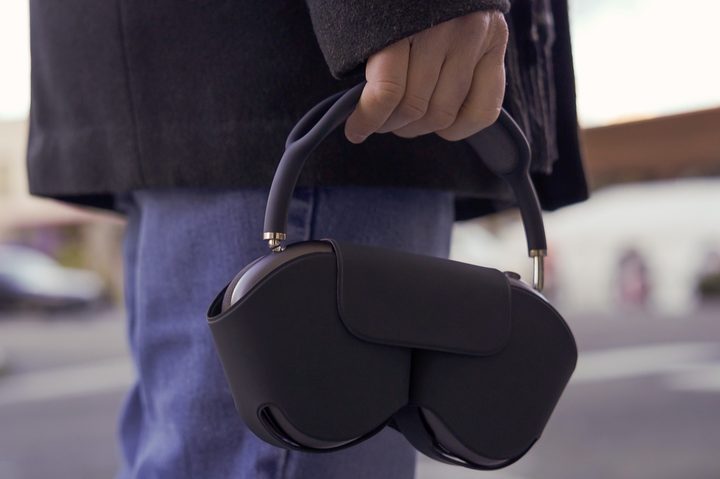
Apple AirPods Max in their protective case.
Riley Young / Digital Trends
Even if Apple couldn’t figure out a way to give the AirPods Max better audio quality, why not fix some of the AirPods Max’s other areas of weakness? Battery life remains just 20 hours. Perhaps that’s enough for most uses, but it keeps the AirPods Max at the very lowest end of the battery life spectrum for wireless headphones — an unfortunate reality given that at $549, these cans are among the most expensive.

Then there’s the case. I use that term loosely. Apple’s bizarre, magnetically latched cover offers some protection for the AirPods Max’s earcups and earcushions, but the two physical controls remain entirely exposed, as does the headband. Again, these aren’t cheap headphones. They deserve better protection.

The AirPods Max are very popular. On a recent trip to Scandinavia, I was stunned by how many people were wearing them. Maybe Apple figures there’s no need to upgrade them beyond swapping out the charging port. But I find that to be a cynical response to a market where competitors like Bose, Sennheiser, and Sony keep adding meaningful improvements to their products with every new generation.

I can only hope that Apple sees the updated AirPods Max as a temporary stopgap. A short-term way to keep its sales numbers up for a few more months until it can release a true second-gen product.

Simon Cohen
Former Contributing Editor, A/V
Simon Cohen obsesses over the latest wireless headphones, earbuds, soundbars, and all manner of related devices and…
Stop joining group projects with a blurry laptop webcam and buy one of these instead
Your laptop webcam is sabotaging your first impression. These five can fix it
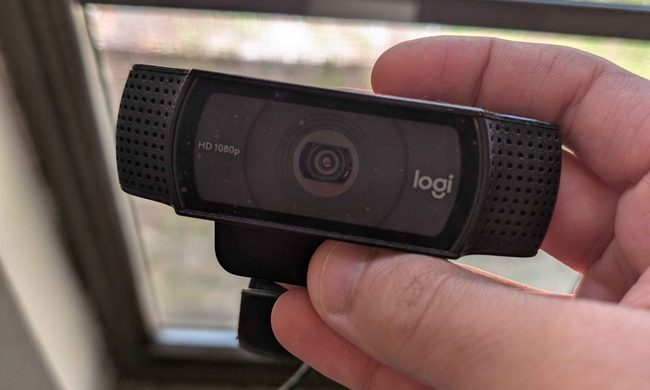
I'm holding my Logitech C920 1080p webcam in my hands.

The webcam built into your laptop might be good enough for a quick call with friends and family. But its shortcomings become much harder to ignore when you are presenting a semester project, interviewing for an internship, or maybe if you're planning to stream for fun.

Laptop cameras also tend to sit far too low, especially when the computer is placed directly on a desk. Meanwhile, a dedicated webcam lets you position the camera closer to eye level. This improves the framing and brings larger sensors, better microphones, and more effective low-light processing.

Read more
I desperately want a new classic Walkman, but Sony probably can’t give me one
Tech minimalism is begging for a new Walkman. Though rebuilding it may be close to impossible
Sony Walkman WM2011

Every few months, another piece of tech that seems obsolete crawls out of a drawer and becomes cool again. The age of minimalism has revived the popularity of iPods among younger buyers. Dumbphones have become an escape hatch from endless notifications. Similarly, digital cameras are dangling from bags again. Physical media keeps attracting people who want something they can actually hold instead of another frustrating subscription.

All of this makes it the perfect time for Sony to bring back the classic Walkman, which was a phenomenon during the 80s and 90s. I would love one. Give me a compact cassette player, physical buttons, and wired headphones. Keep the apps, notifications, and algorithms that shape your taste of music. No more AI assistants or personalzied feeds, just you and your Walkman. There is only one problem though. Recreating the Walkman that people love and remember, would be far harder than putting an old design back into production.

Read more
Proton reveals how smart TVs track you and the escape situation is pretty grim 
Modern smart TVs fingerprint your screen content at the chipset level.
Google TV applications on the Sony A95K TV.

Your smart TV may know far more about your viewing habits than you realize, even if you rarely use its smart features. In a new privacy explainer, Proton warns that many modern TVs quietly collect data about everything displayed on the screen and share it with manufacturers, advertisers, and analytics companies.

The worrying part is that escaping this tracking is becoming increasingly difficult because many privacy controls are buried deep in settings or enabled by default. Proton argues that buying a smart TV today often means accepting a level of surveillance that most people never knowingly signed up for.

Read more