1. Home
  2. Computing
  3. News

Apple will pay up to $1M to anyone who hacks its AI cloud

Add as a preferred source on Google
Apple's Craig Federighi speaking about macOS security at WWDC 2022.
Image used with permission by copyright holder

Apple just made an announcement that shows it means business when it comes to keeping Apple Intelligence secure. The company is offering a massive bug bounty of up to $1 million to anyone who is able to hack its AI cloud, referred to as Private Cloud Compute (PCC). These servers will take over Apple Intelligence tasks when the on-device AI capabilities just aren’t good enough — but there are downsides, which is why Apple’s bug-squashing mission seems like a good idea.

As per a recent Apple Security blog post, Apple has created a virtual research environment and opened the doors to the public to let everyone take a peek at the code and judge its security. The PCC was initially only available to a group of security researchers and auditors, but now, anyone can take a shot at trying to hack Apple’s AI cloud.

Recommended Videos

A lot of Apple Intelligence tasks are said to be done on-device, but for more complex demands, the PCC steps in. Apple offers end-to-end encryption and only makes the data available to the user to ensure that your private requests remain just that — private. However, with sensitive data like what AI might handle, be it on Macs or iPhones, users are right to feel concerned about the potential of the data leaving their device and ending up in the wrong hands.
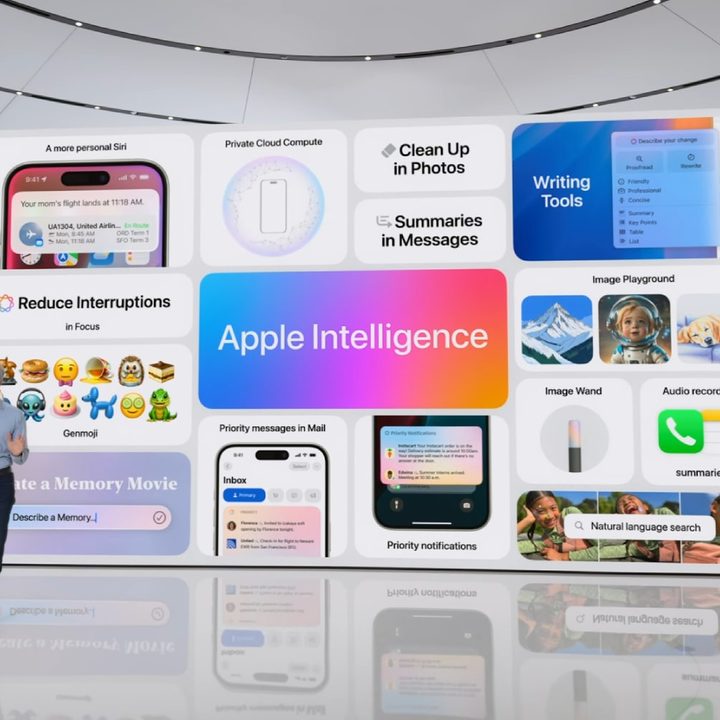
Apple's Craig Federighi discussing Apple Intelligence at the Worldwide Developers Conference (WWDC) 2024.
Apple

That’s presumably partly why Apple is now reaching out to anyone who’s interested with this lucrative offer. The company provides access to the source code for some of the most important parts of PCC, which will make it possible for researchers to dig into its flaws.

The $1 million bounty is not universal. That’s the highest reward for the person or the team who manages to run malicious code on the PCC servers. The next-highest bounty sits at $250,000 and covers exploits that might allow hackers to extract user data from Apple’s AI cloud. There are also smaller rewards, starting at $150,000, which will be paid out to anyone who accesses user data from a “privileged network position.”

Apple’s bug bounty program has previously helped it spot exploits ahead of time while rewarding the researchers involved. A couple of years ago, Apple paid a student $100,000 for successfully hacking a Mac. Let’s hope that if there are any bugs to be found in Apple’s AI cloud, they’ll be spotted before Apple Intelligence becomes widely available.

Monica J. White
Monica is a computing writer at Digital Trends, focusing on PC hardware. Since joining the team in 2021, Monica has written…
NVIDIA’s new AI can detect deepfake videos in just 22 milliseconds
NVIDIA has a new AI tool that can tell fake videos from real ones in milliseconds
Nvidia logo

As generative AI becomes increasingly capable of producing videos that are nearly indistinguishable from real footage, the race is no longer just about creating synthetic media. It's about detecting it before it spreads.

At SIGGRAPH 2026, NVIDIA unveiled Synthetic Video Detector, a new AI-powered verification tool designed to identify AI-generated videos with remarkable speed and accuracy. Rather than replacing traditional fact-checking or forensic analysis, the company says the technology is intended to give newsrooms, broadcasters and enterprises another layer of confidence before synthetic videos enter the public domain.

Read more
Dell XPS 14 (2026) Review: Dell’s classic Windows laptop returns, and it’s hard to put down
The icon returns, and shows why it's still relevant
Dell XPS 14 Review: Featured

Quick take

Dell’s XPS line has always carried a certain weight. It is one of those Windows laptop families that people recognize even if they don’t follow laptops too closely. Clean design built with premium materials, sharp displays, and high-end hardware. The Dell XPS 14 DA14260 continues that legacy. 

Read more
Samsung’s secret AI chip could finally cool down Exynos phones
Samsung's GAIA AI chip is landing in laptops first, but its shared DNA with Exynos hints at a real fix for phones down the line.
Samsung Exynos chip illustration.

If you've ever owned an Exynos-powered Galaxy phone, you already know the drill: heavy tasks like capturing back-to-back pictures or photos for a while, heavy gaming, or rendering videos turn your device into a hand warmer. 

In such a situation, the battery bar drops faster than usual as well. Turns out, Samsung might be working on the fix, and it's coming in a way nobody expected.

Read more