  1. Home
  2. Cars
  3. Emerging Tech
  4. News

Ram postpones electric pickup to 2026 as Ramcharger plug-in hybrid takes the limelight

Add as a preferred source on Google
ram pickup postponed 2590768 picwrevwfy xlarge
Image used with permission by copyright holder

It seems to be yet another sign that hybrids are leading the charge forward as sales of electric vehicles (EVs) slow.

Giant auto group Stellantis is reshuffling the planned launches of two much-awaited Ram models. The brand’s first electric pickup truck has been postponed to 2026, while the Ramcharger plug-in hybrid (PHEV) will take center stage next year.

Recommended Videos

“The decision to launch Ramcharger first was driven by overwhelming consumer interest, maintaining a competitive advantage in the technology and slowing industry demand for half-ton (battery EV) pickups,” Stellantis says in a statement.

Orders for the 2025 Ram 1500 Ramcharger will open in the first half of 2025.

Sales of hybrids powered gains in overall EV sales in the third quarter, reaching a record 10.8% of U.S. light-duty vehicle sales. And hybrids are now considered to be as reliable as gas-powered vehicles, according to a Consumer Reports survey. They also offer a more affordable option than purely electric vehicles while freeing drivers from having to worry about finding available chargers.

Meanwhile, consumer hesitations over EV charging and lifestyle changes explain why RAM delayed the launch of its all-electric pickup truck, seen as a potential rival to Tesla’s Cybertruck and the Ford F-150 Lightning, to 2026.

As for the new Ramcharger, it promises innovations, even in the realm of plug-in hybrids. It’s basically an EV with an electric range of 145 miles, but its gas generator extends the range up to 690 miles. It features a 92-kilowatt-hour battery pack, paired with an onboard 130 kW generator, sending power to 250 kW front and 238 kW rear electric drive modules (EDMs).

The new Ramcharger also allows vehicle-to-vehicle and vehicle-to-home bidirectional charging, giving it the flexibility to charge another Stellantis battery EV or provide power back to the grid.

Nick Godt
Former Freelance reporter
Nick Godt has covered global business news on three continents for over 25 years.
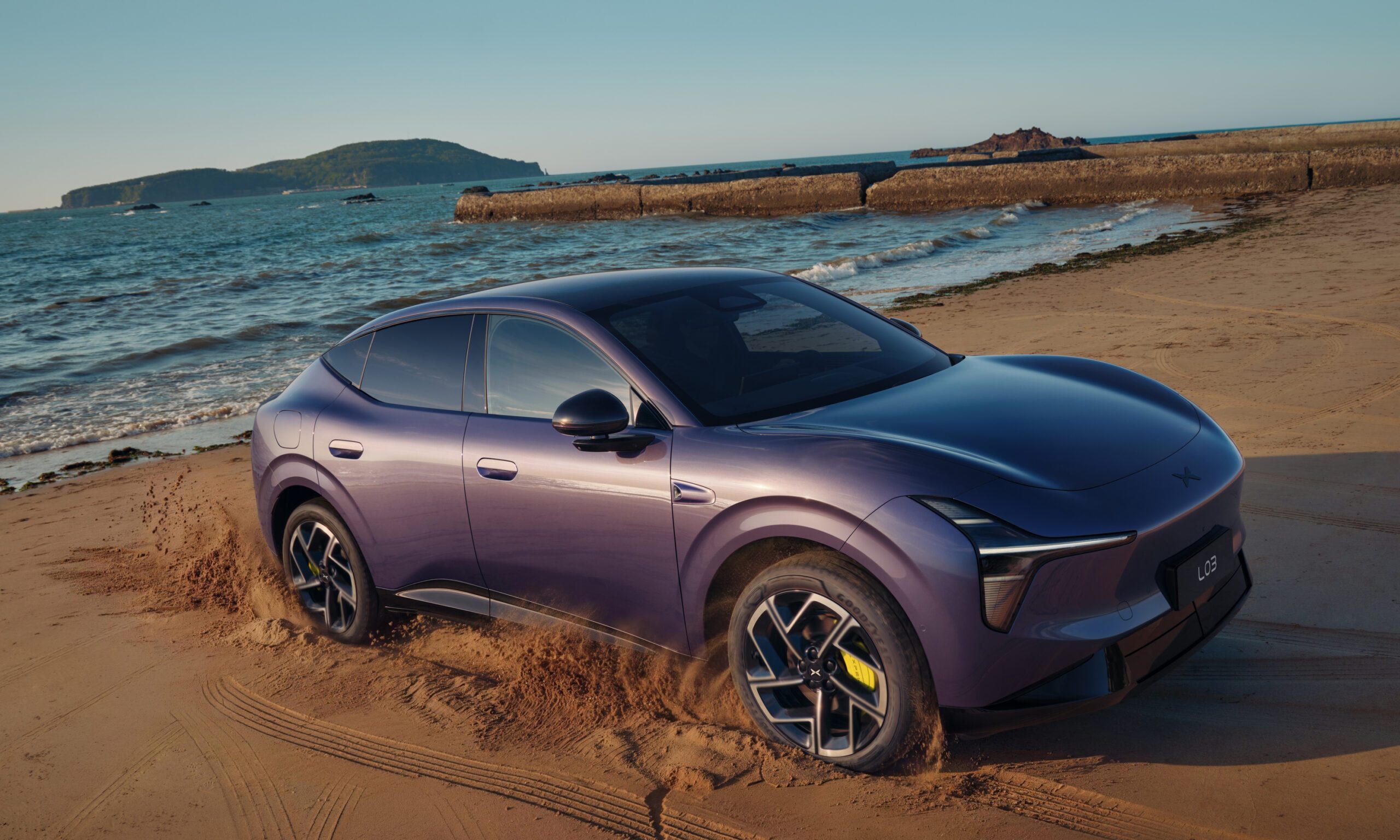
This sleek Chinese EV pairs supercar styling with three AI brains
The Xpeng L03 is an AI supercomputer disguised as a stylish family SUV
Xpeng L03

Xpeng’s latest electric vehicle carries enough processing power to make the term "smart car" actually sound more realistic than it actually is. The new Xpeng L03 debuted simultaneously in Europe and China on July 16, with the company presenting it across 65 markets. Available as a fully electric vehicle and an L03 Power X range-extender, the coupe-SUV is Xpeng’s most internationally focused model so far. Market-specific prices and sales dates remain unannounced.

Three AI chips and Google Maps built right in

Read more
A new sodium battery posts wild four-minute charging numbers, but don’t expect it in an EV yet
The breakthrough could improve fast charging and battery life, but the study hasn’t demonstrated those results in a production-sized pack
EV Charger

A new sodium-metal battery has posted a charging number that makes today’s EVs look painfully slow. In laboratory testing, the cell operated at a 15C rate, equivalent to completing a charge or discharge in roughly four minutes.

That doesn’t mean researchers plugged in an electric car and watched it fill up before the driver finished buying coffee. The result came from a small experimental cell using a new quasi-solid electrolyte, while the larger pouch-cell prototype delivered far less dramatic performance.

Read more
The Apple Car may be dead, but it became the foundation of Apple Intelligence
A decade of work on a canceled car project reportedly laid the groundwork for Apple Intelligence.
Apple Intelligence in Apple Car

The Apple Car may have never left the garage, but it apparently gave birth to Apple's AI ambitions. According to Bloomberg's Mark Gurman, Apple's canceled autonomous vehicle project, one that consumed more than a decade of work and over $10 billion before being scrapped in 2024, ended up laying the technological foundation for Apple Intelligence. In a rather ironic twist, one of Apple's most expensive failures may also become one of its most important long-term investments.

The Apple Car forced Apple to think like an AI company

Read more