1. Home
  2. Space
  3. News

How to watch Firefly launch its Blue Ghost mission to the moon on Tuesday night

Add as a preferred source on Google
Rendering of the Blue Ghost on the moon's surface.
Rendering of the Blue Ghost on the moon's surface. Firefly Aerospace

This week will feature a historic event as Firefly Aerospace launches its first mission to the moon. The Blue Ghost mission aims to put a lander on the moon carrying NASA science experiments, as part of NASA’s efforts to get private companies involved in lunar exploration. If the landing succeeds, it will be just the second soft lunar landing by a private company, following the Intuitive Machines Odyssey lander last year.

Firefly Aerospace’s Blue Ghost mission will launch late at night on Tuesday, January 14, or Wednesday, January 15. Using a SpaceX Falcon 9 rocket, the Blue Ghost will launch from Launch Complex 39A at Kennedy Space Center in Florida. The launch will be liveistreamed by NASA, and you can watch it either on YouTube or by using the video embedded below:

Firefly Blue Ghost Mission 1 Launch to the Moon (Official NASA Broadcast)

Coverage begins at 12:30 a.m. ET on Wednesday, January 15 (that’s 9:30 p.m. PT on Tuesday, January 14), with the launch scheduled for 1:11 a.m.ET  (10:11 p.m. PT).

Recommended Videos

Once launched, the Blue Ghost lander will spend 45 days in space traveling to the moon. It will attempt a soft landing on the lunar surface in early March in the Mare Crisium region. It will then spend around two weeks (a full lunar day) operating its science instruments, with the aim of capturing images of the lunar sunset and investigating how the setting of the sun affects the dusty material on the moon’s surface, called regolith.

There are a total of 10 payloads on the Blue Ghost mission, including those built by NASA, the Italian Space Agency, Blue Origin, and various universities and research centers. These include a drill to enable measurements from several meters beneath the moon’s surface, a new tool for collecting samples of regolith pneumatically, experiments into the stickiness of regolith (a major issue for moon missions), and a device that uses electric fields to repel dust and prevent it from sticking to surfaces.

The lander is around two meters tall and 3.5 meters wide, with four widely space legs that are equipped with shock-absorbing feet to help it touch down gently on the moon’s surface without damage. The legs are built from carbon composites, so they are lightweight, and they have honeycomb elements to help absorb forces during touchdown. The lander will use terrain-relative navigation, similar to the technology used for Mars landings, in which onboard computers take images of the surface to help select a safe landing zone and avoid hazards like craters or boulders.

A video from Firefly shows the planned sequence of the mission:

Blue Ghost Mission 1 Operations - Animation with Text Overlays
Georgina Torbet
Georgina has been the space writer at Digital Trends space writer for six years, covering human space exploration, planetary…
Space is becoming Bezos and Musk’s next data center site, and we have every reason to worry
The AI boom is coming for the night sky
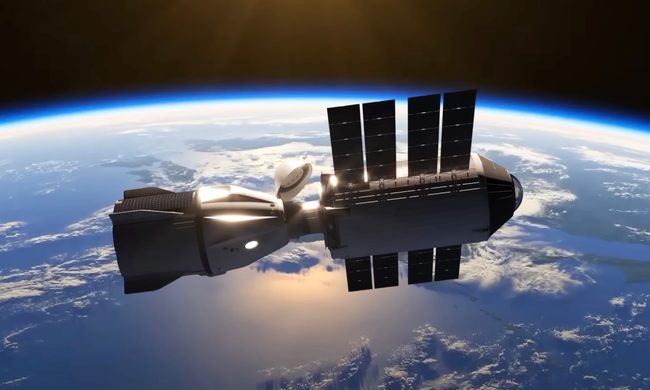
How Vast's space station will look in orbit.

AI data centers already consume vast amounts of electricity and water on Earth, so Silicon Valley has begun looking somewhere considerably more spacious... literally.

Elon Musk's SpaceX and Jeff Bezos' Blue Origin, along with several other companies, have proposed enormous constellations of satellites designed to operate as orbital data centers. However, environmental groups and former space officials are now warning that putting them into orbit at the proposed scale could have severe consequences for Earth's atmosphere and the night sky.

Read more
The first possible exomoon is here, and it makes our Moon look hilariously tiny
Scientists may have found the first exomoon, except this one is the size of Jupiter
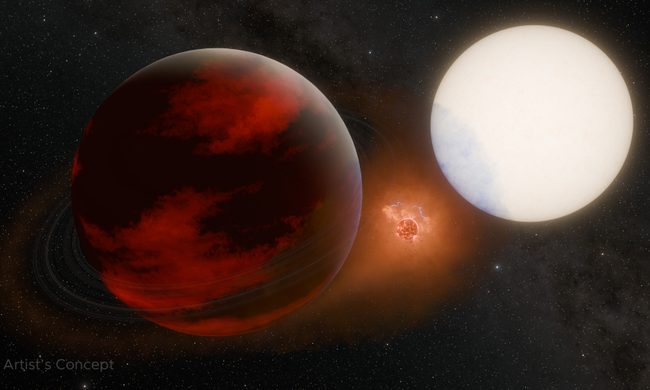
This artist’s concept depicts a potential volcanic moon between the exoplanet WASP-49 b, left, and its parent star. New evidence indicating that a massive sodium cloud observed near WASP-49 b is produced by neither the planet nor the star has prompted researchers to ask if its origin could be an exomoon.

We have already discovered more than 6,000 planets outside of our immediate neighborhood. Yet, finding a moon orbiting one of those distant worlds has proved considerably harder. Astronomers may finally have something close to the real deal, but this particular object stretches the word “moon” almost beyond recognition.

Using the European Southern Observatory’s Very Large Telescope in Chile, researchers detected strong evidence for a moon-like object in the CD-35 2722 system. Further observations are still necessary to confirm the discovery, but it could become the first confidently detected natural satellite outside our solar system. There is still one tiny complication though. This moon is apparently massive.

Read more
China’s answer to SpaceX’s reusable rockets literally catches boosters in a net
SpaceX catches boosters on legs. China just used a net.
Ammunition, Missile, Weapon

SpaceX's playbook for recovering a rocket booster generally involves legs, a precisely controlled vertical landing, and either a concrete pad or a drone ship. 

China just managed to pull off something similar, but in a slightly different way, and on July 10, it tested the method as well.

Read more