  1. Home
  2. Cars
  3. Emerging Tech
  4. News

Tesla reaffirms timeline for affordable EV despite reports of delays

Add as a preferred source on Google
White Tesla Model Y Juniper driving
Christian de Looper / Digital Trends

Tesla has reiterated its plan to begin production of a more affordable electric vehicle in the first half of 2025, maintaining the timeline despite conflicting reports and ongoing industry skepticism. During the company’s latest earnings call, executives confirmed that production preparations are complete and the launch remains scheduled for June.

This comes days after Reuters reported, citing unnamed sources, that Tesla’s lower-cost EV—internally codenamed “E41”—had been delayed, potentially pushing the timeline to late 2025 or early 2026. According to that report, Tesla’s goal to assemble up to a quarter million units of the new model was being reassessed, with shifting internal targets and no clear revised launch date.

Recommended Videos

In the earnings call, Tesla’s VP of Vehicle Engineering, Lars Moravy, pushed back on that narrative, emphasizing that the company is ready to start building the vehicle on existing assembly lines. “The models that come out in the next months will resemble in form and shape the cars that we currently make,” said Moravy. “The key is that they’ll be affordable and you’ll be able to buy one.” CFO Vaibhav Taneja also confirmed the June production target, stating that necessary upgrades to accommodate the new models were completed alongside recent changes to the Model Y lines.

As Digital Trends outlined in its recent coverage, the affordable model—likely a pared-down version of the Model Y—is expected to come with a smaller footprint and lower price tag, potentially under $40,000 before incentives. Tesla is reportedly leveraging increased local sourcing of parts to help shield the model from potential tariffs and trade volatility.

Still, Tesla faces mounting pressure. The automaker’s Q1 2025 earnings revealed a sharp 71% drop in income, and global sales have been on a downward trend. In California, Tesla’s market share fell below 50% for the first time this year. Analysts and market watchers continue to point to CEO Elon Musk’s polarizing political activity as a factor dampening consumer sentiment.

For Tesla, the affordable EV is more than a product launch—it’s a test of whether the company can reestablish momentum in a market that’s rapidly evolving without it.

Nick Godt
Former Freelance reporter
Nick Godt has covered global business news on three continents for over 25 years.
This sleek Chinese EV pairs supercar styling with three AI brains
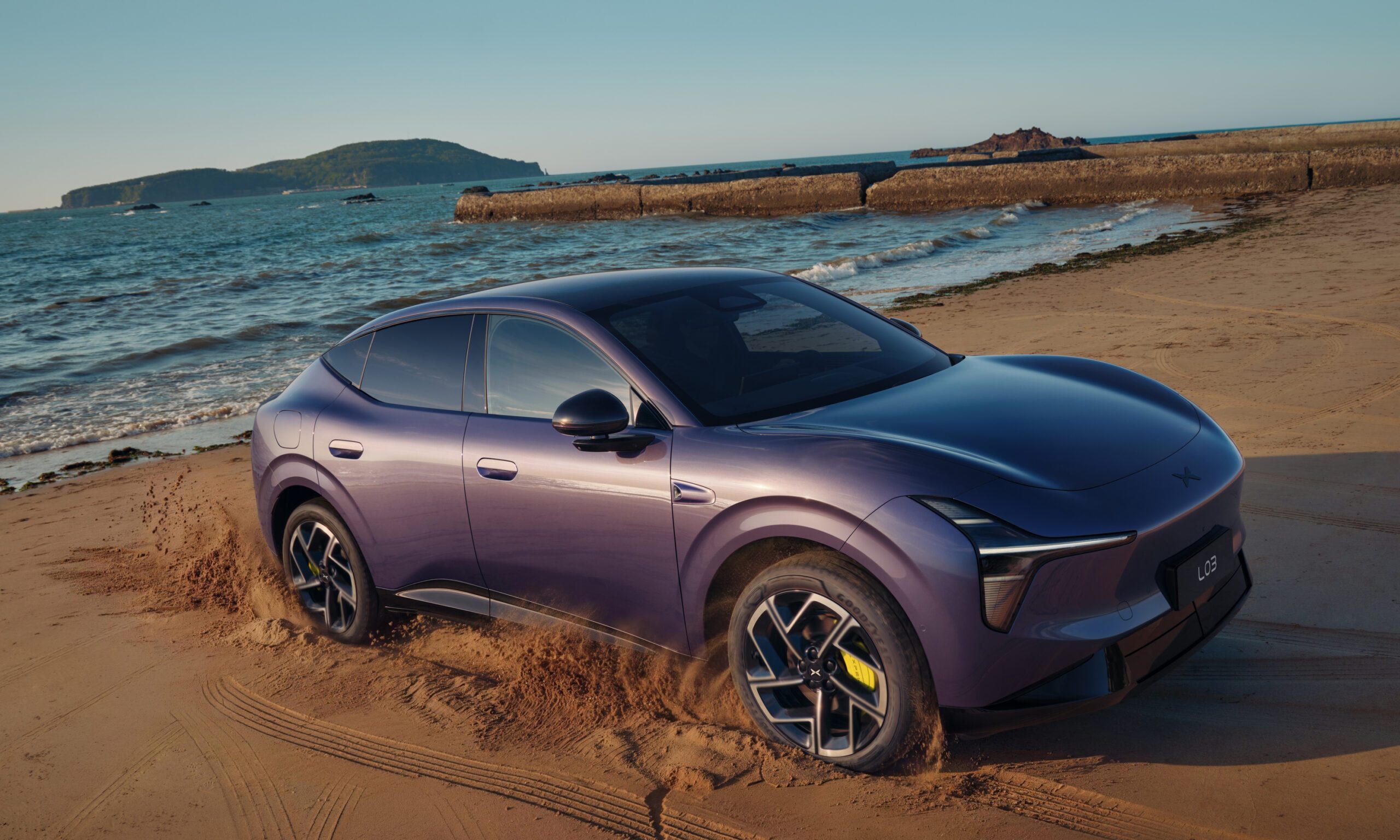
The Xpeng L03 is an AI supercomputer disguised as a stylish family SUV
Xpeng L03

Xpeng’s latest electric vehicle carries enough processing power to make the term "smart car" actually sound more realistic than it actually is. The new Xpeng L03 debuted simultaneously in Europe and China on July 16, with the company presenting it across 65 markets. Available as a fully electric vehicle and an L03 Power X range-extender, the coupe-SUV is Xpeng’s most internationally focused model so far. Market-specific prices and sales dates remain unannounced.

Three AI chips and Google Maps built right in

Read more
A new sodium battery posts wild four-minute charging numbers, but don’t expect it in an EV yet
The breakthrough could improve fast charging and battery life, but the study hasn’t demonstrated those results in a production-sized pack
EV Charger

A new sodium-metal battery has posted a charging number that makes today’s EVs look painfully slow. In laboratory testing, the cell operated at a 15C rate, equivalent to completing a charge or discharge in roughly four minutes.

That doesn’t mean researchers plugged in an electric car and watched it fill up before the driver finished buying coffee. The result came from a small experimental cell using a new quasi-solid electrolyte, while the larger pouch-cell prototype delivered far less dramatic performance.

Read more
The Apple Car may be dead, but it became the foundation of Apple Intelligence
A decade of work on a canceled car project reportedly laid the groundwork for Apple Intelligence.
Apple Intelligence in Apple Car

The Apple Car may have never left the garage, but it apparently gave birth to Apple's AI ambitions. According to Bloomberg's Mark Gurman, Apple's canceled autonomous vehicle project, one that consumed more than a decade of work and over $10 billion before being scrapped in 2024, ended up laying the technological foundation for Apple Intelligence. In a rather ironic twist, one of Apple's most expensive failures may also become one of its most important long-term investments.

The Apple Car forced Apple to think like an AI company

Read more