1. Home
  2. Cars
  3. Emerging Tech
  4. News

The Ioniq 5 is once again eligible for the $7,500 tax credit

Add as a preferred source on Google
2025 Hyundai Ioniq 5
2025 Hyundai Ioniq 5 Hyundai

After a brief and confusing absence, the Hyundai Ioniq 5 is once again eligible for the full $7,500 federal tax credit — and this time, it’s sticking around (at least for now). So, what happened? Let’s unpack the ride.

The Ioniq 5, a sleek and tech-savvy electric crossover, initially made headlines not just for its design, but for being built at Hyundai’s brand-new Metaplant in Georgia. That domestic assembly qualified it for the EV tax credit under the Inflation Reduction Act (IRA), which requires vehicles to be made in North America with batteries sourced from trade-friendly countries. But early in 2025, the Ioniq 5 vanished from the list. Why? Likely due to its battery packs, which were then still being sourced from SK On’s Hungarian facility.

Recommended Videos

During that limbo, the only way to get the $7,500 incentive was to lease the vehicle—thanks to a legal loophole that treats leased EVs as “commercial vehicles,” skirting the strict sourcing requirements. Hyundai even stepped in with its own $7,500 discount for those financing or buying outright, softening the blow.

But as of late April 2025, the Ioniq 5 is officially back on the EPA’s eligibility list, thanks to Hyundai switching battery sourcing to SK On’s U.S.-based factory in Georgia. That means buyers can now get the tax credit up front at purchase—no lease gymnastics required.

Just make sure you qualify: Your adjusted gross income must fall below $300,000 (joint), $225,000 (head of household), or $150,000 (individual). Also, the vehicle’s MSRP must be under $80,000—which is no problem since the Ioniq 5 ranges from $44,075 to $56,975.

So if you’ve been eyeing an Ioniq 5, now’s a great time to plug in.

Nick Godt
Former Freelance reporter
Nick Godt has covered global business news on three continents for over 25 years.
A new sodium battery posts wild four-minute charging numbers, but don’t expect it in an EV yet
The breakthrough could improve fast charging and battery life, but the study hasn’t demonstrated those results in a production-sized pack
EV Charger

A new sodium-metal battery has posted a charging number that makes today’s EVs look painfully slow. In laboratory testing, the cell operated at a 15C rate, equivalent to completing a charge or discharge in roughly four minutes.

That doesn’t mean researchers plugged in an electric car and watched it fill up before the driver finished buying coffee. The result came from a small experimental cell using a new quasi-solid electrolyte, while the larger pouch-cell prototype delivered far less dramatic performance.

Read more
The Apple Car may be dead, but it became the foundation of Apple Intelligence
A decade of work on a canceled car project reportedly laid the groundwork for Apple Intelligence.
Apple Intelligence in Apple Car

The Apple Car may have never left the garage, but it apparently gave birth to Apple's AI ambitions. According to Bloomberg's Mark Gurman, Apple's canceled autonomous vehicle project, one that consumed more than a decade of work and over $10 billion before being scrapped in 2024, ended up laying the technological foundation for Apple Intelligence. In a rather ironic twist, one of Apple's most expensive failures may also become one of its most important long-term investments.

The Apple Car forced Apple to think like an AI company

Read more
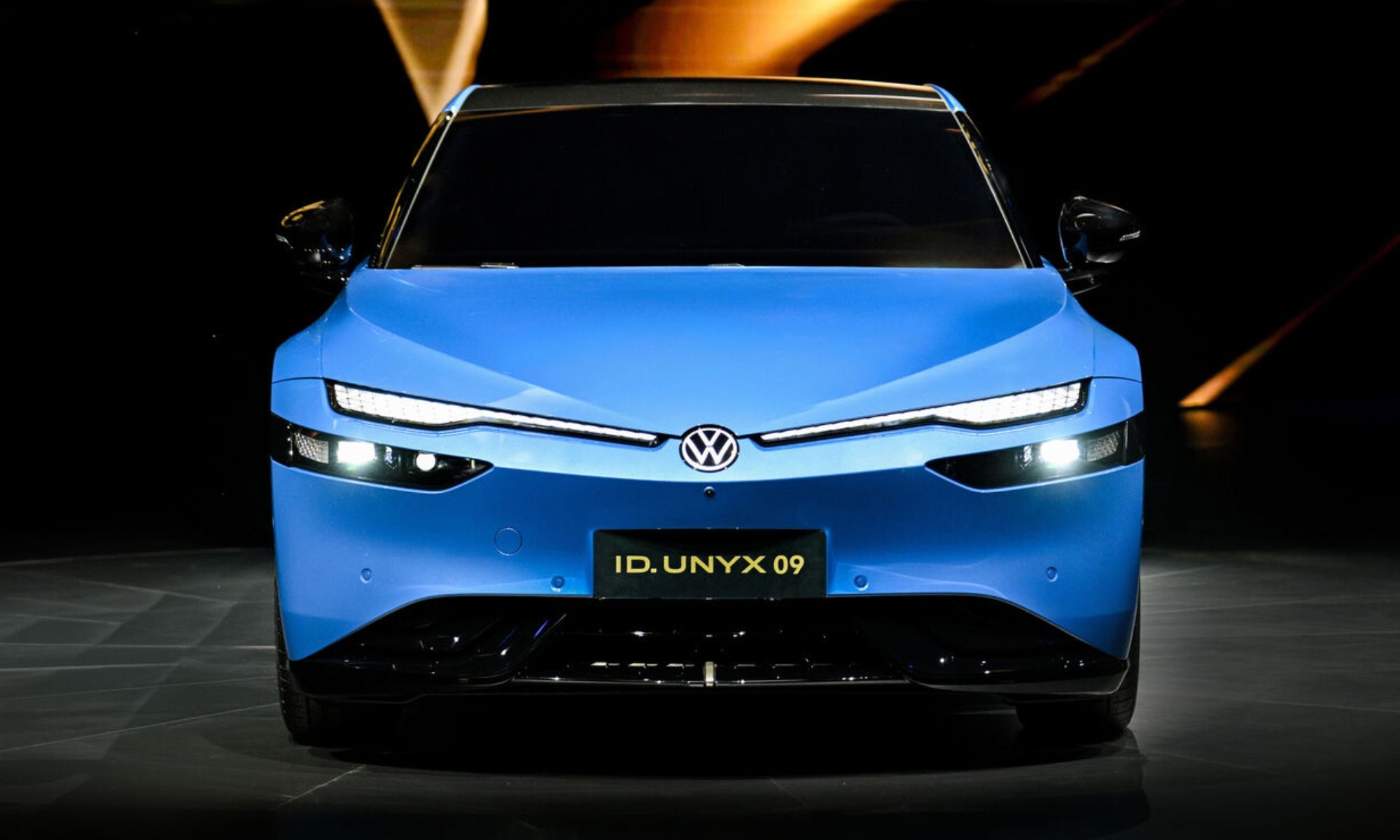
Volkswagen’s ID. Unyx 09 just leaked, and it’s the kind of EV I want to see in the US
VW's partnership with Xpeng is producing exactly what we hoped.
Bumper, Transportation, Vehicle

I've been watching Volkswagen's China lineup quietly get cooler for the past two years, but the ID. Unyx 09 might be the moment it finally gets exciting, not just for Chinese buyers, but for the rest of the world as well. 

Regulatory filings from China's Ministry of Industry and Information Technology, Batch 409, have exposed the full specs of the upcoming sedan ahead of its official launch later this year, and it looks nothing like any VW car I've seen before (via CarNewsChina).

Read more