1. Home
  2. Space
  3. News

NASA astronaut’s first ISS time-lapse is a real stunner

Add as a preferred source on Google
A screenshot from a time-lapse by NASA astronaut Jonny Kim
Jonny Kim/NASA

NASA astronaut Jonny Kim has shared his first-ever time-lapse from aboard the International Space Station (ISS) — and it’s a real stunner.

The dramatic 68-second clip shows a changing view of Earth as the space-based facility orbits our planet at an altitude of about 250 miles. 

Recommended Videos

“My first time-lapse,” Kim wrote in a social media post that included the video (below). Kim said he managed to nail it thanks to some time-lapse tips shared by fellow astronaut Nichole Ayers. “After seeing the result, I told her this felt like fishing,” Kim wrote. “Prepping the camera, the angle, the settings, the mount, then setting your timer and coming back to hope you got a catch. And after catching my first fish, I think I’m hooked.”

My first time-lapse. Thanks to some instruction and tips from @Astro_Ayers, I caught my first aurora. After seeing the result, I told her this felt like fishing. Prepping the camera, the angle, the settings, the mount, then setting your timer and coming back to hope you got a… pic.twitter.com/RgEaq50E5p

— Jonny Kim (@JonnyKimUSA) June 6, 2025

The video shows the space station flying into the night, with city lights in Asia and Australia visible far below, and bright stars shining in the far distance. A short while later, a gorgeous aurora appears over the horizon before filling much of the frame. Toward the end of the clip, one of the station’s solar arrays also come into view.

Auroras are natural light displays in Earth’s sky, caused by charged particles from the sun colliding with the Earth’s magnetic field and atmosphere. While also viewable from parts of Earth, astronauts on the ISS can also enjoy a unique view of this natural wonder. Indeed, for most astronauts, witnessing auroras is one of the highlights of their time in orbit. 

Earlier this year, another NASA astronaut, Don Pettit, shared a dramatic view of an aurora, captured as the ISS flew directly over it. 

Kim arrived at the space station with two Russian cosmonauts after launching aboard a Soyuz spacecraft in April this year. With another four months of his mission left to run, hopefully the American will have time to create more clips similar to his first outstanding effort. 

Trevor Mogg
Contributing Editor
Not so many moons ago, Trevor moved from one tea-loving island nation that drives on the left (Britain) to another (Japan)…
Space is becoming Bezos and Musk’s next data center site, and we have every reason to worry
The AI boom is coming for the night sky
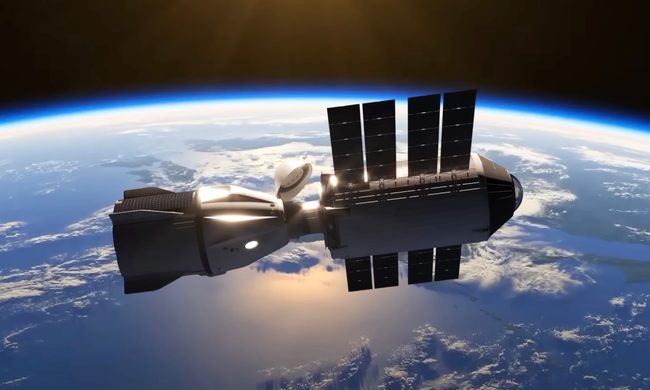
How Vast's space station will look in orbit.

AI data centers already consume vast amounts of electricity and water on Earth, so Silicon Valley has begun looking somewhere considerably more spacious... literally.

Elon Musk's SpaceX and Jeff Bezos' Blue Origin, along with several other companies, have proposed enormous constellations of satellites designed to operate as orbital data centers. However, environmental groups and former space officials are now warning that putting them into orbit at the proposed scale could have severe consequences for Earth's atmosphere and the night sky.

Read more
The first possible exomoon is here, and it makes our Moon look hilariously tiny
Scientists may have found the first exomoon, except this one is the size of Jupiter
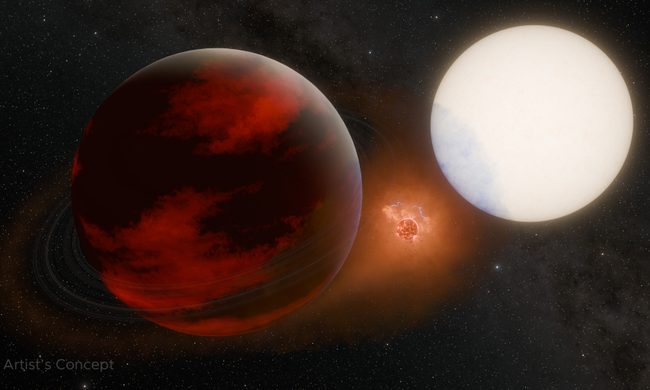
This artist’s concept depicts a potential volcanic moon between the exoplanet WASP-49 b, left, and its parent star. New evidence indicating that a massive sodium cloud observed near WASP-49 b is produced by neither the planet nor the star has prompted researchers to ask if its origin could be an exomoon.

We have already discovered more than 6,000 planets outside of our immediate neighborhood. Yet, finding a moon orbiting one of those distant worlds has proved considerably harder. Astronomers may finally have something close to the real deal, but this particular object stretches the word “moon” almost beyond recognition.

Using the European Southern Observatory’s Very Large Telescope in Chile, researchers detected strong evidence for a moon-like object in the CD-35 2722 system. Further observations are still necessary to confirm the discovery, but it could become the first confidently detected natural satellite outside our solar system. There is still one tiny complication though. This moon is apparently massive.

Read more
China’s answer to SpaceX’s reusable rockets literally catches boosters in a net
SpaceX catches boosters on legs. China just used a net.
Ammunition, Missile, Weapon

SpaceX's playbook for recovering a rocket booster generally involves legs, a precisely controlled vertical landing, and either a concrete pad or a drone ship. 

China just managed to pull off something similar, but in a slightly different way, and on July 10, it tested the method as well.

Read more