“TCL's new premium flagship is the TV to beat this year”
- Top of class HDR brightness
- Outstanding color accuracy
- Impressive built-in audio
- Reflective screen
“Why you can trust Digital Trends – We have a 20-year history of testing, reviewing, and rating products, services and apps to help you make a sound buying decision. Find out more about how we test and score products.“
Earlier this year, TCL held a briefing to show off its new premium flagship QD-MiniLED unit, the QM8K. As the TCL team walked me through the most exciting features of the new model, it became clear that the Chinese brand is gunning for the high-end TV market like never before.
Everything about the QM8K is designed to compete with the largest players in the game, and the executives spoke of their mission to aggressively grow market share in the premium segment. We were impressed by the TCL QM7K released earlier this year, but the QM8K is a step above in every way as TCL attempts to produce one of the best tvs around.
TCL QM8K specs
| Sizes | 65, 75, 85, and 98 inches |
| Pricing | $2,499.99, $3,199.99, $3,799.99, and $6,499.99 |
| Display type | QD-Mini LED |
| Operating system | Google TV |
| Screen resolution | 4K Ultra HD (3,840 x 2,160) |
| HDR support | Dolby Vision, Dolby Vision Gaming, Dolby Vision IQ, HDR 10+, HDR10, HLG |
| Native refresh rate | 144Hz |
| Gaming features | Auto Game Mode (ALLM), AMD FreeSync Premium Pro, Game Accelerator 288, VRR (up to 144Hz) |
| Audio support | Dolby Atmos, Dolby Digital+, Dolby Digital, DTS: Virtual X (Passthrough Dolby Atmos, Dolby Digital+, Dolby Digital, PCM) |
| Connectivity | 4 HDMI (1x eARC), USB 3.0, USB 2.0, Ethernet (LAN), S/PDIF, ATSC 3.0 Tuner |
A premium build that sheds TCL’s budget reputation

The QM8K adopts a new ZeroBorder design that lends a premium aesthetic and an almost edgeless appearance when viewed from a normal viewing distance. The combined width of the bezel and border comes in at an impressive 3-4mm.

Contributing to the premium build is the QM8K’s single-piece aerospace-grade aluminum alloy mold, which lends more rigidity to the body of the TV than plastic-heavy molds like those common in cheaper models.
Much of the rear trim of the QM8K is still plastic, however, which helps keep the total weight of the 85″ unit we tested to a reasonable 85 pounds.
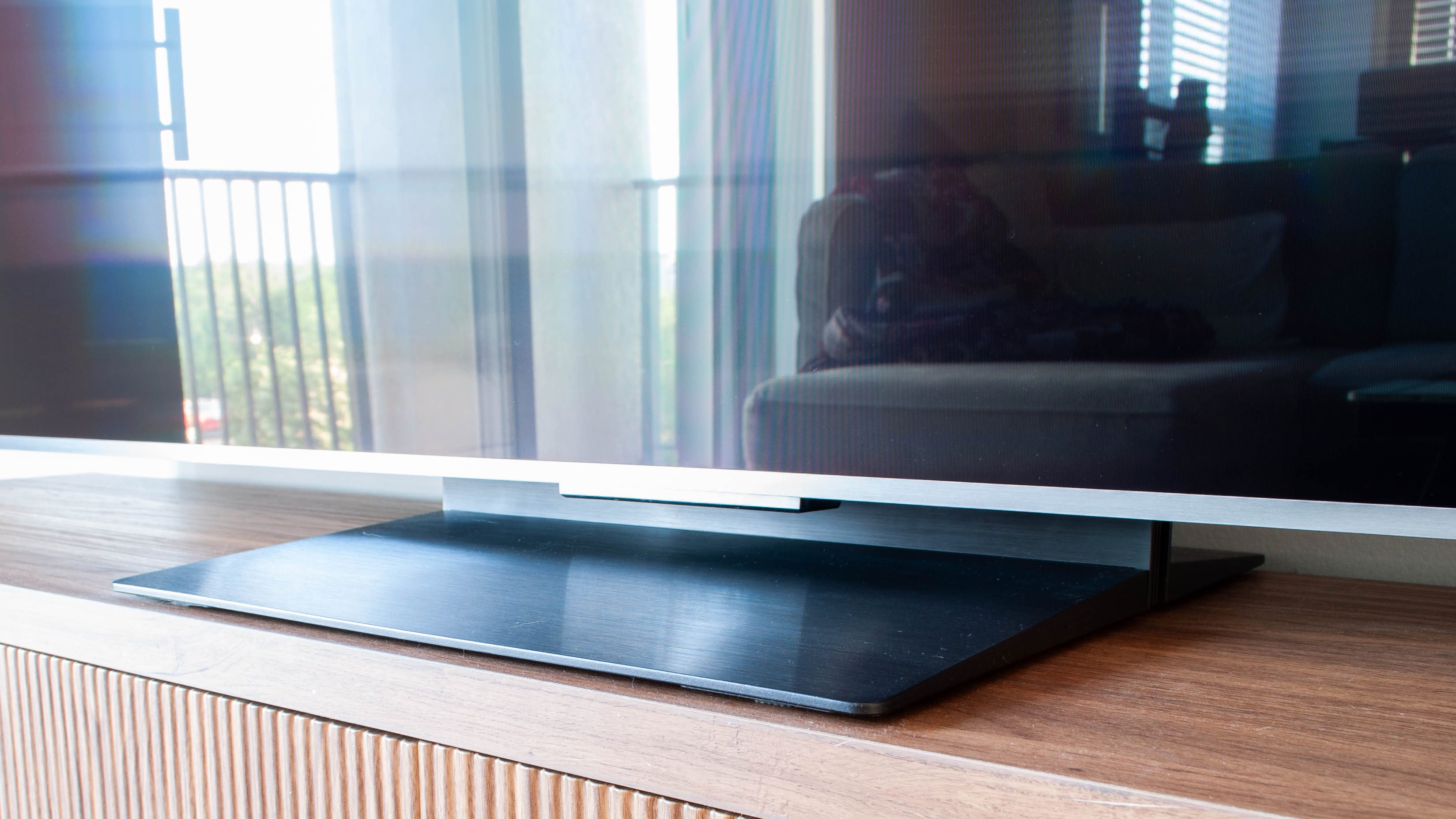
The cheaper QM7K shipped with a plastic stand that felt a bit flimsy during setup, while the QM8K comes with a metal stand instead. Full transparency here: due to a shipping error, the QM8K we tested came without the new stand, so pictured is the QM8K installed on the QM7K’s plastic stand.
A check of the specs shows that the “metal” stand weighs just 1.15 pounds more than the plastic one, so the QM8K stand is likely still a plastic or composite core with metal accenting.

Even the remote got an upgrade for the QM8K, sporting a metallic-accent front plate. The button presses are crisp—almost “clickier” than on the QM7K. Backlighting on the buttons when you pick up the remote ensures it won’t get lost in the couch cushions at night.
Impressive built-in audio on the QM8K

Built-in TV speakers don’t often provide audio quality that is all that compelling. I mostly find them to function as a stopgap until you can get a soundbar or speaker system set up.
But I have to say, I was truly impressed with the Bang & Olufsen setup on the QM8K. The 85W system provides plenty of power, and I experienced zero distortion when bumping up the volume.
Loud action scenes were exceedingly crisp, and dialogue was always clear and intelligible.
Near reference color accuracy right out of the box
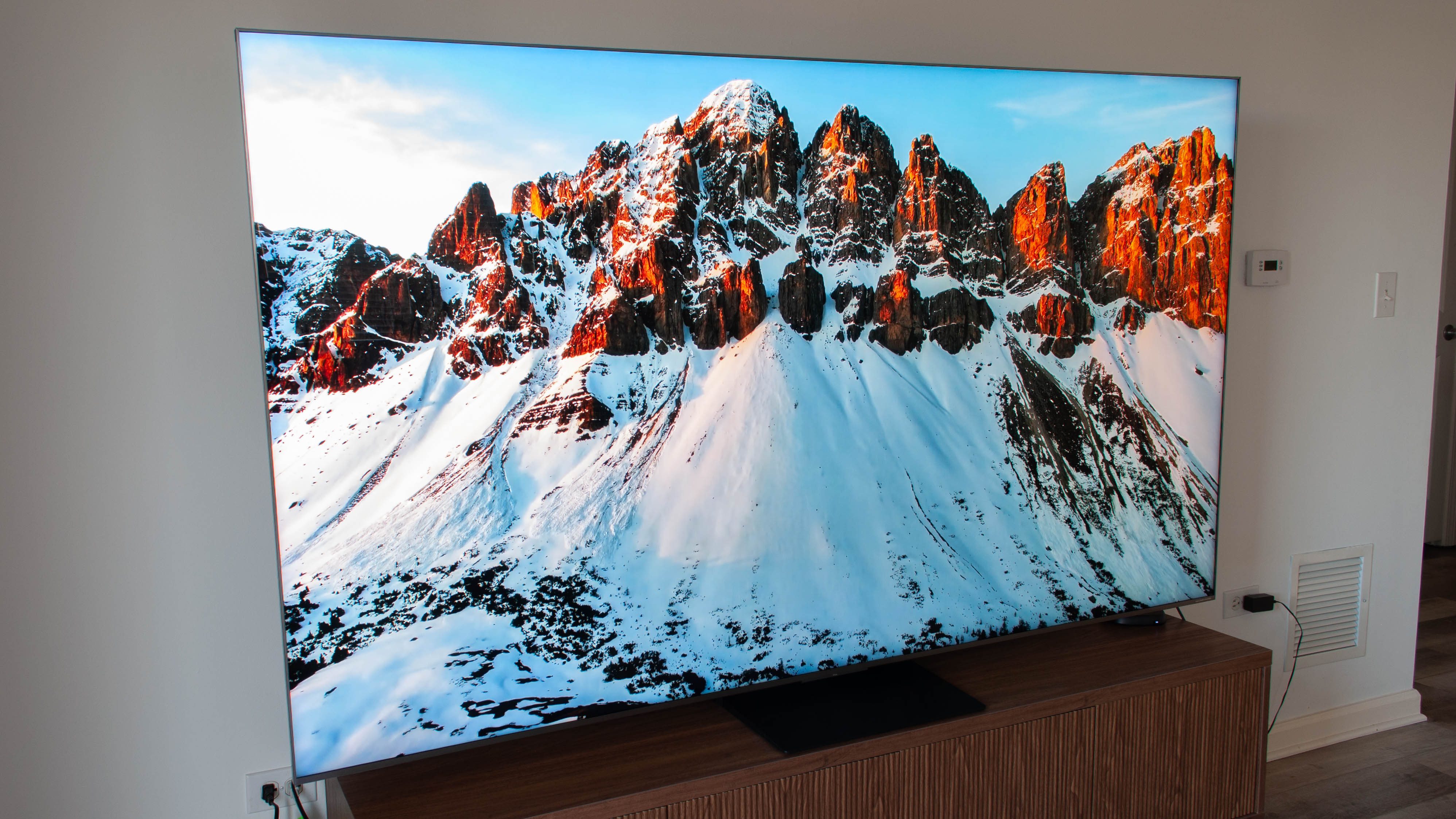
TCL’s Filmmaker Mode in SDR offers stunning color accuracy straight from the factory. Right out of the box with zero adjustments it posted an average Delta E of 0.23 (with a max error of 0.94), well below the “visible” 1.0 threshold. This means a full calibration isn’t even necessary for most users.
I measured a white-point error of 1.33 against a 6,000 K target, with the meter reading 5,988 K which is still excellent for a preset without any further calibration. Gamut coverage was excellent in Filmmaker Mode, covering over 99% of sRGB, and 83.2 percent of Adobe RGB.
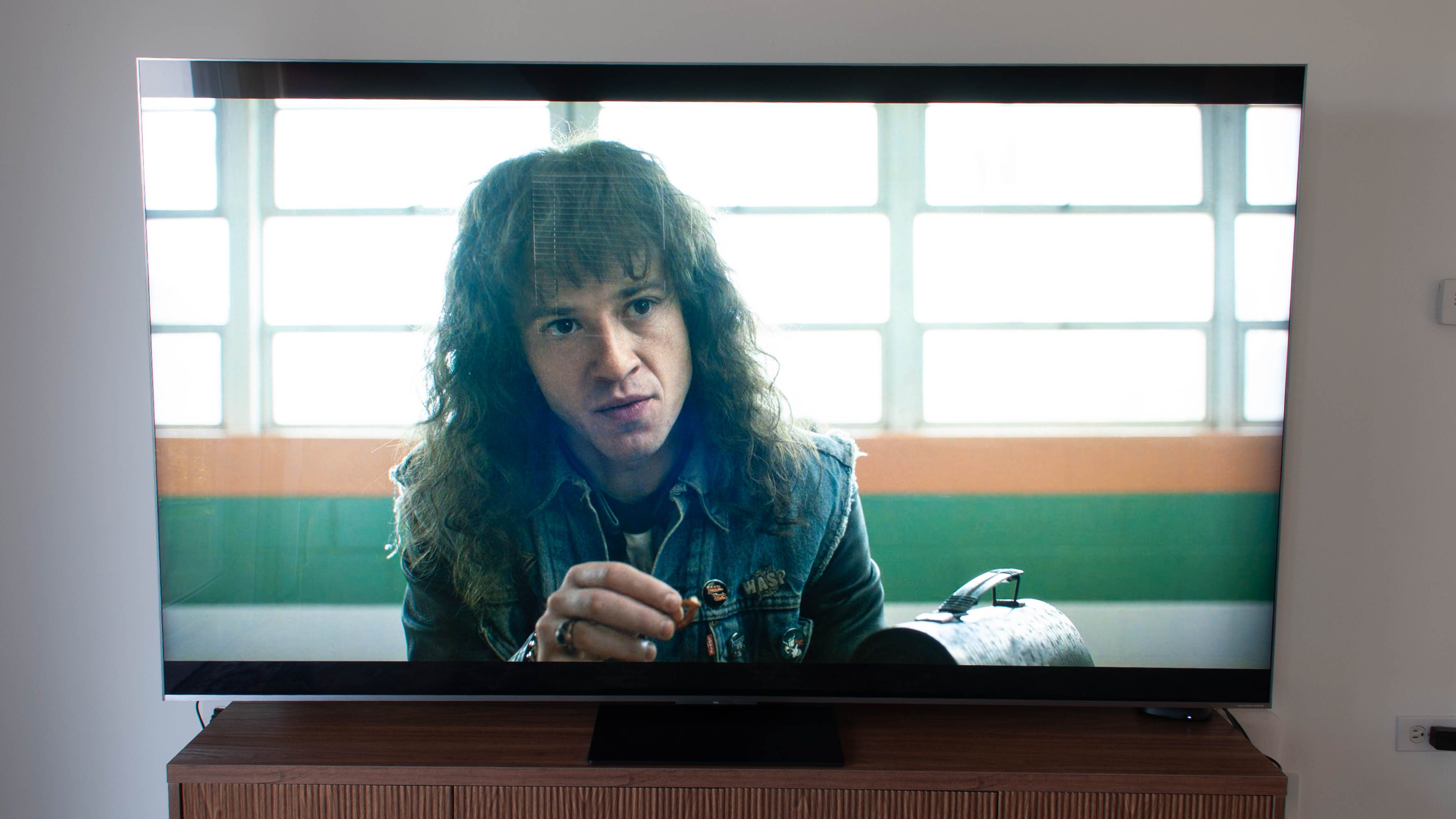
The “Standard Mode” SDR preset on the other hand is a hot mess. Average Delta E leaps to 4.65 (peaks at 7.33) and the white-point shifts to an icy 7,945 K. Colors look blown out, skin tones skew blue and overall accuracy collapses, so swap to Filmmaker Mode immediately.
Gamma tracks the 2.2 curve cleanly and the gray balance stays tight across the range, so Filmmaker Mode preserves shadow detail and highlight detail exceptionally well. I measured a native contrast ratio in SDR of 6,470 : 1, which contributes to the gorgeous picture on the QM8K.
Overall the top-notch tone mapping, hyper accurate color, and fantastic contrast make this one of the best looking TV’s I’ve ever tested. Performance in HDR was equally impressive, thanks to Dolby Vision modes and a substantial boost in contrast ratio.
Bright is an understatement

The brightness on the QM8K is nothing short of spectacular. The 85″ model we tested advertises a peak of 5,000 nits in HDR, which places it firmly among the brightest TVs on the market.
I have to include a bit of a disclaimer here when it comes to testing brightness on the QM8K. I’m currently working with a Calibrite Display Pro HL, which is a wonderful little piece of machinery. However, it’s only rated for brightness readings up to 3,000 nits, meaning that past that point, the sensor gets totally saturated and readings become less accurate.

During testing, I was able to consistently achieve peak brightness readings of around 4,500 to 4,600 nits in a 4% window on my device, and because of the way these sensors respond to brightness levels beyond their max, it’s likely that the reading is inaccurate on the low side.
This makes it completely believable that the panel on the QM8K could achieve 5,000 nits under perfect testing conditions. For peak brightness in HDR while watching actual content, I tested a few different scenes and found that peak brightness readings averaged about 1,400 nits in the brightest spots.
My gripe with reflections
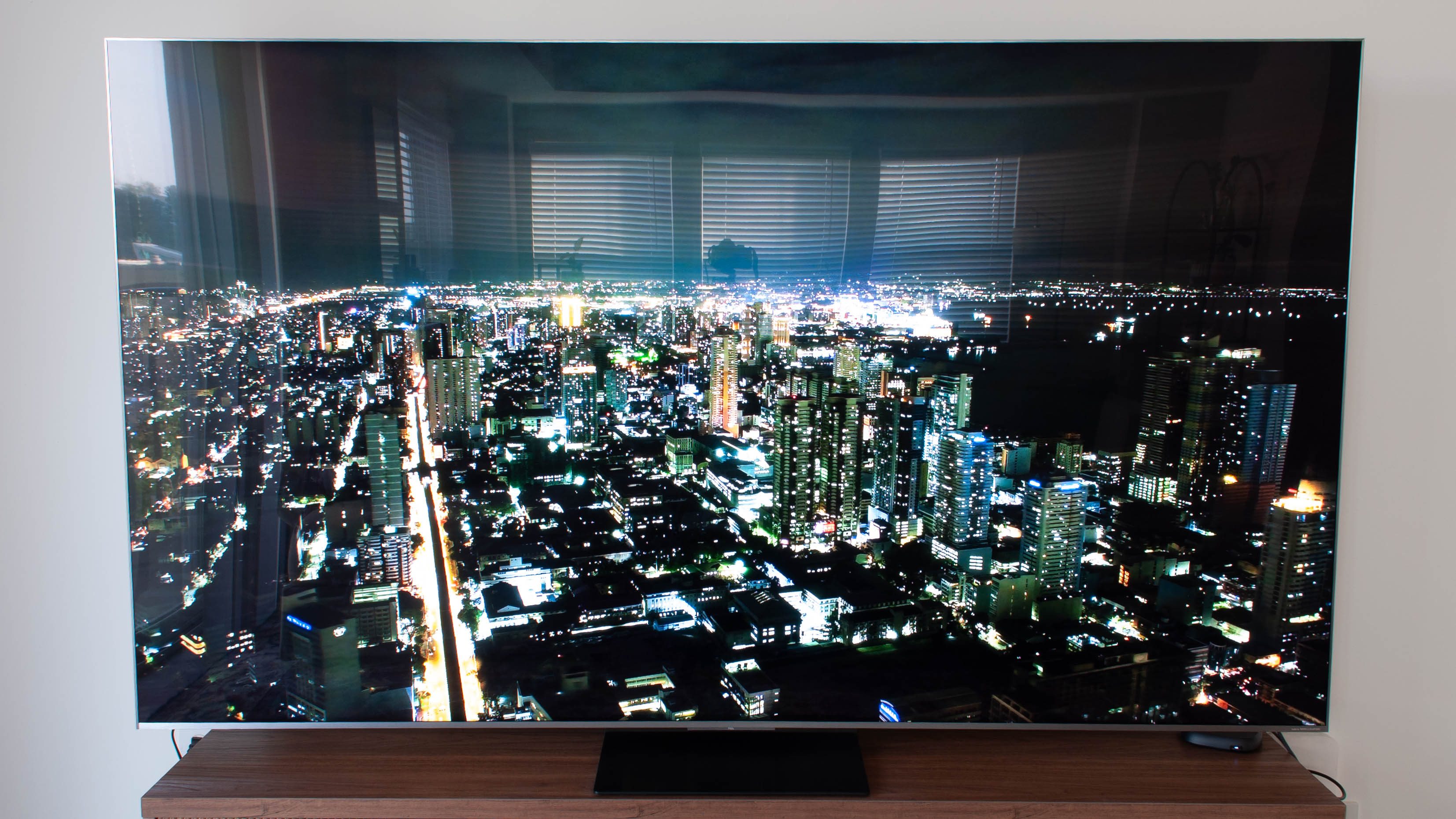
While the brightness of the QM8K impresses, the reflectivity of the screen was fairly high. The setup in my home has some windows facing the screen from across the room. While I understand these are bound to cause reflections when the sun is pouring in, I wasn’t expecting that I would still see them even in the late evening hours with a setting sun and the blinds closed.

Even a fairly dim lamp that usually sits in the dining room behind me has to be kept off to avoid reflections. Overall brightness in the room is not an issue, as the QM8K can more than hold its own in a sunlit room. But direct light sources throw substantial reflections.
Outro
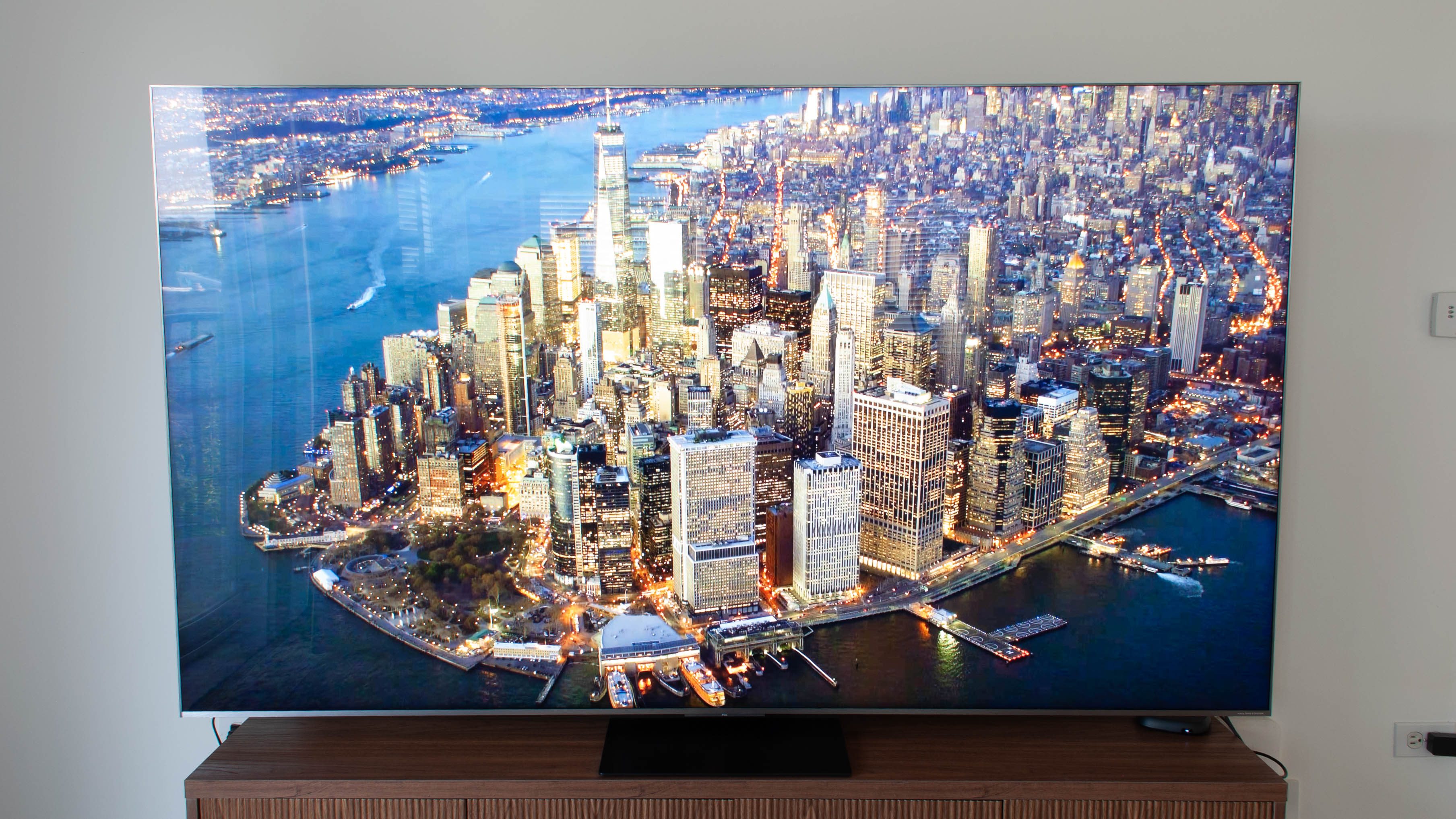
The QM8K is TCL’s boldest attempt yet at capturing market share in the premium TV segment and represents a leap forward in both technology and performance over previous models. TCL is coming for everyone’s lunch and will compete on price in a way only TCL can. The 85″ model we tested retails for $3,799, and look for that price to come down as we get farther from launch and into the holiday season.
QLED Mini-LED TVs are coming after OLED with a vengeance, offering higher brightness, excellent color accuracy, and continuing to push the boundaries on contrast ratios for LED panels. Last year, we were really impressed with the Sony Bravia 9, which was an excellent example of this overall trend.
However, the Bravia 9 is not as bright or color accurate out of the box as the QM8K, and the 85″ version still retails for a cool $1,000 more than the QM8K. TCL’s new premium flagship will be the TV to beat this year.