1. Home
  2. Computing
  3. News

Meta’s new Oakley smart glasses bring major advantages to connected eyewear

Add as a preferred source on Google
Oakley Meta HSTN smart glasses
Oakley / Meta

Meta and Oakley have combined forces to brings us a brand new set of the smart glasses, the Oakley Meta HSTN (pronounced HOW-stuhn), with significant camera and battery upgrades over previous Meta specs.

They’re being dubbed as ‘Performance AI glasses’, apparently built with athletes in mind. They’re equipped with the Meta AI voice assistance, allowing you to trigger actions with your voice – such as starting a recording via the built in camera.

Recommended Videos

First up, the Oakley Meta HSTN glasses pack in battery which can last a claimed eight hours of typical use and up to 19 hours on standby.

That’s significantly longer than the four hours of typical use touted by the Ray-Ban Meta, although in our review they lasted a whole day if recording sessions were kept to a minimum. Still, it’s a promising start for the Oakley smart specs.

Like the best wireless earbuds, the glasses come with a charging case which can provide an additional 40 hours of charge on the go, and you can replenish the battery from 0% to 50% in 22 minutes. An 80% charge will take 45 minutes.

The 12MP camera in the top-right of the frame is capable of capturing 3K resolution, Ultra HD video, an improvement on the 1,440 x 1,920 recording of the Ray-Ban Meta smart glasses.

The ‘capture LED’ is in the opposite corner, which illuminates when the camera is recording or live streaming. This is so others around you know you’re recording video, and if this light is blocked in any way you won’t be able to record until it’s uncovered.

You also get built-in open-ear speakers, allowing you to listen to music and podcasts, and make and receive phone calls on the go, plus they’re IPX4 rated which means they should be able to withstand splashing and spraying water and sweat.

The Oakley Meta HSTN price is $399 and they’ll be initially available in 15 countries (including the US, Canada and UK) later this summer, with more countries (including India, Mexico and the UAE) being added later in the year. If you can’t wait that long, you’ll be able to pick up the limited edition Desert 24k Prizm Polar specs from July 11 for $499.

John McCann
John has been a consumer technology & automotive journalist for over a decade.
The Mac Pro nearly received an M3 Extreme chip twice as powerful as M3 Ultra
High production costs likely killed Apple’s M3 Extreme plans
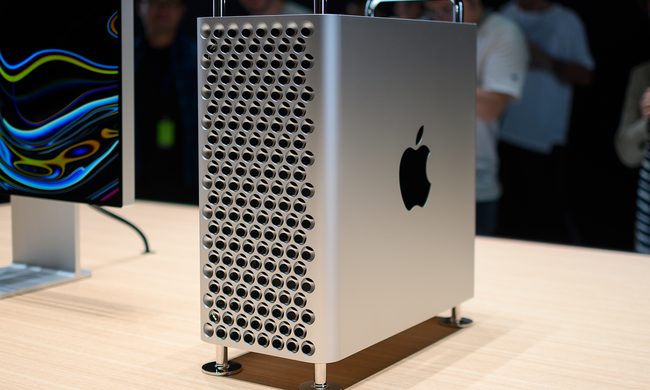
Apple's Mac Pro on a table at a press event.

Apple discontinued the Mac Pro earlier this year, ending a 20-year run for a computer that once represented the very best of the company’s desktop lineup. However, Apple reportedly had much bigger plans for the machine before ultimately replacing it with the Mac Studio.

According to Bloomberg’s Mark Gurman, Apple developed an M3 Extreme chip that could have offered twice as many CPU and GPU cores as the M3 Ultra. The processor was intended to sit above the Ultra tier and could have finally given the Mac Pro the performance advantage it badly needed. Apple eventually abandoned the chip due to concerns over production costs and limited demand for such an expensive machine.

Read more
Hidden prompts can secretly rewrite an AI’s memory, and researchers say that’s a serious problem
Researchers discover AI attack that rewrites an assistant's long-term memory
Chatbot on a smartphone.

Large language models are getting better at remembering us. Whether it's your preferred writing style, recurring tasks, shopping habits or project deadlines, AI assistants are increasingly storing long-term memories to make future conversations feel more personal and useful. But according to new research, that same feature could become one of AI's biggest security vulnerabilities.

Researchers from New Mexico State University have demonstrated a new attack called GhostWriter, capable of secretly planting false memories inside AI agents. Rather than stealing information outright, the attack manipulates what an AI remembers, potentially causing it to make dangerous decisions long after the original attack has taken place.

Read more
This experiment shows how easy it is to poison an open-weight AI model for under $100
This research raises new doubts about trusting open weight AI models.
Computer, Electronics, Laptop

Open-weight AI models have been having a moment lately. Just this month, Moonshot's massive Kimi K3 model landed close behind Claude Fable 5 and GPT 5.6 Sol in several benchmarks, all while remaining fully open-weight and downloadable by anyone.

However, Katie Paxton-Fear, a cybersecurity lecturer at Manchester Metropolitan University and staff security advocate at Semgrep, managed to poison an open-weight model and proved how easily that openness can be turned against you (via The Register).

Read more