Spotted by Google TV enthusiast blog GTV Hacker yesterday, the group discovered FCC documentation for a new set-top box from Netgear that’s powered by Google TV. Called the NeoTV Prime, it’s likely that the device will be a similar size and shape to Vizio’s Google TV-powered Co-Star as well as popular streaming boxes like the Roku 2 or Apple TV. Similar to competitors, the Netgear NeoTV Prime will offer 802.11n wireless connectivity for linking to a home’s wireless network to stream television shows and movies.
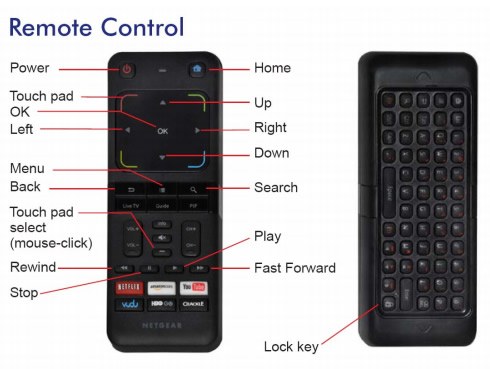 In addition, the unit offers Bluetooth 3.0 connectivity specifically for the remote control. According to the pictures included with the FCC documentation, the remote control for the Netgear NeoTV Prime includes a full QWERTY keyboard on the back of the device.
There’s also a lock button added to the keyboard that will help users avoid clicking letters while operating the buttons on the front of the remote. On the front side, users will find a directional touchpad, menu buttons, volume buttons, channel buttons and video control buttons.
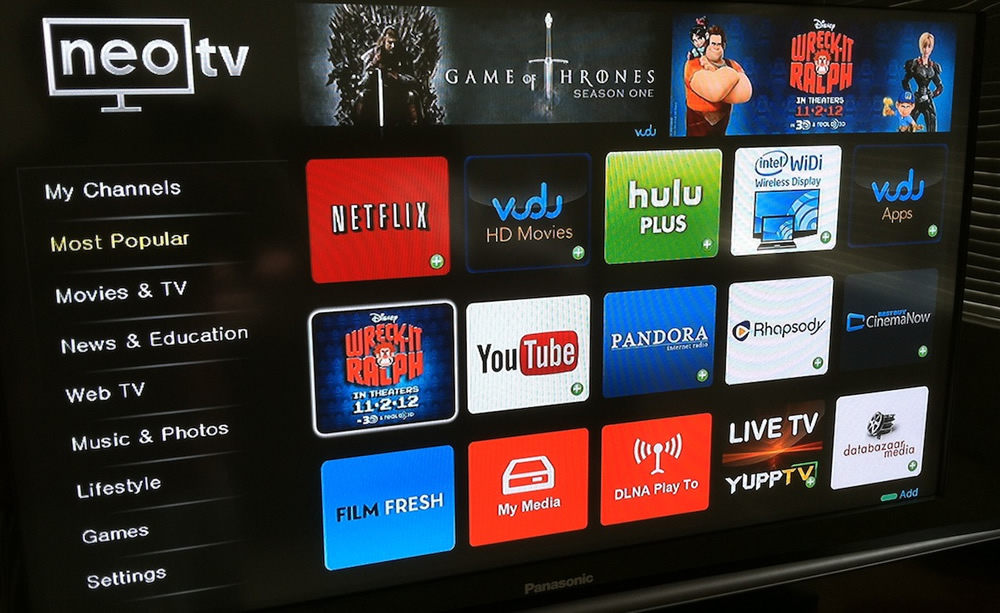
At the bottom of the remote, Netgear has included six application buttons that will likely launch Netflix, Amazon, YouTube, Vudu, HBO GO and Crackle. The inclusion of the Amazon and HBO GO buttons is an indication that Netgear will announce support for those applications when the NeoTV Prime is officially announced. Up to this point, both Amazon and HBO GO aren’t available in the channel lineup of the NeoTv line of streaming set-top boxes. According to Engadget, the device is currently in beta testing and those buttons launch the Web applications immediately.
Prior to the discovery of the Netgear NeoTV Prime, Endgaget also found FCC documentation for a similar Google TV-powered ASUS set-top box or dongle. Called the ASUS Qube, it’s likely that both ASUS and Netgear will officially announce these Google TV-powered devices at CES 2013 and show off the new hardware on the show floor.