

Created by product development firm Cambridge Consultants, the DropTag is an inexpensive sensor that keeps track of how packages are handled when being transported by delivery companies like Fedex, UPS or the United States Postal Service. Utilizing low-power Bluetooth for communication and tracking, the small DropTag sensor can be packaged inside a box or attached to the outside of the package prior to shipment. During the journey, the sensor will record each time the package is dropped as well as shook. The sensitivity of the sensor can be adjusted by the user to measure something as harmless as general motion up to extremely catastrophic drops that could result in major damage of the package contents.
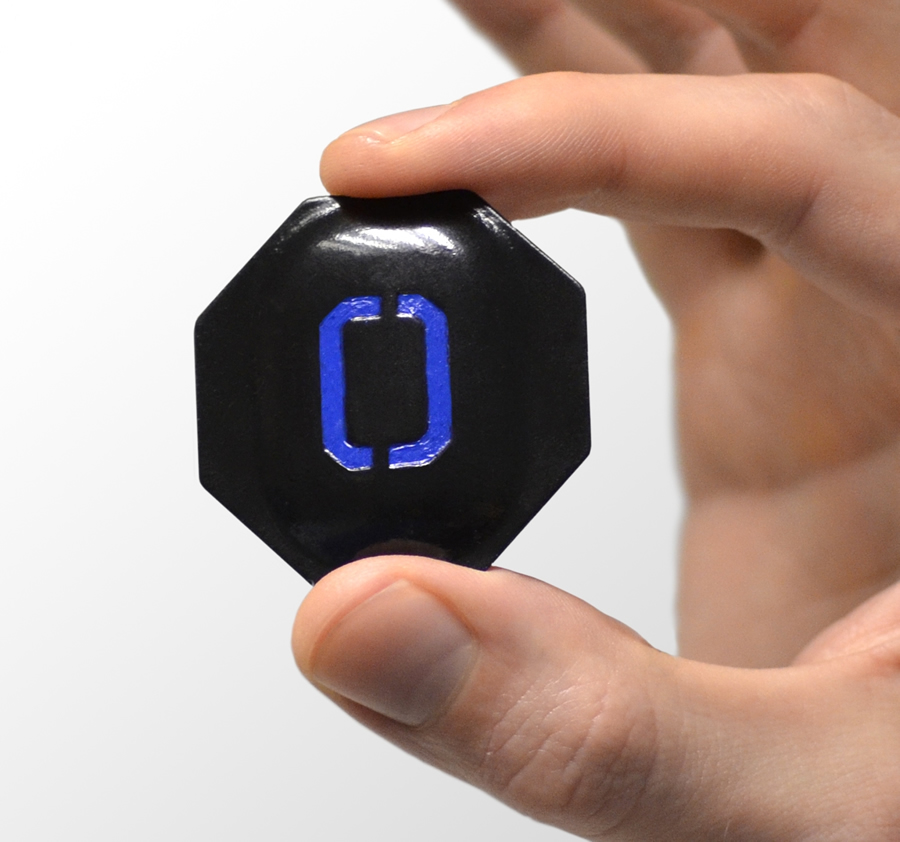 Once the package arrives within 150 feet of the recipient, the DropTag will relay all data to the recipient’s smartphone over the Bluetooth connection. Using a simple interface, the smartphone application would indicate if the package was handled properly or dropped along the way. Assuming the recipient is available to receive a package that requires a signature, they will be able to check to see if the contents are intact before signing off on the delivery.
In addition, the recipient would have a very specific set of data points that could be used as evidence of negligence on the part of the shipping company. However, if the shipping company delivered the package without incident, the recipient could go after the person or company that originally sent the broken item. This could be useful for e-commerce transactions in which the recipient doesn’t have a preexisting, direct relationship with the sender.
Beyond helping the general public, a shipping company like UPS or Fedex could utilize these sensors to improve internal quality control. By setting up Bluetooth-enabled checkpoints within warehouses, the condition of all packages utilizing the DropTag sensor would be automatically tracked. This data could tie directly into reports about employee performance and allow management to specifically isolate employees that are dropping tons of packages. However, before any process changes are made, the shipping company would likely weigh the cost of implementing this sensor technology against the total yearly cost of reimbursing customers for negligence.
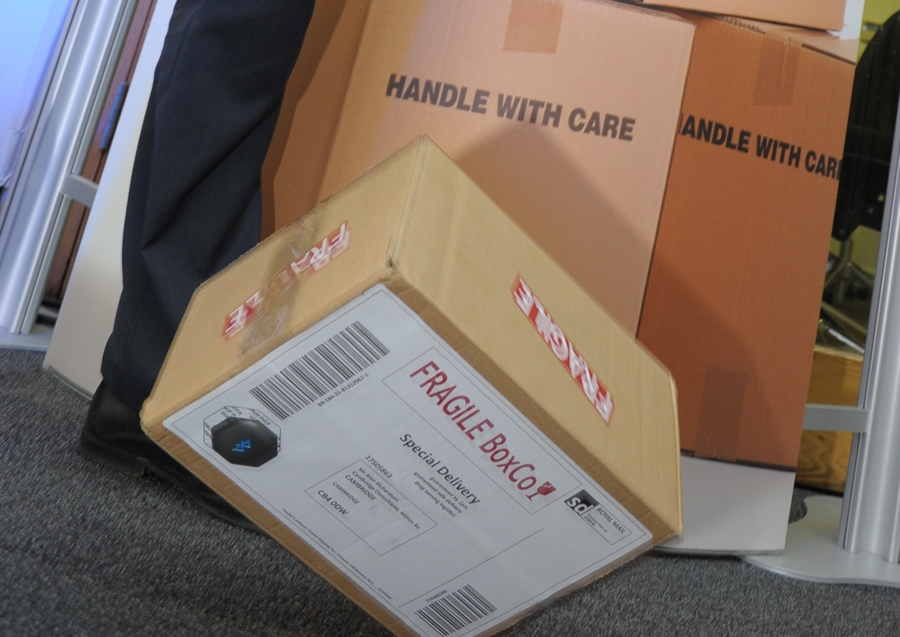 Regarding the cost of each sensor, Cambridge Consultants business development manager Tom Lawrie-Fussey stated “By minimizing the complexity of the electronics in DropTag, we’ve calculated that DropTag could analyze and log crucial events for many weeks using just a single coin-cell battery and could even perhaps be reused.”
Lawrie-Fussey continued “By keeping it simple, we’re confident that the material cost would be less than $2, making it a very affordable addition that would add significant value to the consumer and distributor alike.”
In addition to tracking drops, Lawrie-Fussey indicated that the simple interaction between the Bluetooth sensor and a GPS-enabled smart device could also lead to real-time package tracking. Assuming a delivery person carried a GPS-enabled device with them at all times, consumers could view exactly where a package is located rather than simply relying on general updates each time the package label is scanned by the shipping company. Representatives of Cambridge Consultants haven’t indicated when the DropTag will be available to consumers, but plan on showing the device at a technology trade show in Germany during April 2013.


