
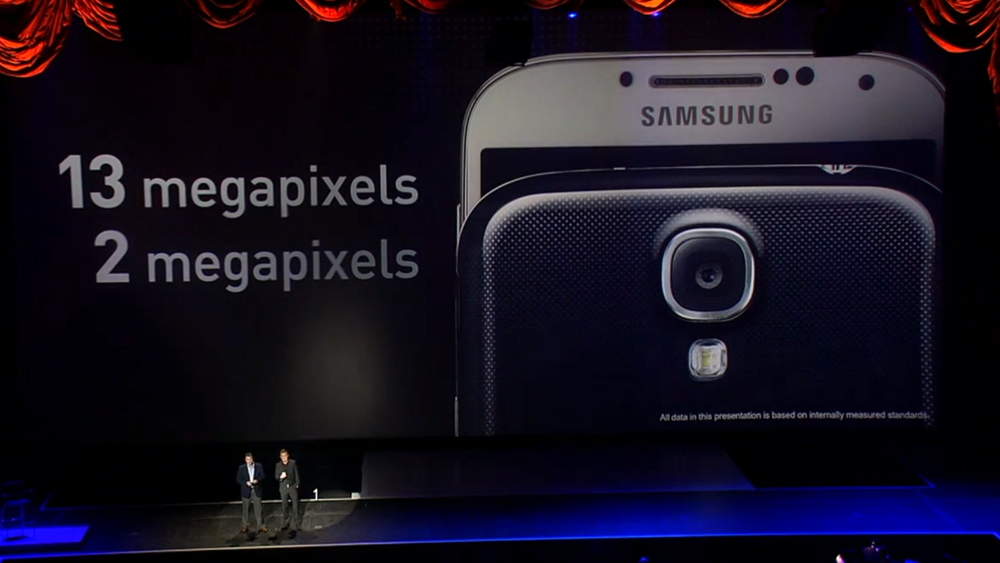
Samsung put on an event worth capturing on camera to announce the Samsung Galaxy S4. This is fitting since one of the big areas of focus for the latest handset to bare the Galaxy S name. The camera itself was upgraded, with rear-facing camera getting boosted to 13-megapixels, but that was one of the least interesting things about the Galaxy S4’s picture snapper. It’s all about the features that complement the captures, and it’s got tons of new ones.
Possibly the most impressive feature to get rolled out with the Galaxy S4’s camera is Duel Camera record, which does pretty much exactly what the name infers: It lets you capture footage from both the rear and the front-facing camera. This was designed to solve the problem of excluding the cameraperson from being in the video or photo by adding the actions of the person behind the camera into its own frame that plays in unison with the main camera’s footage. This duel camera feature can also be used in video calls, allowing the person on the other line to see what you’re seeing during the call. Ryan Bidan described the feature as being “like adding another dimension of detail to the memory you’re creating,” which doesn’t quite live up to the 3D camera rumor, but we’ll take it.
Capturing it all is a theme of the Galaxy S4’s camera features, as evidenced by its many new shooting modes. Highlighting these include a function that makes it possible to capture more than 100 shots in just four seconds. You can then browse all those captures and pick your favorites to put into a single frame composite picture or save them all as a homemade .gif with Drama Shot. This is just one of twelve shooting modes. This includes another called Sound and Shot, which captures voice and pictures together.
Of course, sometimes you’ll capture things that you don’t really want in your photo. That’s where the new Eraser feature comes in. It allows you to completely eliminate a part of your snapshot that you didn’t see when lining up the shot. This tool will be the worst enemy of photo bombers everywhere.
Because Samsung assumes this new camera and all its features will be enough to tempt you to take quite a few snapshots – and they aren’t wrong in thinking that – the company has also improved the way you view your pictures. Air View, a feature borrowed from the Galaxy Note II, gives users control over browsing their photos and preview them by simply hovering overhead with a finger. This function is available across the phone, but will allow users to quickly preview photos and videos from their galleries without taps or swipes.
Another new feature takes the old adage “a picture is worth a thousand words” and tries to make a full-length novel. By taking geo-tagged information from photos, users can create Story Albums. These are collections of pictures from a certain trip or at a specific location that are designed to act as digital keepsakes of the memories there. A built-in feature with Story Albums allows them to leave the digital realm and become physical prints with a couple quick taps.
There are sure to be other modes worth exploring on the Galaxy S4’s camera, and we’ll definitely want to see what it’s capable of in different lighting and situations. But based just off the features shown at the launch event, it seems like Samsung sunk a lot of effort into making the Galaxy S4’s camera something special. We’ll see if it looked better in our memory or if it will be creating them when the phone arrives in April.


