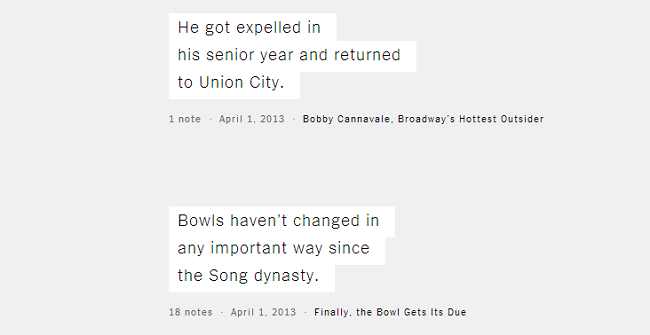
 Amid an onslaught of April Fools’ marketing initiatives that range from silly to insipid to just-stop-it-already-PR-people-we-get-it-you-know-how-to-use-the-Internet, the New York Times released something today that is both funny and genuinely awesome – a haiku bot.
The bot takes lines from stories that make the front page and turns them into haiku (if you forgot about 11th grade English, haiku is a poetry format of three lines, with a five syllables – seven syllables – five syllables configuration, often with an element of juxtaposition in the verbal imagery). On the New York Times Haiku site, short, clipped snippets arranged out of context are occasionally flat but mostly weird and funny. It’s like if @horse_ebooks got sent to an MFA program.
Some of them seem like they could be crafted by a reaching but promising high school English student: 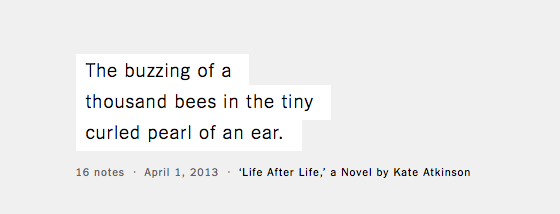
While others are funny and very obviously culled from a lifestyle story:
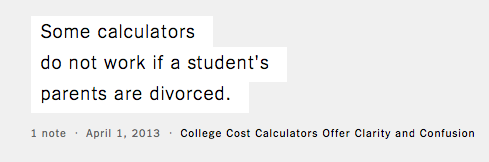
 And others still are kind of sad and great:
Senior software architect at the New York Times Jacob Harris built the bot, but explained that they don’t throw each haiku on the blog – Times employees comb through for the best ones, and they changed the algorithm to take some idiosyncratic vocabulary into account. As Harris notes, “We started with a basic rhyming lexicon, but over time we’ve added syllable counts for words like Rihanna.”
Pro tip: if you ran out of the amount of free articles you can read on the New York Times website a month but you still want to check them out, this bot is an access point – but it probably makes more sense to pay for a subscription instead of scrolling aimlessly through poetry-ified stories.
Not everyone is happy about this project … because some people are grumps. For instance, this guy had some harsh words for Harris:
The @nytimes builds headline-to-haiku auto-generator. Welcomes National Poetry Month by punching poetry in the face.niemanlab.org/2013/04/not-an…
— N Swartzendruber (@fishpatrol) April 1, 2013
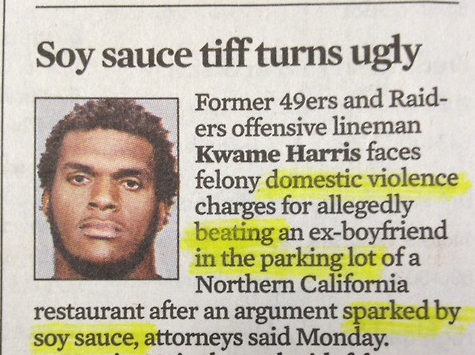
Another chuffed poetry lover told Harris his project wasn’t as good as a Tumblr devoted to making haikus out of newspaper articles. That project, called Hidden Haiku, allows people to turn in submissions by highlighting the parts of the article they find haiku-worthy:
We think there’s room in the world for both projects.