

Samsung’s hotly-anticipated Galaxy S4 smartphone will sport a bunch of new features when it launches later this month — including a high-density 5-inch display, touch-free interaction, and split-screen apps. It will also be the first device to launch with Samsung Knox, a security platform to enable businesses, schools, government and other organizations to lock down and manage their devices, plus keep personal and corporate data securely separated on mobile devices, a bit like BlackBerry Balance. But there’s a twist: Samsung Knox will be including persistent security technology from Canada’s Absolute Software in the firmware of its flagship Galaxy products. That’s the same company that makes LoJack for Laptops.
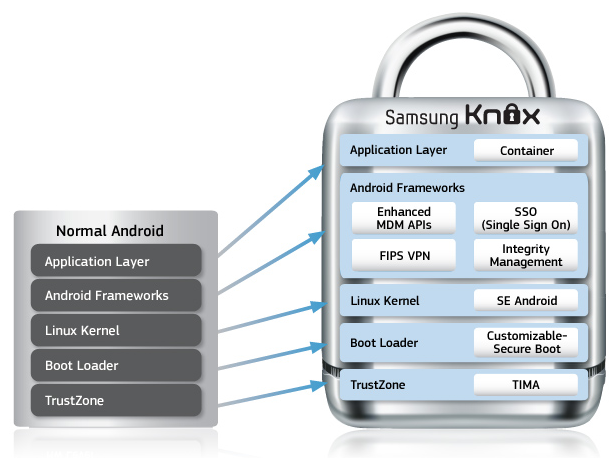
Why do you care? Samsung Knox marks the first time a device maker has moved to substantially enhance Android’s security profile — it’s calling it SE Android, for “Security Enhanced”. (Knox is named for Fort Knox, get it?) It’s also the first time a smartphone will ship with embedded software that can remotely wipe, track, and potentially recover devices.
“A vendor needed to step up and complete the security of Android, and I think Samsung has done that,” said Absolute Software CEO John Livingston in a phone interview. “We’re very excited to be working closely with Samsung. They’ve really taken a leadership position to get this functionality into their devices.”
Like LoJack for Laptops, Absolute’s embedded security software can track and potentially recover a device that’s been lost or stolen virtually anywhere in the world; it can also be used to remotely lock or wipe out all data on a device. But it’s not an ordinary app that can just be deleted: If a clever thief wipes or resets a protected device, Absolute’s persistence technology essentially re-spawns, pulling a new copy out of firmware.
The partnership with Samsung is the first time Absolute’s persistence technology has been put into smartphones or tablets, but Absolute isn’t new to the game. The company has been making embedded security for the Intel PC world for many years, and counts most major PC makers as partners.
Samsung Knox will be aimed at vertical markets (like schools, corporations, governments, and health care), but the embedded software will be in all Samsung’s flagship Galaxy devices, whether they’re procured by IT departments or picked up at Walmart. That means folks bringing personal smartphones and tablets to work will have the have the same high-end security as “enterprise” devices.
Even though the software will be embedded in Galaxy devices, the system will not be tracking location or activity out of the box.
“We ship the tracking software turned off, and only the owner can turn it on,” said Livingston. “We’re very committed to data privacy — it’s critical to our business to ensure that all data is private.”
Activating the Absolute’s embedded security software will be a paid service: the “owner” would be an organization paying about $80 for three years, with lower rates for volume customers. However, the service could expand to everyday owners of Galaxy devices.
“Smartphone and tablet tracking and recovery services are something consumers are asking for and want,” said Livingston. “We will be working with Samsung to take protection services to carriers and telcos, and bring it to a broader consumer market.”
In that scenario, consumers might pay for tracking, recovery, and remote wiping services as part of their mobile service plan, activating (or de-activating) the service as they see fit.
What’s the appeal? After all, plenty of tracking and monitoring solutions are available for Android — for instance, Prey, Lookout, and Plan B are free. Samsung’s upcoming Galaxy devices should have an edge, though, with regenerating security software right in the firmware. Further, users bringing personal Galaxy devices to work will have a better chance of being able to work with their employers’ device-management systems — including a separate, encrypted container for work-related stuff separate from their own apps, email, photos, and media.
Hopefully, by embedding security capabilities deep in Galaxy devices, Samsung is also opening the door to powerful options for everyday customers to secure, track, or remote-wipe their smartphones and tablets if they’re lost or stolen. That’d be a win for everybody.


