Agree? Disagree? Sound off in the comments below, and for the “pro” side of the argument, check out “Why Free-to-Play is here to stay.”
“Free-to-play.” Google knows how I spend my free time and has decided I’m the ideal target for these three words. I see them plastered above bare midriffs, strewn across battlefields and underlined by laser guns. All of the extremes of gaming, shrunk down to bite size and served to me – for free!
According to some talking heads this bait will be the game industry’s savior. By luring players in with free playtime (then bombarding them with microtransactions) games can custom-tailor monetization to fit almost any player. At least, that’s how the pitch goes. So why do I feel annoyance instead of excitement when “free” appears?
Pay-to-win
Developers working on a free-to-play games walk a tightrope. To attract money from players worthwhile rewards must be offered, yet gamers despise the idea that another might gain an edge because they pay more money.
This is a serious and difficult problem. As a player, I’ve experienced firsthand the frustration of being killed by a weapon I don’t have because I didn’t pay. On occasion, I’ve quit a free game for this reason, writing it off without paying a cent. Who wants to play against a stacked deck?
Worse, balance is a problem that can never be universally solved. Every game is different, which means balance is different, and solutions used in one game won’t work in another. Balance is difficult enough for a developer to perfect without worrying about how players who pay less stack up against players who pay more. Pay-to-win will always be an issue when micro-transactions can be used to purchase items relevant to gameplay.
Divided attention
Developers working on a free-to-play game aren’t just creating a game, they’re also building an online store. And that means support, marketing, and security concerns that developers don’t normally deal with.
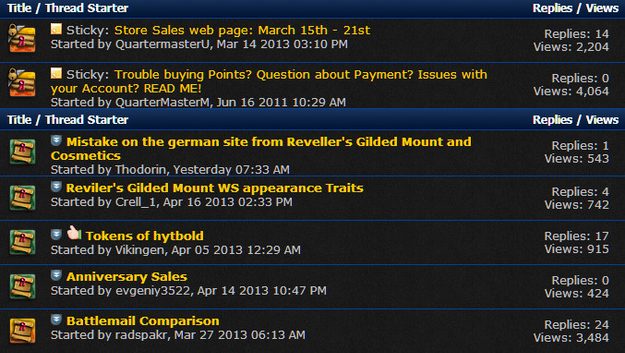
For small titles, with small stores, this problem is minimal. But complex games with many players often run into problems. Visit the forums for Turbine’s free-to-play games and you’ll see that they have support forums set up specifically for in-game stores. Most of the posts are, predictably, complaints or requests for customer support.
Issues related to free-to-play can even create problems where there’d normally be none; in Lord of the Rings Online, for example, some subscribers had trouble getting the Turbine Points owed to them on time (and I’m among their number). A small problem, yes – but one that casts the game in a poor light. In the recently launched Defiance there were issues with purchased weapons and items disappearing from inventories. This issues has supposedly been corrected, but once you are burned by a microtransaction it is hard to trust them again – and Defiance is a full retail release with a $60 price tag and resources many don’t have.
I can’t help but wonder if managing the in-game store takes away from time and money that could otherwise be spent on content for subscribers.
Moving the goal posts
Games are entertainment. They’re created to provide an experience that is fun, engaging, intense, or all three. If a game doesn’t work as entertainment it fails, so developers focus on reducing frustration and increasing fun. Many gameplay concepts gamers take for granted – from fast-travel to frequent checkpoints – exist to make games more entertaining.
Free-to-play, however, moves the goal posts. The aim is no longer entertainment; instead, monetization is the goal. A minimal level of entertainment is required, sure, but only because a game with no players makes no money.
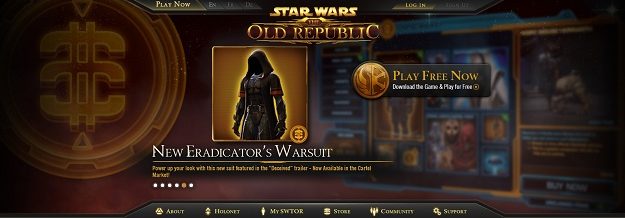
The effects of this change can be felt in most free-to-play games. Repair costs in Star Wars: The Old Republic have gone up, yet the new end-game dailies reward little cash. The Lord of the Rings Online provides fast travel to quests, but only for a fee. Hawken’s useful countermeasures have limited charge and must be periodically re-purchased. In a full subscription or retail game the purposeful exclusion of convenience would be considered a flaw. With free-to-play, it’s just part of the game.
Don’t get me wrong; free-to-play games can be fun, and I’m a fan of all the games I listed. I just believe the entertainment these games offer is compromised by monetization. Free-to-play, by its very nature, demands that gameplay take a seat behind marketing.
Class warfare
When Star Wars: The Old Republic went free-to-play I decided to log in and see what had changed. At the time, the answer was “not much,” but while touring Hoth I noticed public chat was strangely active. The topic? Animosity between paying and free players. Paid players were not happy with the “space-poors” and “newbs” logging in to steal their kills, clutter their server and generally get in the way.
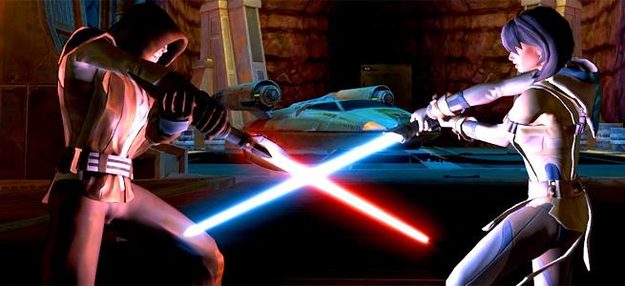
Such anger might seems strange, but tribalism is hardly a new trend in online games, and the paid players also have a practical point. Free players are not as powerful as paying players, can’t access operations (the game’s group content) or PvP, and can only lead an underclass of free-to-play guilds. There’s not much reason to befriend players who don’t subscribe.
Other games have shown the division, as well. I’ve also witnessed paid-vs-free animosity in Tribes: Ascend, Hawken and Blacklight: Retribution. Free players are supposed to provide paid players with content (more people to shoot), but their existence can fracture a game’s community.
Free-to-play isn’t going away, but…
Mark Jacobs, known for his work on Dark Age of Camelot and Warhammer Online, recently predicted a free-to-play apocalypse. He stated in an interview that “free-to-play will become just another model” and warned that “you’re going to see a lot of developers shutting down.”
I agree. The hype around free games can make one forget that the model is based on hope. Make the game free, then hope that enough players pay to create a sustainable title. Yet firm data simply doesn’t exist. How much money does the average player spend? How often do free players turn into long-term customers? Do player numbers tend to go up after the initial free-to-play release or spiral down? What are the costs of running an in-game store? The answers to these questions are unknown.
But I don’t think we need to know. The only question that must be asked is this: does free-to-play make games more entertaining? I think the answer is no. And if the answer is no, free-to-play is “just another model.” One that is here to stay, no doubt, but certainly not the future of gaming.
Image credit: Jon Candy/Flickr