  1. Home
  2. Audio / Video
  3. Legacy Archives

Peachtree Audio launching new deepblue three-way Bluetooth speaker

Add as a preferred source on Google

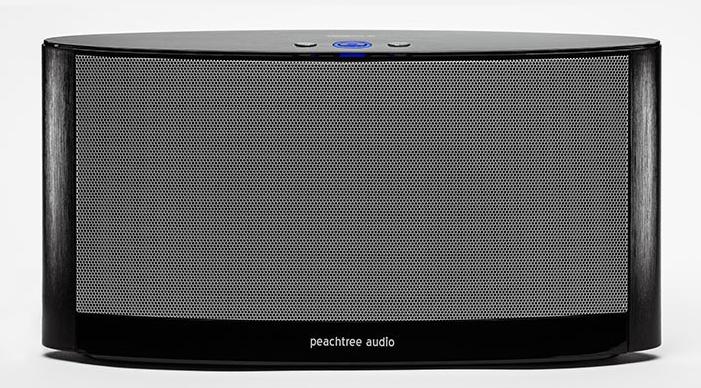
Peachtree Audio deepblue 

Peachtree Audio has introduced a new three-way Bluetooth speaker it’s calling deepblue, a single-box system that is meant to offer big sound in a small package. If that sounds like a familiar tag line, it is. But Peachtree has a way of producing audio gear that sounds spectacular, and that has us taking a close look at this speaker with some eager anticipation of hearing it soon. 

Recommended Videos

The deepblue has five custom speakers with a 6.5-inch bass driver, two 3-inch mid-range drivers and two 1-inch soft dome tweeters — hence, where Peachtree forms “a true three-way speaker”. For power, it has a 240 watt five-channel amplifier, which is double what you would typically find in most wireless speakers, according to the company.

While Bluetooth is the focus, the 3.5mm audio input ensures that the unit will work with a simple wired connection, too. The remote has been simplified by offering 12 buttons for control, with just three on the deepblue itself. Devices with AVRCP, which is short for the audio/video remote control profile found in later Bluetooth protocols and most smartphones, means you can control your music playback via the remote instead of the phone, if need be.

Peachtree also added a four-step digital bass equalizer to the deepblue, which is supposed to adjust the bass to sound just right, regardless of what song is playing and what room it’s in. A 17-step volume control offers more precise volume, while the digital signal processor plays around with the frequency response to ensure nothing comes out distorted.

“deepblue uses the most powerful amplifier in its class and overbuilt custom speakers to produce a surprising amount of sound. People’s faces light up when they hear deepblue,” said Jonathan Derda, Director of Training for Peachtree Audio. “Our engineers exploited the laws of physics and tweaked the Digital Signal Processing to produce a level of sound quality that is unlike any other wireless speaker currently on the market.”

The deepblue speaker will come in black or gray and sell for $400 from Peachtree’s website and select retailers starting in June.

Ted Kritsonis
A tech journalism vet, Ted covers has written for a number of publications in Canada and the U.S. Ted loves hockey, history…
Topics
Sony returns to the professional IEM market with the IER-M500
Featuring a new dynamic driver, high passive noise isolation, and a stage-ready design, the IER-M500 targets live performers.
Sony IER-M500 Launched Featured in use by artists

Sony is officially back in the professional in-ear monitor (IEM) space. The company has announced the IER-M500, a new pair of stage-focused earphones designed for everyone from aspiring musicians to seasoned performers. Rather than chasing features like active noise cancellation or spatial audio for casual listening, the IER-M500 is built with one goal in mind: helping artists hear themselves clearly during live performances.

Built for the stage, not the daily commute

Read more
Sony revives the RX10 with AI autofocus, 4K 120fps, and a longer-lasting battery
It comes with AI that tracks birds mid-flight and provides 25x optical zoom with no lens changes required.
Sony RX10 V featured image

Sony just revived its most beloved all-in-one body camera with autofocusing AI from its professional Alpha mirrorless lineup.

Everything that made the previous generations great is still there. The ZEISS Vario-Sonnar T* lens covering 24mm to 600mm at F2.4 to 4.0, the 1.0-type stacked sensor, and the compact form factor. 

Read more
Spotify finally lets you pin more than four items in your library, and it only took a few years
Spotify's most embarrassingly overdue fix just happened, and it's available for free users too.
The atlantic article playing on spotify

Spotify has raised the limit on pinned items in Your Library from four to 20. Yes, you read that right.

For years, Spotify thought four items were sufficient, even as users asked for more, and today the company finally caved. Credit where it's due: 20 is actually a meaningful number.

Read more