1. Home
  2. Mobile
  3. Phones
  4. News

Google Pixel 10 pulls off an iPhone MagSafe trick with more style

MagSafe for Android? Nope. This is Google Pixelsnap.

Add as a preferred source on Google
Ring snap on the Google Pixel 10.
Google

Google has finally lifted the covers from its Pixel 10 series phones, arming them with a faster silicon, better camera, and loads of meaningful AI features. But the star of the show is the next-gen charging wireless system, which is going to finally address the yearnings of an Apple MagSafe-like facility for all Android fans out there.

What is changing? 

Back in 2023, a new wireless charging standard called Qi2 was announced, promising faster top-up speeds and a system of built-in magnets (within the phone and the charging device) so that both the devices are locked tightly in place and offer stable contact for wireless power transfer. 

But so far, no mainstream smartphone brand has delivered phones that natively support Qi2 wireless charging, with the exception of HMD Skyline. The situation has been messy so far. Samsung’s Galaxy S25 series phones are merely Qi2-ready, which means you will need to put a magnetic case on these phones. Apple, on the other hand, has been offering the facility under the MagSafe name for years. 

With the Pixel 10 series, Android phones are finally embracing the full Qi2 experience. On the Pixel 10 series phones, you will find magnets fitted underneath the real glass shell to allow the magnetic contact. Google, however, is marketing it under the Pixelsnap branding, an ecosystem that includes a charging puck, stand, protective cases, and a minimalist round kickstand. 

Why does it matter?

I love the fact that Google came prepared with Qi2 support across the board on the Pixel 10 series. Whether you go commando or slap a protective case on the Pixel 10, you won’t miss out on the Qi2 wireless charging perk. You’re good to go, without or without the Pixelsnap accessories.

Thanks to support for Qi2 charging, the wireless charging speeds have reached 15W, and these can be achieved with any Qi2 certified charger out there. The ecosystem of Qi2 certified third-party accessories is pretty buzzy already. And that means you no longer have to stick with wireless charging accessories sold by Google only.

Interestingly, the Pixel 10 Pro XL goes the extra mile and enables 25W wireless charging, thanks to Qi2.2 support. You can already buy a whole bunch of compatible 25W Qi2.2 chargers and stands from brands like Belkin and Anker among others. Just make sure that you are using a 20W or higher charger to get 15W wireless charging output, and a minimum 35W USB-C power brick to achieve 25W top-up speed on the Pixel 10 Pro XL. 

Nadeem Sarwar
Nadeem is the Managing Editor at Digital Trends.
The best phones in 2026: our 14 favorite smartphones right now
We tested phones across all price brackets so that you can make the best pick based on your needs and budget.
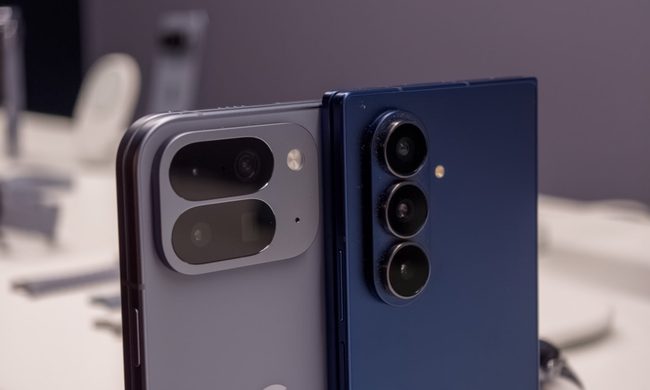
Google Pixel 10 Pro Fold vs Galaxy Z Fold 7 cameras

Choosing the right smartphone in 2026 is no easy task. Apple and Android manufacturers now have strong options at almost every price, while better cameras, longer battery life, improved software support, new AI features, and more refined foldable designs have made the market more competitive than ever. But picking one is not easy, especially if your budget is tight, or you are just legitimately concerned about getting the best value for your money and need a reliable daily driver for long-term usage.

We have tested and compared the leading smartphones available today, looking beyond the spec sheet to see how they actually perform in daily use. Camera quality, battery life, performance, display quality, software, design, and long-term value all play a part in our recommendations. Whether you are looking for a powerful flagship, a dependable budget phone, a compact device, or a foldable, this guide should help narrow down your choices.

Read more
Snapchat Planets Meaning: Order, Rankings, and How Friend Solar System Works
Snapchat Planets turns your best friends list into a solar system, and yes, your orbit says a lot
Snapchat Planets being shown on the Snapchat app on iPhone.

Snapchat+ includes several exclusive features, but few have generated as much curiosity as Snapchat Planets. Part of the app's Friend Solar System, it transforms your Best Friends list into a planetary ranking, assigning each of your top eight friends a planet based on how often you interact.

From Mercury, which represents your closest friend, to Neptune, which represents your eighth closest, the system offers a quick visual snapshot of your interactions. But what do the different planets actually mean, and how does Snapchat decide who gets which one?

Read more
How to use WhatsApp Web
We'll show you how to use WhatsApp on your desktop or laptop
WhatsApp Web

As one of the most popular messaging services, you’ve already heard of WhatsApp. From its humble beginnings in 2009—two years before Apple introduced iMessage—to its acquisition by Facebook (now Meta) in 2014, WhatsApp has become the dominant messaging platform around the globe.

In recent years, it's grown even more potent with new features like video messages, self-destructing voice messages, the ability to edit sent messages, and more. We even finally got an WhatsApp iPad app in May 2025.

Read more