Exploding through a $69,000 goal on Kickstarter and rapidly heading towards the $1,000,000 mark with more than six weeks to go, Plug is a network connected device that allows you to convert a portable hard drive into private cloud storage shared between your personal computer, work computer, tablet and smartphone. While there’s always elements of risk when using third party cloud storage services like Dropbox, the creators of Plug are attempting to create a more secure cloud service to preserve all of your data.
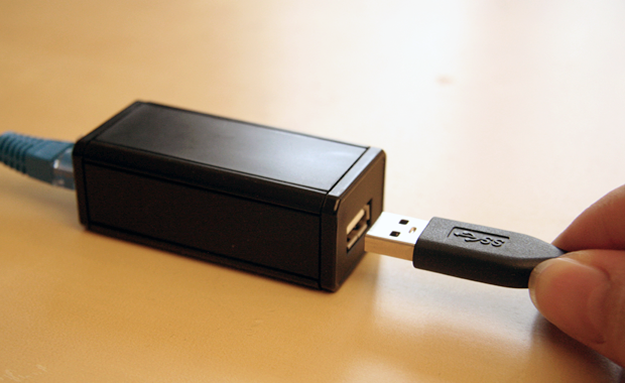
To get started with the Linux-powered Plug, all the user has to do is connect the small device to the home’s router using an Ethernet cord and connect a storage device to the opposite side via USB. In addition, the user can connect multiple storage devices to the Plug by adding a USB hub. After the user installs the Plug application on their computers and mobile devices, files can be shared, snyced, downloaded and uploaded on all the user’s devices. The concept is pretty much identical to Box.com, Google Drive, Microsoft Skydrive or any other cloud storage service.
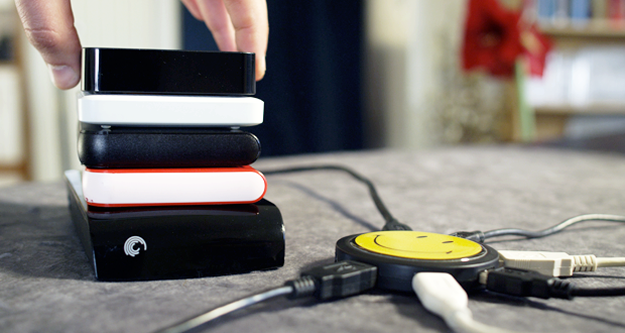
One of the main benefits to creating your own cloud storage is the potential to add tons of storage space. While a service like Dropbox charges $795 per year for unlimited space, a Plug user could simply spend $200 for an additional portable hard drive each time they needed an additional 4TB of space. However, it’s likely that most users won’t need any more than 1TB for the foreseeable future. Regarding drive failure or electricity outages, you could also purchase a second Plug installed at another location in order to have a backup of all your data.
Each time you access and change a file using Plug, that version of the file is stored at home. If you happen to make a mistake overwriting a file, you have the ability to roll back to an older version if needed. If you need to send files to another person, the creators have included a file sharing tool that simplifies transfers of large quantities of data like photos or video. It likely sends a private link over email that allows the recipient to download data off the connected hard drive.
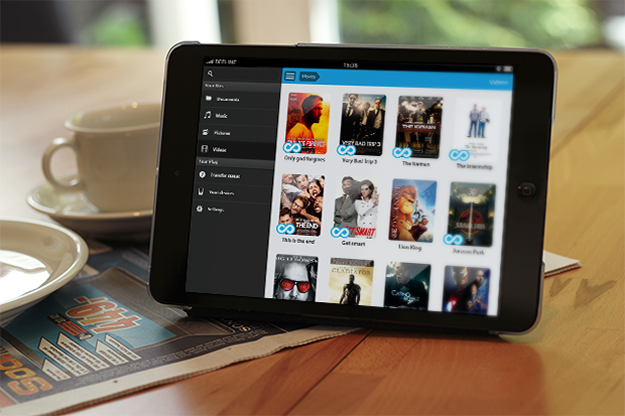
In addition, users have the ability to stream media from your home storage device. If you have tons of movie rips on your external device, you can stream that video on a mobile device like an iPad assuming the video formats are compatible. The mobile application for tablets and smartphones organizes the data by file type, thus allowing users to browse through all their photos, videos or music in one place. Regarding the tech used within the Plug, all your devices connect over an asymmetric encrypted VPN. When it comes to speed, the creators have opted for USB 2.0 over USB 3.0, specifically to keep the cost of the device down.
According to the Kickstarter project page, the first batch of the Plug device should head out to backers by December 2013. The cheapest contribution level is currently $79 and the device is expected to retail for $150 after the project comes to a close. The creators of the plug are offering multiple color options as stretch goals as the total funding level climbs to $1 million. While the Plug team has included a project timeline for the development of the hardware and software, be aware that delays in manufacturing often push back delivery dates of Kickstarter-funded products by weeks or even months.