Last month, Google announced the new Pixel Watch 4 alongside its new Pixel 10 family featuring the Pixel 10, Pixel 10 Pro, Pixel 10 Pro XL, and the Pixel 10 Pro Fold.
The phones took center stage at the Jimmy Fallon-hosted press event in New York, particularly thanks to the new MagSafe-like Pixelsnap magnetic wireless charging feature and a 100x zoom feature designed to challenge the best smartphone cameras from Samsung and Oppo.
Despite taking a backseat to its cellular siblings, the Pixel Watch 4 is fantastic in its own right, and three features have me excited for its launch in early October. This delayed launch means it will be released after the Apple Watch 11 and Apple Watch Ultra 3, which will be launched alongside the iPhone 17 series, including the ultra-thin iPhone 17 Air, next month.
Here are the features that Apple and other smartwatch makers should copy from the Pixel Watch 4.
Gemini-powered AI Fitbit Personal Health Coach

If there’s one feature that you’ll remember about the Pixel Watch 4, it’s probably Google’s new Gemini-powered AI Health Coach. I experienced a brief demonstration during the Pixel Watch 4 launch, and from what I saw, Google’s AI Health Coach is the health feature I was waiting for.
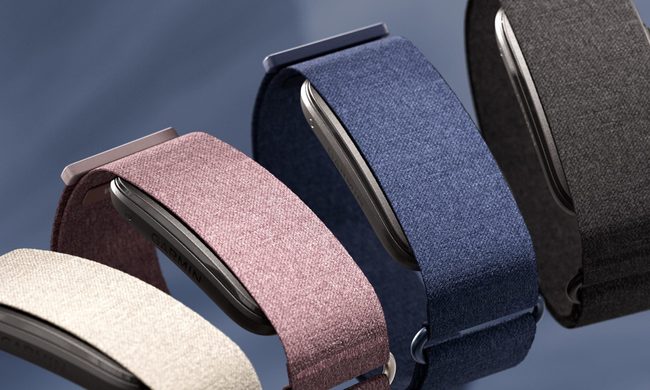
The premise of this feature is fantastic, and it matches similar AI health coaches on wearables like the Whoop 5 band and the Oura Ring 4. Built with Gemini, it analyzes all the data stored in the Fitbit app — including data collected from third-party devices connected via Health Connect — and enables on-demand and ongoing analysis.

Gemini already knows a lot about you, and as part of your fitness journey, it’ll help you evaluate and set your goals. Once your goals are set, the Fitbit personal health coach will analyze all available data and then provide recommendations on how to achieve the goal you’ve set.
Using live data from a Google employee — rather than a staged demonstration, as one might expect for a feature two months from launch — I was able to see the Fitbit Personal Health Coach in action. A simple request for advice on how to improve VO2Max levels — a measure of your aerobic fitness level — yielded trend data, recommendations, tailored exercise plans, and easy access to the underlying data.
This feature will inevitably need to evolve considerably over the coming years, but the Fitbit personal health coach has me excited for AI to come to our wearables. I hope it can consult my medical devices, like my CGM for glucose measurement, and provide recommendations that incorporate that data as well.
Standalone Satellite Communication

Beyond the Fitbit personal health coach, there’s one feature that could save your life in an emergency: the Pixel Watch 4 is the first to support Standalone Satellite Communication. It works the same way as the best phones, and can connect to satellites for emergency calls or texts.
The Pixel Watch 4 is powered by the Snapdragon W5 Gen 2 chipset, which utilizes the same 4nm SoC as the first-generation model and is designed to enable new features, such as Satellite communication, rather than providing a raw power boost. While the feature is only available on Pixel Watch 4 LTE models and in the contiguous United States, it could still be lifesaving for those who hike or climb in remote areas where a regular cell signal is unreliable.

During an emergency, the feature will activate if you attempt to make a 911 emergency call and it fails to connect due to a weak signal. The Pixel Watch 4 will ask you a series of brief questions to understand the nature of the emergency, and dispatch all of this information — as well as your GPS coordinates — to the emergency responders.
It’s an elegant way to implement this, and I have no concerns about its viability, especially since Google has partnered with Garmin. As discovered by DCRainMaker, the emergency response is powered by Garmin Response Center, which has deployed emergency services to help users of devices like the Garmin inReach in emergencies on more than 20,000 occasions since its inception.
Raise to talk for Gemini

I’m a firm believer that Gemini and AI are designed for the smartwatch form factor. Gemini first launched on the Pixel Watch 3 two months ago, and last month’s Galaxy Watch 8 series was the first to come with Gemini preloaded by default. With the Pixel Watch 4, Google has implemented a quality-of-life improvement that could make all the difference.
As the name suggests, the Pixel Watch 4 is the first to enable a new Raise-to-talk feature that lets you lift the Pixel Watch 4 to your face to activate Gemini, so you don’t need to use the “hey, Google” hotword. This makes it far more convenient, especially as it works extremely well. It’s a feature that every smartwatch maker should definitely copy.
Google’s AI coach could be the best use of AI on a wearable yet
Beyond these three major features, the Pixel Watch 4 also has a few additional enhancements, including a larger display, dual-band GPS, and wireless charging, which bring it on par with the best smartwatches, such as Samsung’s new Galaxy Watch 8 and Galaxy Watch 8 Classic.
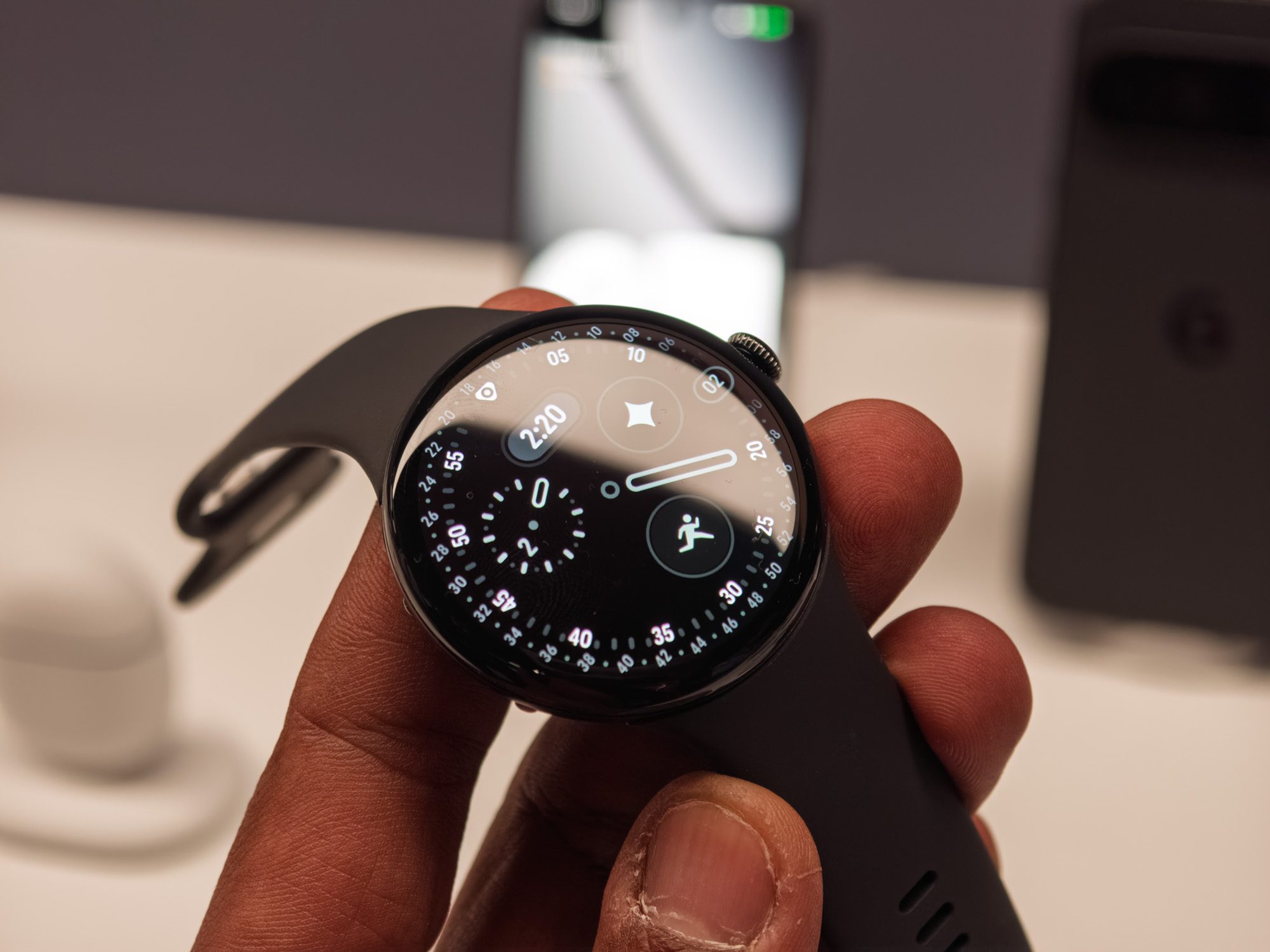
Google says the display features a 10% larger touchscreen than the Pixel Watch 3, while the bezels are 16% smaller. Combined, this makes the Pixel Watch 4 look particularly stylish, and a peak brightness of 3,000 nits matches the best from Samsung as well as the Apple Watch Ultra 2.
Google’s AI coach could be the best use of AI on a wearable yet, and we’re just months into Gemini on smartwatches.. The change to wireless charging also means the Pixel Watch 4 is far easier and faster to charge, and brings it in line with the competition. However, the charging puck is fairly small, and it may be challenging to obtain a spare charger if needed.