1. Home
  2. Computing
  3. Legacy Archives

Buying a MakerBot Digitizer? 3D scanners come with copyright strings attached

Add as a preferred source on Google

Yesterday, MakerBot announced the availability of its new Digitizer 3D Desktop Scanner. The concept is definitely a cool one: Take an object that’s up to 8 inches tall and 8 inches wide (and up to 6.6 pounds), place it on the scanner, and allow the Digitizer’s lasers to scan the object and output the 3D code to your 3D printer’s software. It’s basically reverse 3D printing.

However, as Forbes pointed out in a story today, it seems you can’t just go around 3D-scanning whatever you want and printing your own versions, as copyright infringement can come into play – bet you never thought of that. Say you just wanted to print your own version of that cute Partridge in a Pear Tree Salt and Pepper Shakers you bought from Pottery Bar. But scanning Pottery Barn’s product into your 3D printing software (and printing a replica) is technically not okay. 

Recommended Videos

According to Forbes, digital artist Joaquin Baldwin learned this the hard way. Baldwin used Shapeways, a 3D printing marketplace that prints your 3D files and sends you the finished product, to create a set of 3D-printed Final Fantasty VII figurines. Developer Square Enix, however, wasn’t too fond of that idea and issued a takedown notice to Shapeways.

Because 3D printing and scanning is just recently becoming popular and something that anyone can now do at home, there aren’t a whole lot of legal cases in which to base laws. However, according to Michael Weinberg of Public Knowledge, who wrote a white paper about legal issues with 3D printing, more and more small court cases will appear and will set legal precedents going forward. 

So what’s technically kosher in the world of 3D printing and scanning? According to Forbes the laws around 3D printing and scanning are complicated. If an object is purely decorative, it’s protected by copyright. Objects that serve a purpose, are, instead, covered by patents. Weinberg uses vases as an example, saying that a vase serves a purpose – to hold water and flowers – but it can also be a work of art. In this case, the vase itself isn’t a matter of copyright, but the designs on the outside are. Another example is a doorstop. “If the individual were to reproduce the entire doorstop, including the print and carvings, the original manufacturer may be able to bring a successful claim for copyright infringement,” Weinberg told Forbes. “However, if the individual simply reproduced the parts of the doorstop that he cared about – the size and angle of the doorstop – and omitted the decorative elements (the print and carving), it is unlikely that the original manufacturer would be able to successfully bring a copyright claim against the copier.”

Although we don’t necessarily condone it, we have a feeling that if you do end up 3D-scanning something with a unique design, and 3D-printing it for your own use, you’ll probably be okay as long as you don’t share the digital file online. You may want to avoid taking photos of the object and posting it on Instagram, too, just to be safe.

As desktop 3D printers and scanners become more common, the question of copyright will become more prevalent. Until there are clear-cut rules, use some discretion before scanning and printing a design that’s not yours. 

Jennifer Bergen
Former Computing Editor
Jennifer Bergen is the Computing Section Editor at Digital Trends and is in charge of all things laptops, desktops, and their…
Google Earth’s AI misadventure lasted only a day. It was a tale of dangerous ignorance.
Nuclear reactors, tanks, and historical destruction on a life-like satellite map? Yeah, that's bad.
Nano Banana AI image generator representation.

Technology behemoths are clearly not reading the room, or they are just moving faster than they should when it comes to AI deployment. Google has already stuffed its Gemini AI in every corner of its software stack, from Android to daily productivity tools like Gmail that are used by hundreds of millions of users every day. AI is everywhere. Not all of it is bad, mind you. But in a few places, it just feels forced.

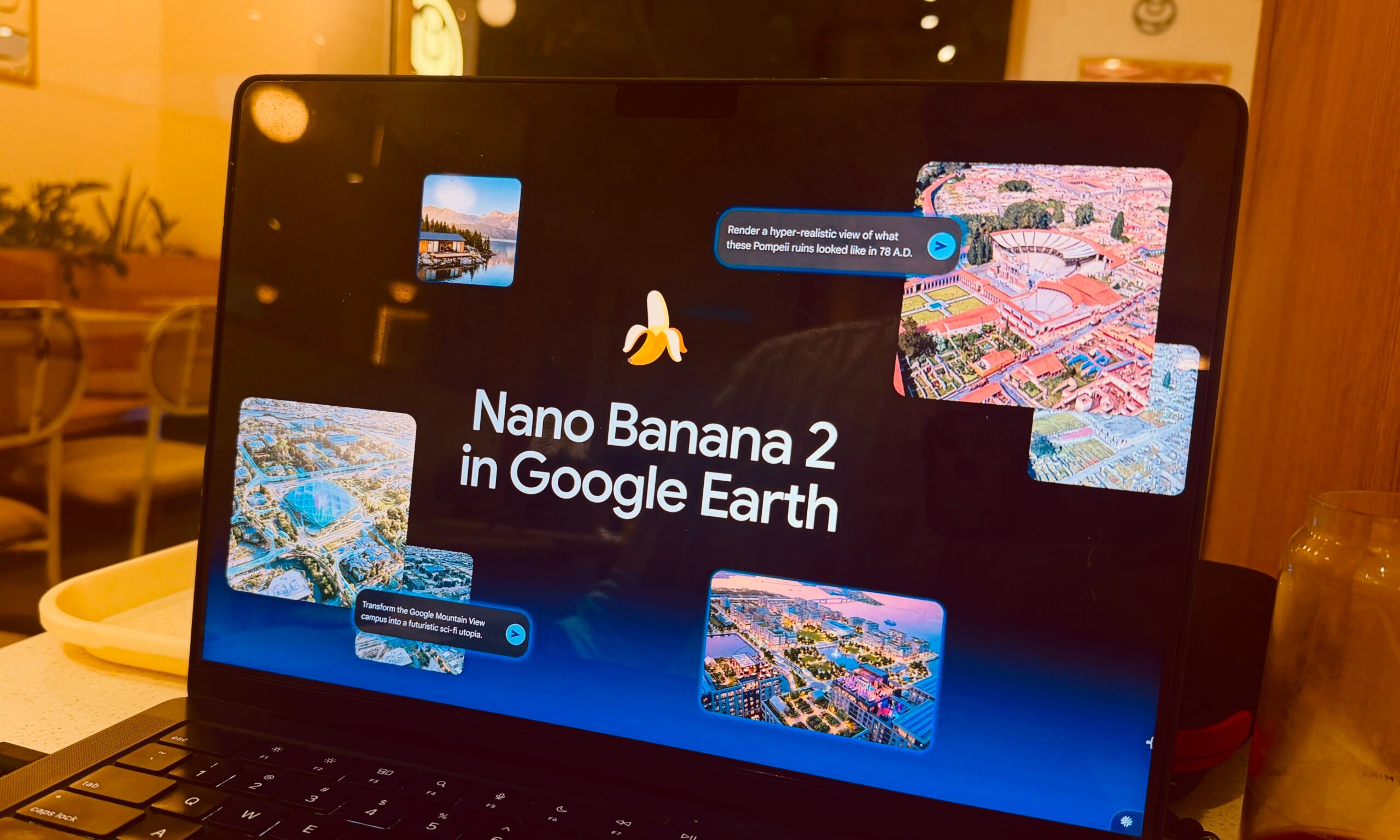
In its latest AI-fication experiment, the company targeted Google Earth. The idea was to let the audience use its Nano Banana 2 AI image generator and make images that can be placed on the map view. On paper, it's a cool idea. What would the Colosseum of Rome look like in your urban neighborhood? Yeah, fun stuff like that.

Read more
AMD is apparently gearing up to raise GPU prices right after Nvidia’s steep hike
AMD has reportedly told AIB partners about a price hike that goes into effect in. August.
AMD RX 7800

AMD is next in line to raise the asking price of its Radeon GPUs, merely days after the news of a similar hike coming for Nvidia graphics cards started making waves. As per ChannelGate on Weibo (h/t VideoCardz), AMD has informed its board partners that the price of GPU and memory bundles will go up by at least 10% in August.

Is a similar price hike coming for standalone graphics cards? I won't be surprised if that happens. The situation is so bad that AMD is planning to bring back graphics cards with 4GB of onboard memory. AMD just introduced the RX 9050 GPU, which costs $279. Notably, it's just $20 less than the RX 9060 XT that offers double the graphics memory.

Read more
Microsoft will make Windows work well with just 8GB RAM. We desperately need it
The dream of a reliable and affordable Windows laptop hinges on the next milestone at Microsoft.
Surface laptop on wooden table

The year 2026 has marked a huge course correction for Microsoft after years of frustrating users with plenty of confusing processes, unoptimized UI elements, and just the generous bloatware that can bring any Windows system to a crawl. Microsoft has finally shifted into a new phase. From fixing the right-click behavior to speeding up the Search system, the company has fixed plenty of papercuts.

The next major milestone is making Windows 11 run smoothly on Windows PCs with just 8GB of RAM. That directly means entry-level and budget laptops will at least get the basics right, even if that means sacrificing the on-device AI bells and whistles. Let's face it. The increasingly AI-first approach to computing on a Windows 11 machine is a little too taxing on the hardware at hand.

Read more