
Who makes the best HDTV: LG or Samsung? Samsung or Sony? Toshiba or Panasonic? We hear these questions all the time. So, if those questions are so common, why are the answers so uncommon? Well, the trouble is that such queries are extremely broad. Answer one way or the other and you can count on getting branded as a fanboy/fangirl. You can’t just say “brand X is the best.” That’s ridiculous. The best at what? Everything? We don’t think so.
But we recognize that anyone asking these questions clearly needs some kind of nudge in one direction or the other, or maybe just some guidance with their research. With that in mind, we’ve decided to pit one brand against the other in an ongoing vs. series until we’ve exhausted as many variations as possible; because the truth is, different brands do exhibit distinct characteristics and understanding those characteristics can help make a buying decision easier. Here we go.
Related: LG TV reviews, Samsung TV reviews, Digital Trends’ TV buying guide.
LG vs. Samsung
It’s no mistake that we’ve started with LG and Samsung. These two South Korean TV manufacturers are extremely competitive. Like, espionage and spying and mud-slinging kind of competitive. And while that might seem a little hard core, it turns out intense competition tends to motivate intense innovation – and that’s a good thing. LG and Samsung may be rivals, but they are both at the top of their game. The rivalry has also resulted in some different approaches to TV design and engineering.
Aesthetic design
You can talk about how picture quality is the main priority all you want, but we both know that the thinner and sexier a TV is, the more you’re going to want it. Unfortunately for you, Samsung and LG are almost tit for tat in this department. Let’s take a couple samples from each brand’s line-up to illustrate:
Samsung’s F8000 and LG’s LA8600 are the top-of-the-line series for both companies. As you can see, both offer extremely tiny bezels and very thin profiles. LG’s stand comes forward in a sort of ‘U’-shape while Samsung’s retreats to the back of the set in a gentle curve. LG’s stand swivels, Samsung’s does not. Otherwise, they’re both striking TV’s.


Stepping down to the Samsung FH6030 and the LG LA6200, we see more of the same. Bezel sizes on each are about the same size, but where the Samsung uses a traditional rectangular stand, LG uses a swooping semi-circular base. The depths are very close, too, with Samsungs just .75-inches deeper than LG’s in this case. In other comparisons, though, you’ll find the reverse to be true.
Again, LG and Samsung are really close up and down their respective TV lines. Which looks better is a matter of personal preference, not brand superiority.
Picture quality
For LED LCD televisions:
Again, making a blanket statement here would be totally irresponsible, but based on our most recent review experiences, we’d say Samsung TV’s tend to have slightly better black levels, while LG’s sets generally exhibit superior color accuracy out of the box. Screen finishes (matte vs. glossy) tend to vary by model, so we can’t make a call there. We can say, however, that Samsung’s LED edge-lighting control seems to be just a bit ahead of LG’s at this point. From our reviews of the top-of-the-line models listed above, Samsung’s set has less blooming at the edges than LG’s does.
For plasma television:
Based on our conversations with LG, plasma is a technology the company is in the process of slowly phasing out. While LG’s plasmas do perform well, Samsung has spent a lot of time developing a plasma that can compete with the best in the world. Frankly, if the superior picture quality of a plasma TV is what you seek, you should be comparing Samsung and Panasonic televisions.
Smart TV
While LG’s Smart TV interface has shown a lot of improvement recently and stands to make a quantum improvement in the next couple of years, for now we have to lean toward Samsung’s Smart TV interface – again, this is a personal preference. You may disagree and that is just fine.
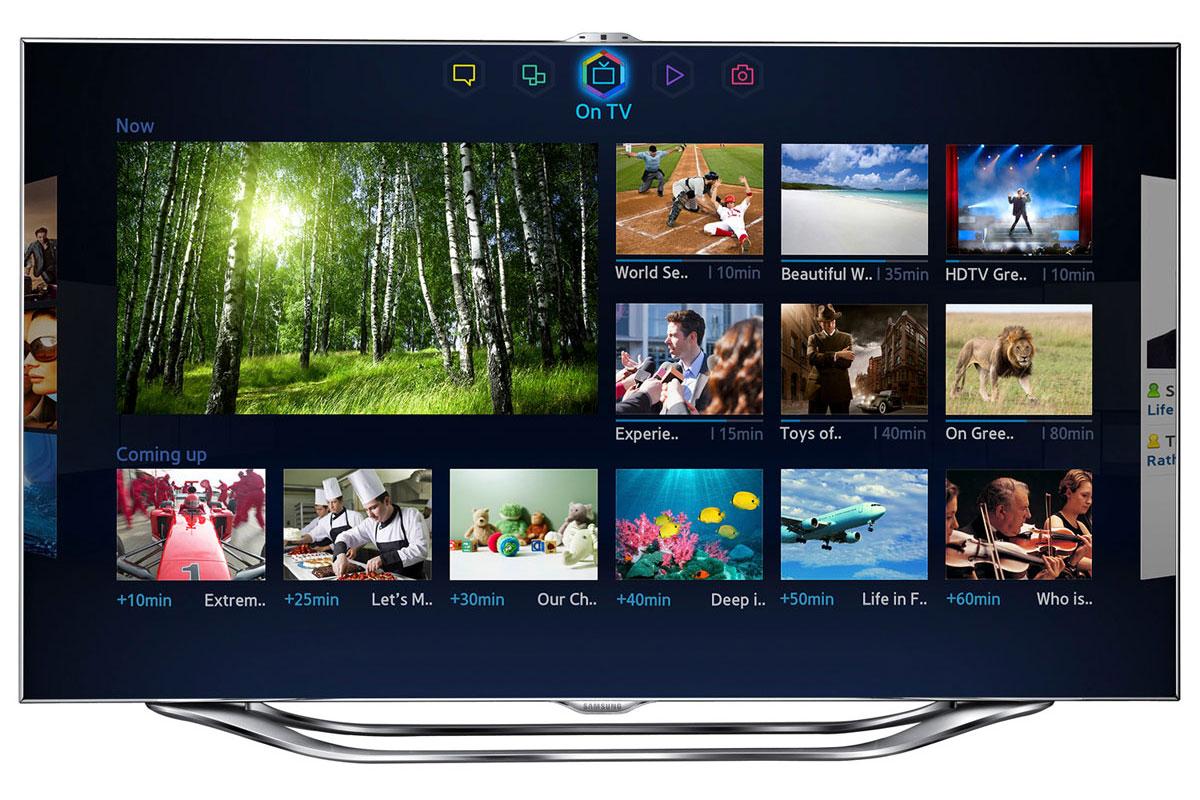 We prefer the way Samsung has broken down its Smart UI into five distinct segments, and we prefer the graphical layout for its richer, more colorful appearance. Also, Samsung currently supports Amazon Instant’s VOD app where LG does not, and that’s no small deal for us.
User interface
Not only does the user interface vary from tier to tier within each manufacturer’s line-up, but the term user interface is itself very broad. So, for the sake of this piece, let’s say the user interface has to do with the experience of navigating through a TV’s various menus in order to make changes to the settings. In that regard, the contest is a draw. Both companies have gone through a lot of effort to make the process of getting through all the menus and sub-menus as pain-free a process as possible. Neither has reached perfection, but considering how complex these TVs can get, we’d have to say both brands have done a pretty terrific job. There are some manufacturers with terrible user interfaces, and we’ll be getting to them soon enough.
Remote control
Simply put, LG’s Magic motion remote control is our favorite stock remote right now. While Samsung’s trackpad-style clicker may resonate better with others, we prefer the point-and-click, Wii-style action of LG’s remote. It’s just more fun to use and younger kids tend to take to it quickly.
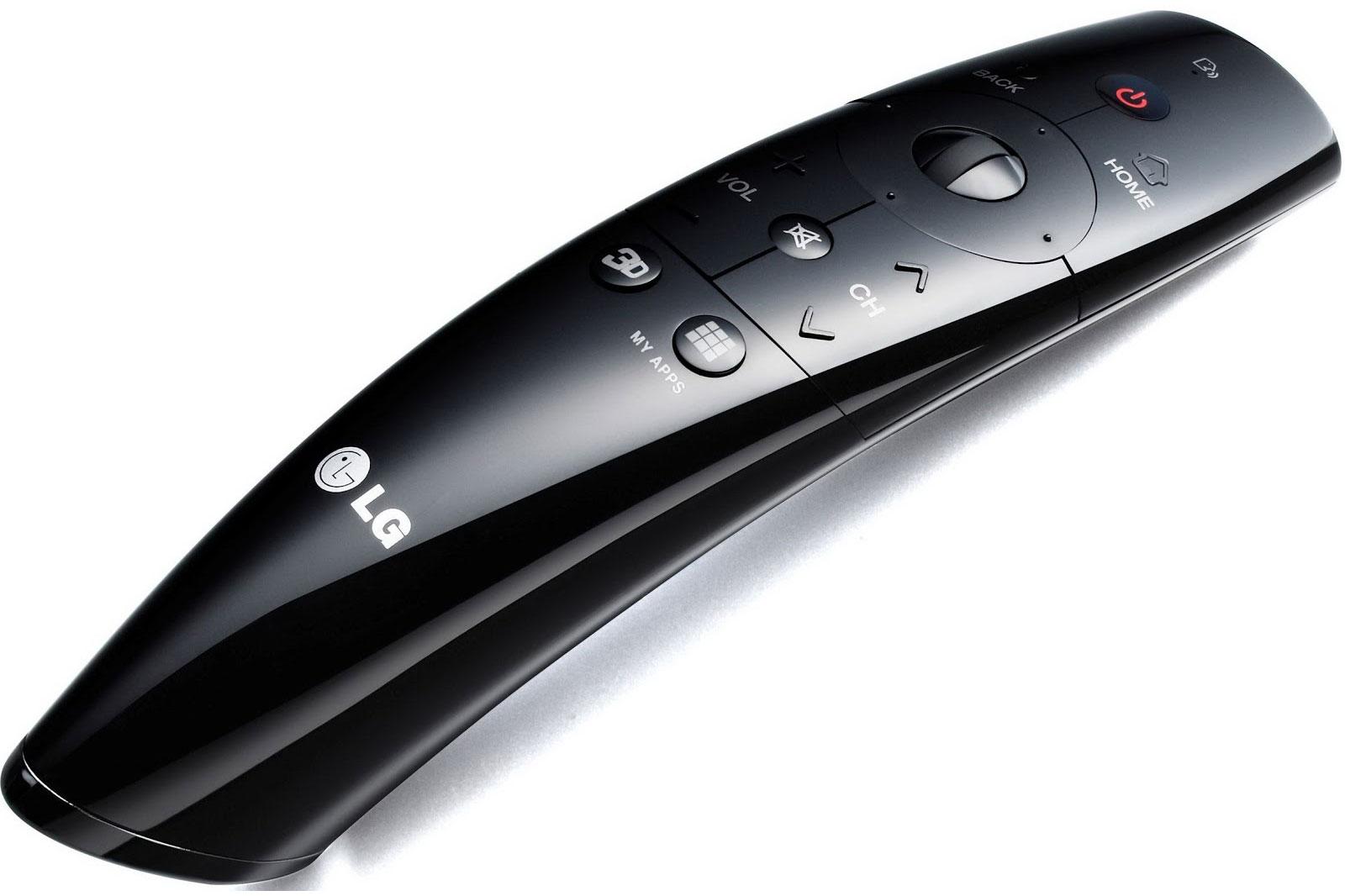 Both of these remotes come with each manufacturer’s upper mid-tier TV’s on up. As for the standard clickers on the lower-end models, we prefer anything that’s back-lit, otherwise they’re pretty much the same.
Internet connectivity
At this point, both Ethernet and Wi-Fi connections are standard on both LG and Samsung’s Smart TV. This really shouldn’t be a consideration.
Now go look at some TVs, will ya?
We sincerely hope you’ll walk away from reading this with some sense of how LG and Samsung compare with each other. But we think the most valuable takeaway here is that you get out there and go put your hands on a TV and its remote for a while to get the feel of things. In our home theater crash course, we suggest you forget about the sales guys on the floor and just start playing around. That’s what those TV displays are for.


