Polk Audio today unveiled two new entries into the boundless wireless speaker market, the Camden Square and the Woodbourne. True to their posh titles, the new devices represent a higher water mark of quality and features than many entries we see in the wireless segment, designed for the discerning listener who’s willing to pay a little more for convenience, performance, and style. Let’s take a quick look at both of these sleek new devices and see what they have to offer.
Camden Square ($300)
Named after Polk’s stomping grounds in Baltimore, the Camden Square Bluetooth speaker is carved into an elegant block of sound 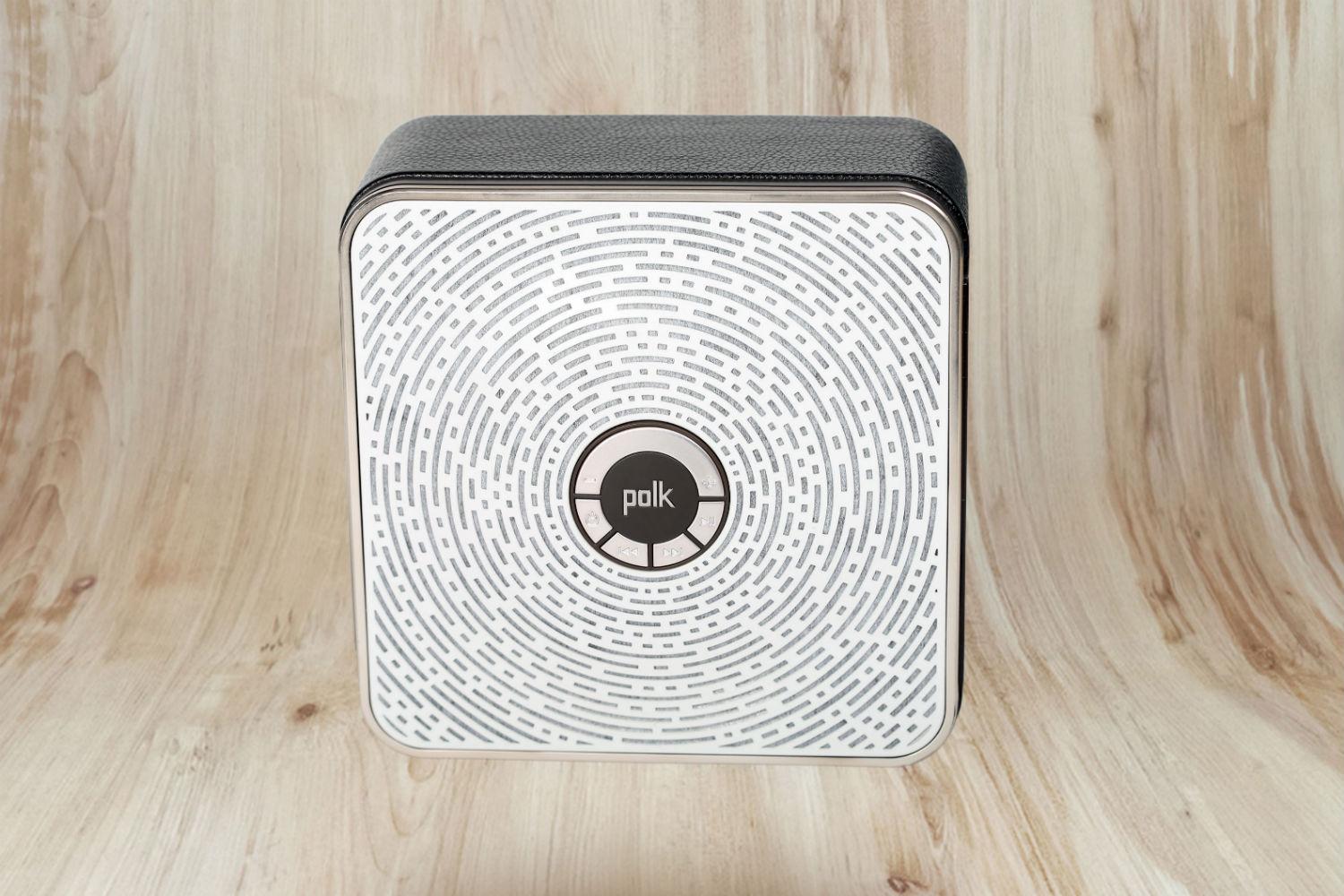 that’s designed to come along for the ride. The speaker boasts an impressive estimated 24 hour battery run-time, and while it’s not exactly pocket size, Polk claims the speaker is relatively light in weight and includes a shoulder bag to pack it with you. Beneath the front screen’s swirled lines, the Camden harbors four active full-range drivers and two passive radiators. The system runs through a batch of Polk’s proprietary DSP that promises distortion-free listening and a decent helping of bass below the 200Hz line.
The speaker’s most intriguing feature, however, may just be Polk’s new DJ Stream app, designed specifically for the Camden Square. Through the iOS and Android compatible app, up to four devices can be connected to the speaker at a time, which can then feed a playlist from their music libraries controlled by a host device. The app also allows for up to 128 other users to sit on stand-by, ready to jump into the action when one of the active four users drops out. Other features for the Camden Square include a 3.5mm Aux input, and a set of onboard controls circled around the Polk emblem on the speaker’s front face.
Woodbourne ($700)
Designed as an elite wireless home sound solution, the Woodbourne incorporates both Bluetooth with Apt-X, and Airplay to deliver hi-fi wireless audio from its arched, post-modern frame. While Polk is mum on the the specific size of the drivers that rest beneath the speaker’s elegantly curved front screen, we do know the stereo system is powered by a 4-channel amplifier that delivers a whopping 180 watts of power, run through proprietary DSP and Dolby Digital processing.
The Woodbourne is constructed from a medium density fiberboard (MDF) acoustically suspended frame and offers elegant touches like a woodgrain finish and a minimalist uniform design, aptly melding form and function. Aside from its wireless connectivity, the speaker includes multiple connection options for your TV and other accessories including ports for USB, optical, 3.5mm, and Ethernet connection. A succinct control interface rests at the center of the device, and the system also includes a long-range remote. While the Woodbourne’s refined style is certainly poised to spruce up any living room, at $700, we’re hoping this speaker sounds as good as it looks, if not better.
We haven’t gotten a chance to listen to either of Polk’s latest additions but we’re hoping to get our hands on them soon, so we’ll let you know how they stand-up in the prodigious wireless speaker segment. Both of the new devices are available tomorrow at Polk’s website, and will be in select Best Buy stores starting November 3rd.