  1. Home
  2. Cars
  3. Photo Galleries
  4. Legacy Archives

Ferrari’s customs division commemorates F1 legend Niki Lauda

Add as a preferred source on Google

Most people honor their favorite sports stars with jerseys and posters. This tribute to Formula One legend Niki Lauda is a little more elaborate.

An individual Ferrari owner commissioned the company’s Tailor Made personalization program to build a car honoring Lauda. The custom 458 Italia’s gestation coincided with the September launch of Rush, the Ron Howard film that tells the story of the epic rival between the Austrian driver and Brit James Hunt.

Lauda, 64, has three F1 titles to his credit (1975, 1977, 1984), and raced in 177 grands prix. He received severe burns in a crash at the 1976 German Grand Prix, but tenaciously got himself back in the car before the end of the season. He currently works as a television commentator and non-executive chairman for Mercedes-Benz AMG.

The Tailor Made 458 features a paint scheme that matches the one worn by Lauda’s 1970s Ferrari F1 cars. Naturally, that means red is the primary color, with a white roof and Italian flag. The gold wheels also give the car a very ’70s vibe.

On the inside, the Italian flag pattern is repeated on the seats and center console, accented by red stitching on nearly every surface.

No mechanical changes have been reported, not that they were needed. The 458 has a 4.5-liter V8 with 562 horsepower and 400 pound-feet of torque. It can do 0-60 mph in around 3.4 seconds, and reach a top speed of 202 mph.

That’s pretty appropriate for a car inspired by an F1 driver. It’s certainly better than the special edition 2001 Fiat Seicento built to honor another legendary Ferrari driver, Michael Schumacher. Sadly, you’re more likely to see one of those than the one-of-one Tailor Made 458.

Stephen Edelstein
Stephen is a freelance automotive journalist covering all things cars. He likes anything with four wheels, from classic cars…
Volvo is rolling out Apple Music to over 2 million cars with a simple OTA update
Your Volvo may soon get Apple Music without needing CarPlay
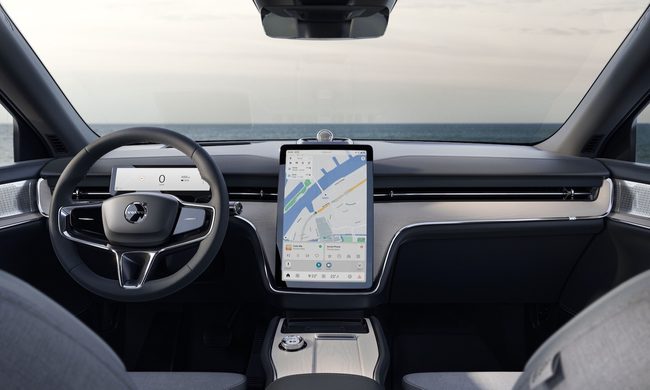
Interior view of the 2024 Volvo EX90.

The line between your smartphone and your car continues to blur. Volvo has announced that it is rolling out an over-the-air software update that brings Apple Music directly to the infotainment systems of more than 2 million vehicles worldwide. Instead of relying on Apple CarPlay or plugging in an iPhone, eligible drivers will be able to stream music natively from their car's built-in system, making Apple Music another integrated feature of Volvo's software experience.

The update is arriving for a wide range of Volvo models, including the EX90, ES90, XC90, S90, V90, XC60, S60, V60, XC40, EX40 and EC40, covering model year 2020 onwards. Availability, however, may vary depending on the vehicle.

Read more
Chery’s latest EV packs flagship tech for the price of a base Tesla, but you can’t buy it
Here's everything packed into Exeed's 2027 Exlantix ES, from its 27-sensor autonomous driving suite to its 860 km range, all starting under $31,000.
Car, Transportation, Vehicle

Chery's premium arm just dropped a sedan that makes you wonder why American EVs cost twice as much for half the tech.

Exeed's 2027 Exlantix ES ships with a driver-assist system called Falcon 700. It is built around an Nvidia Orin-Y chip and a genuinely stacked sensor suite.

Read more
A new AI model wants self-driving cars to think before they swerve
Forget guessing games, this self-driving AI actually shows its work.
Self driving car

Self-driving cars have gotten pretty good at driving. The harder problem is teaching them to drive safely in situations nobody planned for. We have heard horror stories of self-driving cars, behaving erratically in emergency situations, often times delaying first responders from reaching the scene.

A team at Seoul National University, led by professor Jun Won Choi from the Department of Electrical and Computer Engineering, thinks they have cracked part of that puzzle with a new AI model called SafeDrive. The research was recently selected as a highlight paper at CVPR 2026, a distinction that goes only to roughly 3% of all submissions.

Read more