1. Home
  2. Computing
  3. News

Altman and Ive have apparently hit a snag with their mysterious AI device

Add as a preferred source on Google
Jony Ive and Sam Altman.
Jony Ive and Sam Altman. OpenAI

It was in October 2023 that reports first surfaced of Apple’s former design guru, Jony Ive, teaming up with OpenAI chief Sam Altman to create what was dubbed at the time as “the iPhone of artificial intelligence.”

Earlier this year, OpenAI said it was acquiring io, a startup co-founded by Ive, in a $6.5 billion deal that finally confirmed the existence of the partnership to develop new AI-powered hardware.

Recommended Videos

In May, Altman said he’d already seen Ive’s design for the product, describing it as “the coolest piece of technology that the world will have ever seen.”

But the device is still hidden away.

A target launch date has been set for next year, but a report by the Financial Times (FT) over the weekend suggested that it faces a delay as the team attempts to overcome a number of technical issues. 

The much-anticipated product will be “a palm-sized device without a screen that can take audio and visual cues from the physical environment and respond to users’ requests,” according to the FT, which has spoken to people with knowledge of the project. It’s also been described by an insider as “roughly the size of a smartphone that users would communicate with through a camera, microphone, and speaker.”

But the report added that the team is having issues with the device’s “software and the infrastructure needed to power it.”

For example, It’s currently trying to agree on the personality of the device’s AI assistant, while also addressing privacy issues.

A source told the FT that “compute is another huge factor for the delay,” referring to the computing power and infrastructure necessary to run the advanced AI models that the device will depend on. “Amazon has the compute for an Alexa, so does Google [for its Home device], but OpenAI is struggling to get enough compute for ChatGPT, let alone an AI device. They need to fix that first.”

It wouldn’t be unusual for an all-new device to face delays, and no doubt Ive and Altman have at the forefront of their minds the disastrous launch suffered by Humane’s AI Pin.

The AI Pin was a highly anticipated AI-powered wearable device released in April 2024. It was marketed as a revolutionary smartphone replacement but failed spectacularly due to a slew of issues that included poor product design, slow and unreliable AI responses, short battery life, and a high price of $699 plus additional subscription costs.

The device was discontinued in February this year and the company sold its key assets to HP for $116 million.

Trevor Mogg
Contributing Editor
Not so many moons ago, Trevor moved from one tea-loving island nation that drives on the left (Britain) to another (Japan)…
ChatGPT is coming for one of Google’s smartest Chrome features
OpenAI brings ChatGPT to Chrome to challenge Google's Gemini Side Panel
OpenAI

OpenAI is expanding ChatGPT beyond its website with the launch of a new Chrome extension that can understand the contents of the webpage you're viewing. The extension allows users to ask questions about a page, summarize articles, explain complex concepts, and even kick off longer AI-powered tasks without leaving their browser.

The move positions ChatGPT as a direct competitor to Google's Gemini in Chrome, which introduced similar context-aware browsing features earlier this year. While both tools aim to bring AI directly into web browsing, they take slightly different approaches to productivity and automation.

Read more
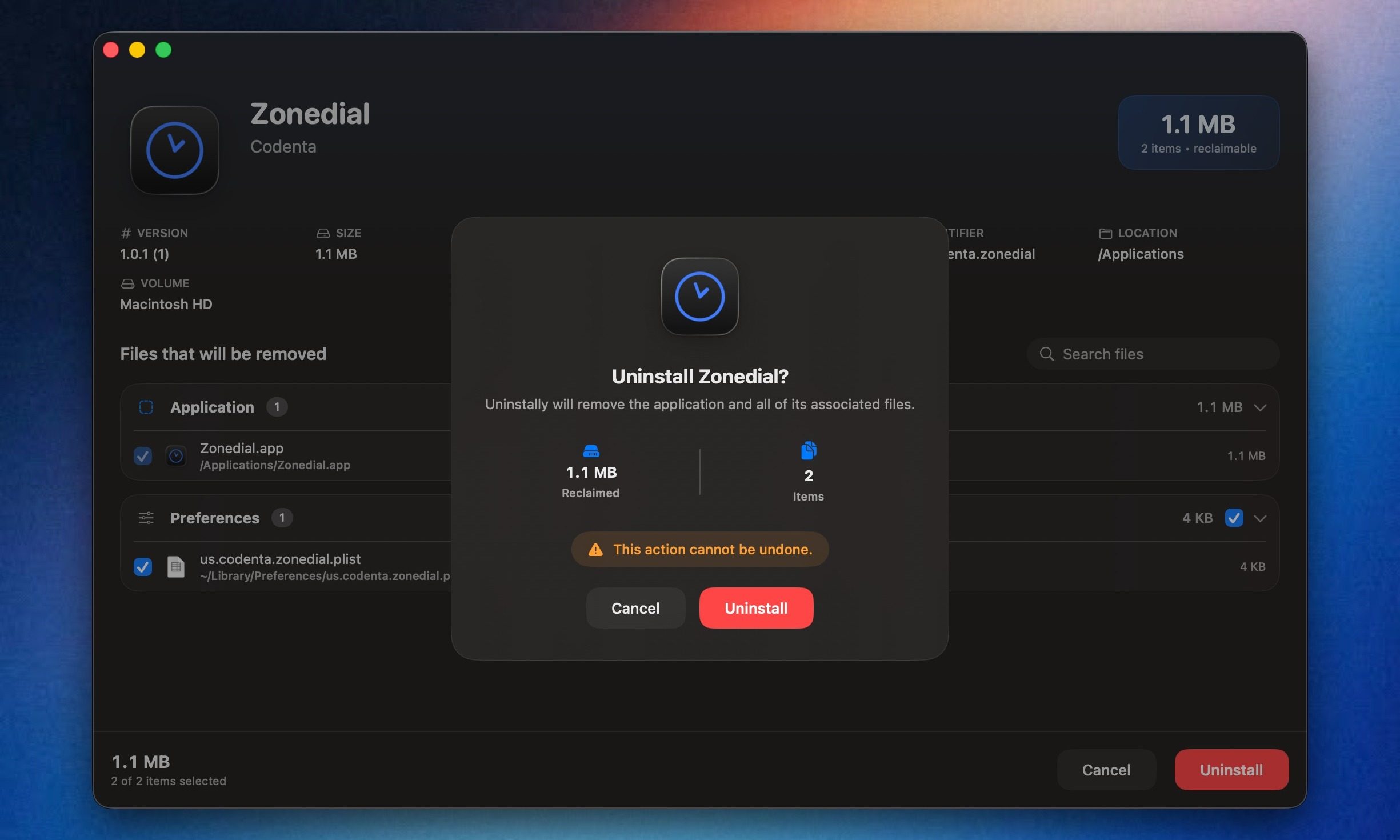
This open-source Mac app finds the junk files your deleted apps leave behind
Uninstally removes apps properly, leftovers and all
Uninstally macOS app UI

Uninstalling apps on macOS is usually very easy. You drag an app to the Trash, empty it, and move on. The annoying part is that many apps still leave residue behind, including support files, caches, preferences, containers, and logs. I have always found that frustrating, especially when old app data keeps sitting around long after the app itself is gone.

AppCleaner by FreeMacSoft has been the popular go-to option for this for years, and it still does the job well. But I recently came across a new open-source alternative called Uninstally by Codenta, which solves the same basic problem. It removes Mac apps along with the support files, caches, preferences, containers, logs, and other leftovers they usually leave behind.

Read more
AMD just made Ryzen laptop chips even more confusing, but here’s what’s actually new
The refreshed lineup brings more Zen 4 processors to mainstream and budget laptops.
AMD Ryzen 100 and 200 series

AMD has quietly expanded its mobile processor portfolio with 11 new Ryzen laptop processors, adding fresh models under both the Ryzen 200 and Ryzen 100 families. While that sounds straightforward enough, the bigger story isn't the chips themselves -- it's AMD's increasingly confusing naming strategy. The company has introduced seven new Ryzen 200 processors alongside four new Ryzen 100 models, but despite belonging to different series, many of them are actually built on the same Hawk Point silicon featuring Zen 4 CPU cores and RDNA 3 integrated graphics.

The Ryzen 200 series gets seven new CPUs

Read more