
Like guns? Prepare to drool.
Behind the doors of a high-rise suite at the Mirage Hotel and Casino in Las Vegas, Digital Trends got the world’s first look at the all-new 500 Series AR Smart Rifle from TrackingPoint, the company that invented Precision Guided Firearms – guns that pack the accuracy of a ballistic missile.
Built on the AR platform, TrackingPoint’s new firearms pack the same Tag Track Xact (TTX) system as the company’s earlier platforms, allowing hunters to hit targets at up 500 yards away – the “maximum range of the gun,” says John Lupher, TrackingPoint CEO. While that’s not the 1,200-yard distances made possible with larger TrackingPoint Smart Rifles, the AR platform does make it easier for hunters to move to a new position, or shoot from a standing position.
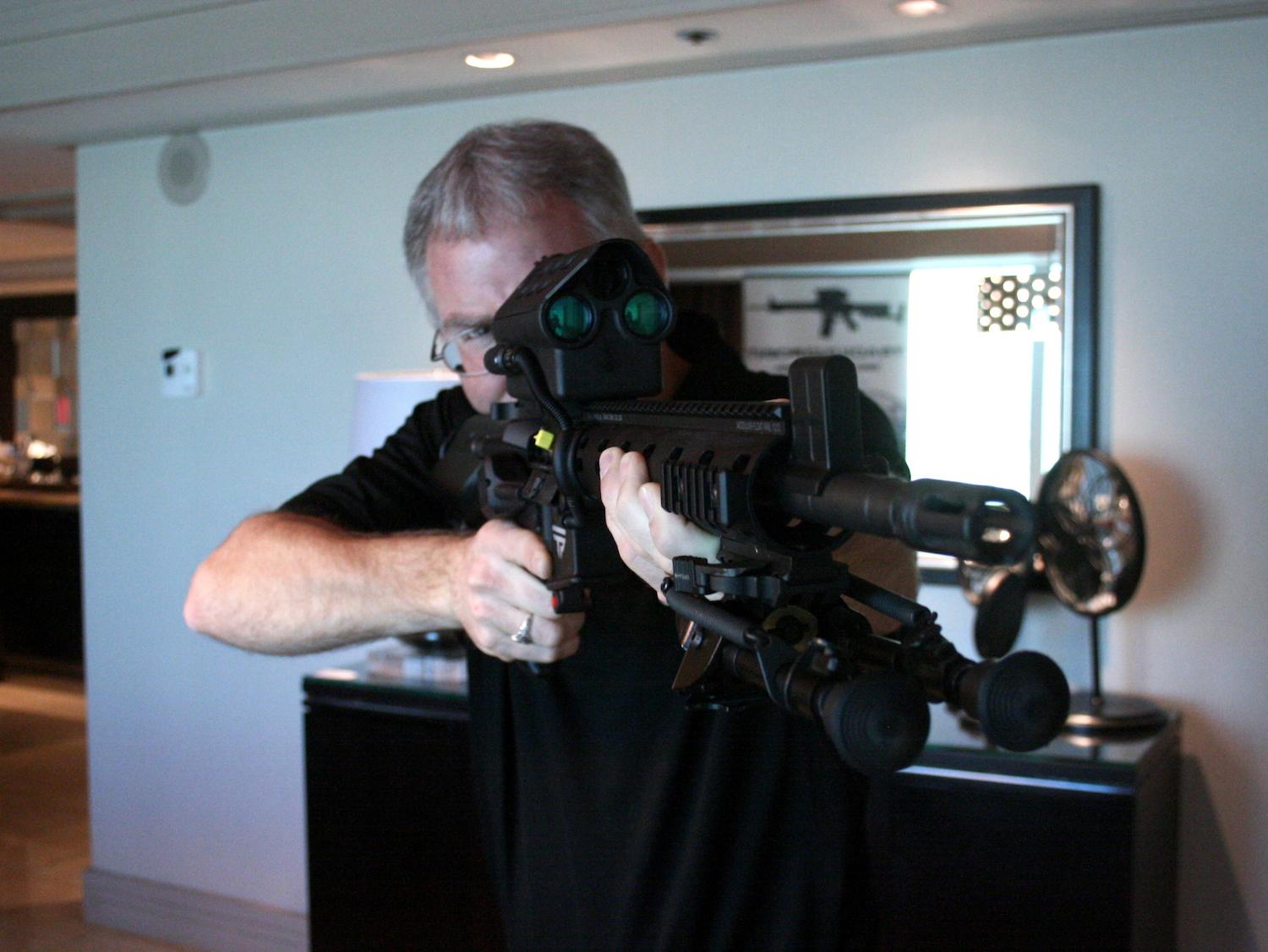
Using the TTX ballistic system, shooters simply tag the target they want to shoot, pull the trigger, and the instant the the shot is lined up, the AR Smart Rifle fires a round. Shooters can also re-tag their target as many times as they like, to ensure the best possible shot.
If you haven’t ever heard of TrackingPoint’s TTX system before, here’s what it tracks continuously as you line up your shot (and you’re forgiven for not knowing some of these terms – ask your gun friends): Range, drop, magnus effect, spindrift, coriolis effect, direction, cant, inclination, pressure, temperature, humidity, muzzle velocity, barrel length and twist, lock time, ballistic coefficient, and drag coefficient. Oh, and wind direction and speed – but you’ll have to input that yourself.
“There are some amazing expert marksmen in the world,” says Lupher. “But what this does is, it lets you pick up this gun and go shoot right to the same level of those expert marksmen.” And when you consider how accurate the AR Smart Rifle allows you to be when aiming for moving targets, and how fast it enables you to mark the exact spot on a target you want to hit, Lupher adds, “I would argue that we’re beyond what the human capacity is for being able to factor all those things in to get the shot off.”
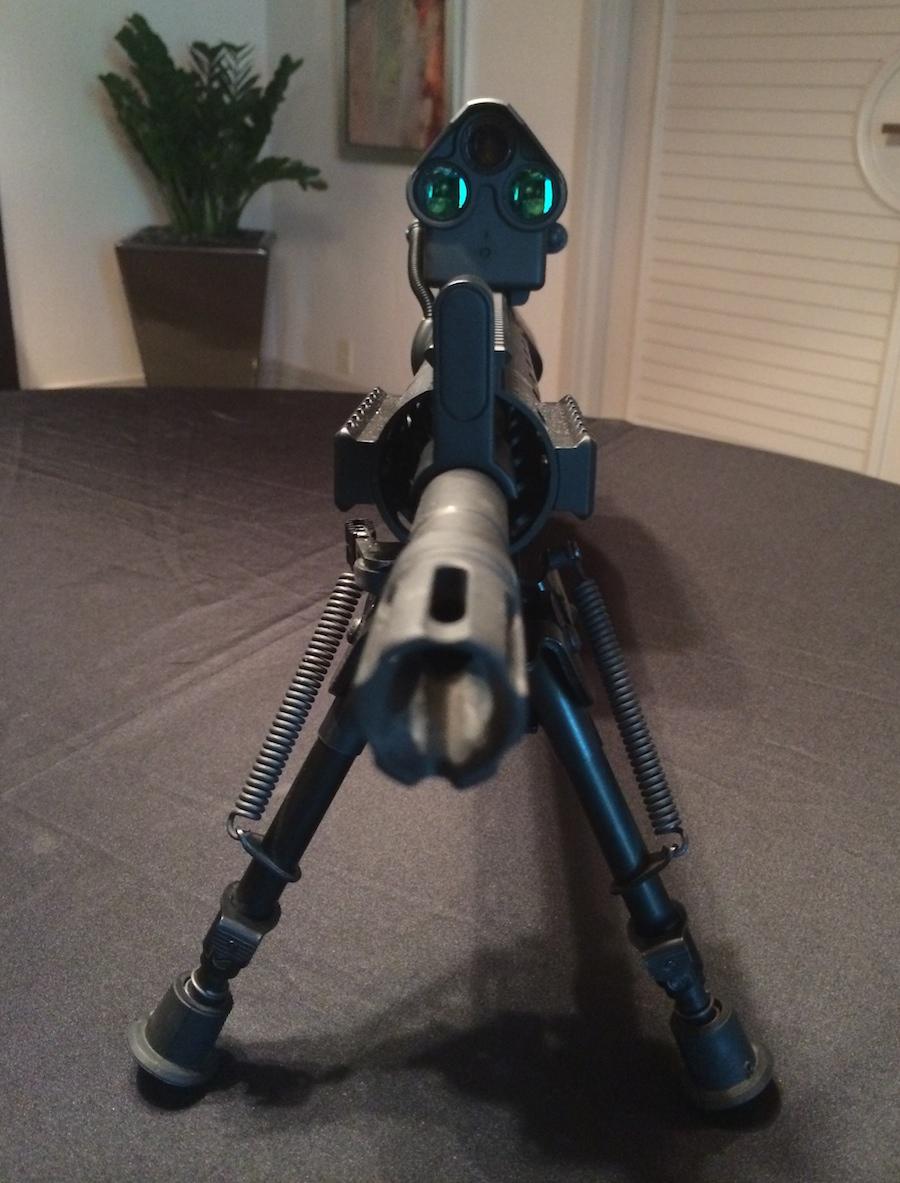
Another improvement over earlier Smart Rifles is the repositioned batteries that power the firearm. In the AR series, TrackingPoint has moved the batteries to the butt stock of the gun, giving the firearm a far better feel in the hands.
“With more weight back in the butt stock, now it’s more on your shoulder than out on your forearm, and so the gun has a much more balanced feel,” says Lupher. “Most people think it weighs less than it does because the weight’s back here on your shoulder rather than in your hands.”
After getting some hands-on time with a near-finished prototype of the new TrackingPoint AR, we can attest to its excellent balance and feel in the hands. If you’re comfortable holding a gun, the AR Smart Rifle won’t leave you wanting.
As with earlier iterations of the TTX system, the AR Series scope allows users to stream live video to a connect smartphone using the TrackingPoint app (iOS, Android) and record video to the TTX’s on-board storage, which can hold up to an hour of footage.
TrackingPoint is taking orders for its 500 Series AR Smart Rifles, which come in either 7.62, .300 BLK, and 5.56 calibers, starting today for $9,950. Shipments will start in October.


