1. Home
  2. Computing
  3. Legacy Archives

Fujitsu to Push Notebook Drives to 1.2 TB

Add as a preferred source on Google
Fujitsu to Push Notebook Drives to 1.2 TB
Image used with permission by copyright holder

In collaboration with the Kanagawa Academy of Science and Technology, Fujitsu Laboratories Limited, and Yamagata Fujitsu Liimited, Fujitsu Computer Products of America says it has not only created "ideally ordered" aluminum nanohole patterned media which could enable the company to make storage media capable of containing 1 terabit per square inch—but the company can read and write from individual nanoholes using currently available flying-head hard drive technology. In theory, the development could enable the company significantly increase data density in hard disk drives, with potential storage capacities reaching as much as 1.2 TB on a two-platter, 2.5-inch hard drive.

"This technology achievement is a major leap for the industry and confirms Fujitsu’s position as a research leader on the path to one Terabit/in2," said Fujitsu Computer Products of America vice president David James, in a statement. "We expect this breakthrough to provide revolutionary changes for various IT and consumer applications."

Recommended Videos

The technology is detailed in the July 9 edition of Applied Physic Letters; essentially, researchers were able to apply perpendicular recording processes to create the alumina ideally ordered media at a pitch of 100 nm nanoholes, using a nano-imprint lithography, anodic oxidation, and cobalt eletrodeposition. Fujitsu was then able to confirm basic bit-by-bit read-write capabilities using a flying head over a 2.5-inch rotating disc—the same technology used in today’s conventional hard drives.

It will likely be a few years before consumers start seeing portable drives creep into the 1 TB range: success in the lab still needs to translate to economically feasible production processed and, of course, development of mass production capability.


Geoff Duncan
Former Contributor
Geoff Duncan writes, programs, edits, plays music, and delights in making software misbehave. He's probably the only member…
MSI’s new 4K 120Hz OLED monitor uses inkjet tech that could make premium screens cheaper
The first 27-inch 4K 120Hz IJP OLED monitor arrives through MSI and TCL CSOT
Computer Hardware, Electronics, Hardware

The future of OLED monitors may have just taken a significant step forward. MSI and TCL CSOT have unveiled the world’s first 27-inch 4K 120Hz desktop monitor built using inkjet-printed OLED technology, bringing a manufacturing method once limited to prototypes and specialist displays closer to everyday buyers.

Called the MSI Pro Max OLED 271UPJW12, the monitor uses a TCL CSOT panel created by printing organic light-emitting material directly onto the display. The process wastes less material than conventional OLED manufacturing and could eventually make panels cheaper and easier to produce at scale.

Read more
MSI launches a white 16-inch gaming laptop with a 12GB RTX 5070 and a pile of matching accessories
MSI bundles a mouse, headset, and extended mouse pad with its new white Crosshair gaming laptop
Adult, Female, Person

MSI has launched the Crosshair A16 HX MLG Edition globally, giving one of its upper mid-range gaming laptops a white-and-red makeover alongside a full set of matching accessories. MLG here stands for Mo-Loong-Gi, meaning “Dragon Princess,” and refers to an original character created by MSI rather than Major League Gaming.

What are you getting with this special edition laptop?

Read more
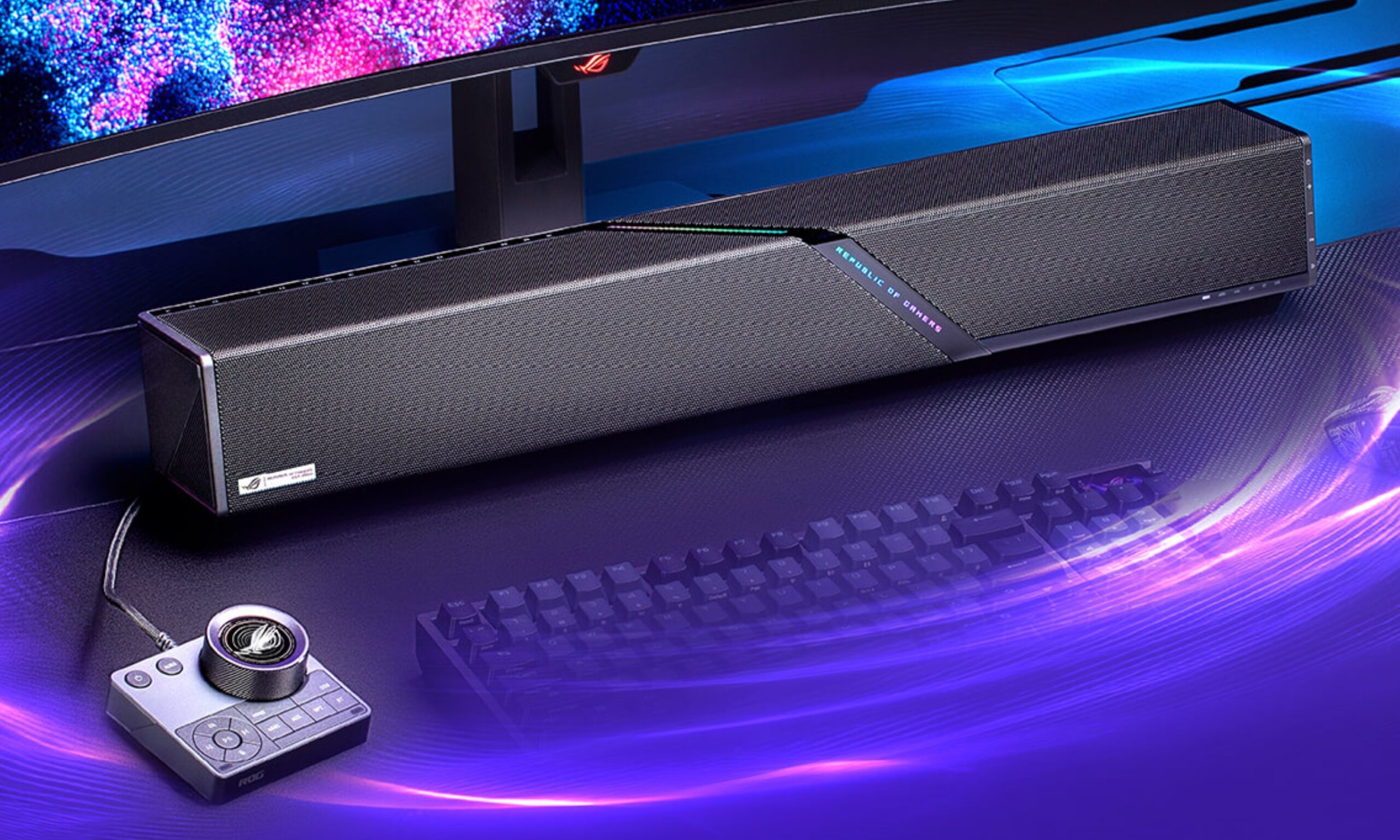
The ROG Gjallar packs Dolby Atmos in a compact form factor, but its US debut is still under wraps
Asus' new ROG Gjallar gaming soundbar brings Dolby Atmos and a wireless subwoofer to your desk.
Electronics, Speaker

Asus unveiled the ROG Gjallar back in early July 2026, as the first speaker system under the ROG brand. However, at the time, the company stayed quiet on pricing and availability. That's changed now. 

So what's actually inside the ROG Gjallar?

Read more