
When Google announced at the end of last month that it was selling Motorola Mobility to Chinese tech firm Lenovo, we quickly learned that the Mountain View company had decided to hold on to some bits of the business, including Motorola’s Advanced Technology and Projects Group (ATAP), which is responsible for the Project Ara modular smartphone initiative.
Updated by Jeffrey Van Camp on 2-27-2014: Google has launched the Project Ara website, encouraging people to join the Scout program to help shape Ara. Check it out.
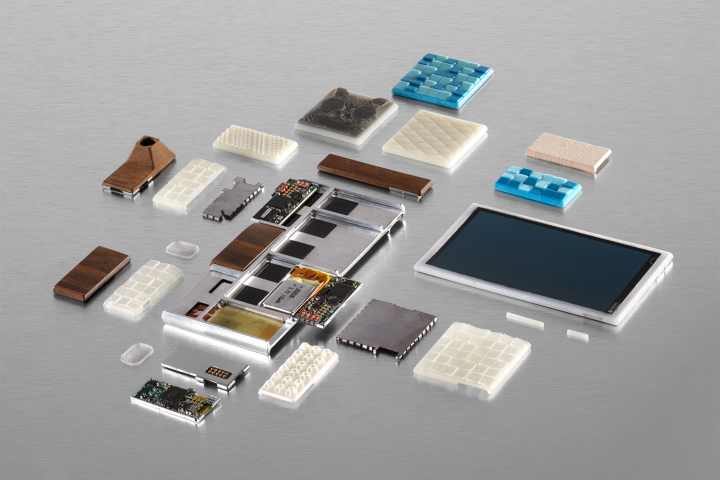
ATAP’s build-your-own-phone idea first made waves four months ago, and aims to allow consumers to build a handset from a wide range of components which they fit onto the smartphone’s structural frame.
The idea is that you can create a device according to your needs and preferences. Work mostly in the cloud? Then choose a smaller memory module and a larger battery. Keen photographer? Grab the best camera module over the less impressive, cheaper alternatives. Even better, if you become a keen photographer, you can go back and swap out your low-performance camera module for a better one.
It should also prevent waste, allowing you to easily replace a broken module instead of ditching the entire phone.
With an Ara developer conference in Silicon Valley scheduled for this April, project leader Paul Eremenko has decided to lift the curtain a little more on the project, offering Time a closer look at where it’s aiming to go with the plan.
$50 frame and hot-swapping
Eremenko says his team is aiming on creating a frame that would cost $50. That sounds reasonable, but don’t forget, we’re talking simply an aluminum frame, display and Wi-Fi-only functionality.
The team is also planning to enable the hot-swapping of modules, so if your battery was about to pack up, you could whip out the camera module or some other part and throw in a fully charged battery – without having to power down.
Mobile kiosks
Eremenko even talks of “mobile kiosks” where you’ll be able to build your device, with a virtual assistant analyzing your social media feeds to guide the customer toward particular modules. So, as Time suggests, if your photos are regularly praised, a decent camera module would be offered, and if the analysis shows that you tend to take photos in dim lighting conditions, a camera module with impressive low-light performance would be recommended.
Google has hooked up with Massachusetts-based NK Labs to help with the electrical, mechanical and software elements of the project, while South Carolina firm 3D Systems is helping with the creation of a high-speed 3D printer to push out frames for the phone.
“If this is successful, it could become one of those watershed moments for 3D printing,” 3D Systems boss Avi Reichental told Time.
While some may remain skeptical as to whether Google can really make a go of Ara, Eremenko suggests the project is moving ahead at great speed, telling Time that engineers are “finishing up work on a functioning prototype, which will be ready within weeks, with a version ready for commercial release in the first quarter of 2015.”
[Images: Google ATAP]


