What Happened: You know that earsplitting, window-rattling BOOM that planes make when they break the sound barrier? The one that got them banned from flying over land? Well, it might be a thing of the past.
- This week, the legendary Skunk Works team at Lockheed Martin (the same folks who made the SR-71 Blackbird) just successfully flew their brand-new plane, the X-59, for the very first time.
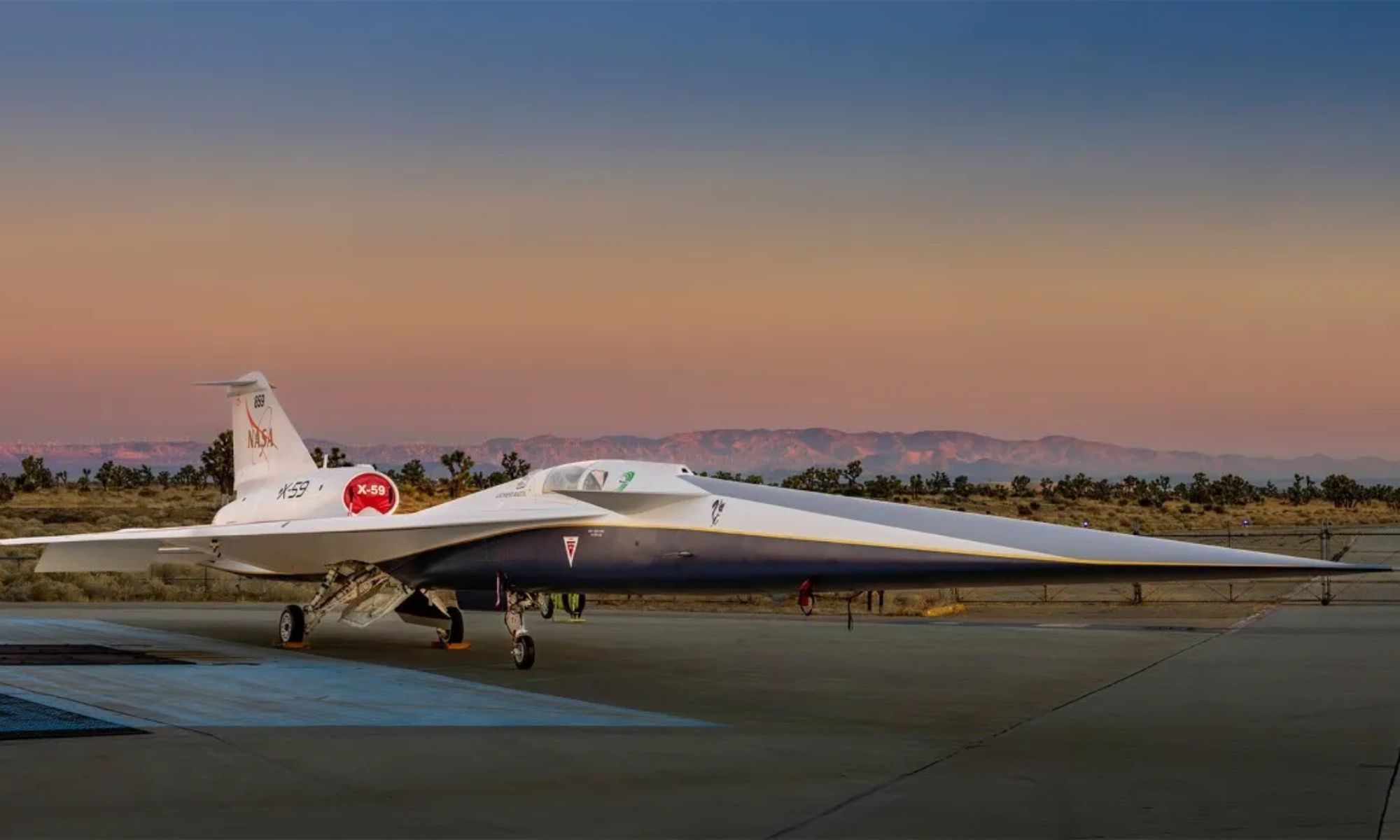
- This plane is special. It’s the centerpiece of a NASA mission called Quesst, and its entire purpose is to fly faster than sound without making that deafening boom.
- The jet took off from a Skunk Works plant in California and landed safely at a NASA research center a short while later. The team said the flight went perfectly, which is a huge first step for this crazy new tech.

Why This Is a Big Deal: This isn’t just another test plane. This could bring back supersonic travel for all of us.
- The reason we don’t have planes like the Concorde anymore is that the sonic booms were so disruptive, they were only allowed to fly over the ocean.
- That’s not a great business model. The X-59 is designed to change the game. Its super-long, pointy shape is engineered to slice through the air in a way that turns that violent “boom” into a much quieter “thump.”
- If it works, NASA can take this data to regulators and say, “See? It’s not loud. Can we lift the ban?” This could open the door for a whole new generation of commercial planes that can fly over continents at twice the speed of sound.
Recommended Videos
Why Should I Care: Because this could completely change how we travel. We’re talking about flying from New York to London in about three hours.
- Think about what that does for business, or just for visiting family. It redefines what “far away” even means.
- It’s also just incredibly cool. This is the kind of leap in aviation we haven’t really seen since the jet engine first showed up – blending speed with a design that’s actually trying to be a good neighbour.
What’s Next: Okay, so this first flight was just a slow-and-steady test. Over the next few months, the pilots will start to really push the X-59, taking it higher and faster until it’s officially breaking the sound barrier.
- After that comes the most important part: they’re going to fly it over select cities across the U.S. to actually measure how people react to the sound.
- If nobody really notices the “thump,” it could clear the way for airlines to start building these new quiet, fast jets by the end of the decade.
- As one NASA official put it, this is all about “going farther, faster, and quieter than ever before.”