1. Home
  2. Phones
  3. News

Researchers warn that social media is not the best place to get your news fix

Because viral doesn’t always mean verified.

Add as a preferred source on Google
social-media-low-news-quality
Berke Citak / Unsplash

What’s happened? After examining nearly 11 million posts across 7 social-media platforms, researchers have found a consistent pattern. People are more likely to click and engage with lower-quality news links than higher-quality ones, even when the same user posts both, says research by Cornell University. This is why several of the news pieces popping up on your social media feed may not be reliable despite the huge number of likes, especially as even AI systems struggle with news accuracy.

  • The study included platforms such as BlueSky, Mastodon, LinkedIn, Twitter/X, TruthSocial, Gab, and GETTR — each with its own unique inclination.
  • On every platform, news from lower-credibility sites received 7% more engagement than posts from higher-credibility outlets.
  • This trend appeared on both left-leaning and right-leaning platforms, and notably, sensational headlines and emotional framing of the news seem to drive the clicks.
  • The study tested with the same set of poster and audience, but the lower-quality news still pulled more engagement.

This is important because: If people constantly reward poor journalism or more dramatic content, platforms have no incentive to boost reliable info, and misinformation gets a free algorithmic ride.

  • Higher-quality journalism risks losing reach and influence when clicks chase chaos.
  • Engagement-based feeds could be amplifying bad content by design.
  • This isn’t just a ‘bad algorithm’ problem; it’s a human behavior problem as well.
Recommended Videos

Why it matters? This challenges the idea that misinformation spreads only because of tech. Sometimes, people simply choose the louder link.

  • The findings weaken the narrative that misinformation only spreads on platforms with certain political leanings.
  • Users reward outrage, not accuracy. As a result, good reporting often loses to viral drama.
  • Platforms need to rethink their recommendation systems, not just moderation; some are already testing tools that give users more control over what they see.

Ok, what’s next? Expect more debate on whether social platforms should prioritize credible sources, not just whatever drives attention.

  • Platforms are already experimenting with credibility signals by implementing AI to verify facts.
  • Users may see prompts or labels nudging them toward reliable sources in the future.
Manisha Priyadarshini
Manisha Priyadarshini is a tech and entertainment writer with over nine years of editorial experience.
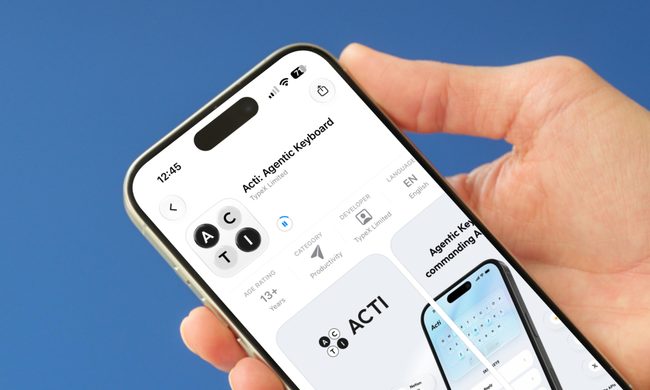
Acti just turned your smartphone keyboard into an AI assistant
One keyboard that types your words and does your errands. This might be the upgrade your thumbs have been waiting for.
Acti keyboard open on iPhone

Your smartphone’s keyboard is the thing you interact with the most, and yet, it has largely remained the same since it was introduced two decades ago. Yes, it has become better at understanding our typing habits and predicting text, but its function has largely remained unchanged. 

A Singapore startup called Acti looked at the keyboard and the large space it occupies on your smartphone and asked a fair question. Why not make it actually do things? After seeing its keyboard in action, I think the idea has legs.

Read more
Finding photos is so much easier with Siri AI in iOS 27 that I no longer scroll
Natural language photo search in iOS 27 is the kind of feature that quietly becomes essential.
Electronics, Phone, Mobile Phone

My camera roll has crossed 8,000 photos, and it got there by capturing random moments (only to forget them later). The problem, however, starts when someone asks me to share something specific. It could be their portrait from last weekend or the food pictures they snapped using my phone.

Finding those pictures usually means scrolling through my seemingly endless camera roll. If the photo is a month or two old, I end up scrolling past hundreds of other images to find it, and that gets old fast.

Read more
WhatsApp clears that usernames won’t leave you open to scammers
New safeguards include username keys, rate limits, and anti-impersonation protections.
Whatsapp Usernames Whatsapp Username

WhatsApp's long-awaited username feature is now officially rolling out to users. But almost as soon as it was announced, many began asking an obvious question: won't this make it easier for scammers to message strangers? Now, WhatsApp has stepped in to explain why it believes that won't happen.

WhatsApp says usernames aren't as open as Telegram's

Read more