1. Home
  2. Computing
  3. Legacy Archives

PC Shipments Show First Drop in Five Years

Add as a preferred source on Google
PC Shipments Show First Drop in Five Years
Image used with permission by copyright holder

According to research firm IDC, PC shipments were down 1.8 percent during the last quarter of 2008 and are expected to decline by more than 8 percent during the first half of 2008. The declines follow five years in which the sector almost always showed double-digit growth every year. However, IDC seems to detect what may be light at the end of the tunnel: the research firm expects small positive growth in PC shipments by the end of the year, making the total decline for 2009 somewhere around 4.5 percent.

"Slackening demand in the consumer market is stifling the engine of growth for U.S. PC shipments," said IDC’s research manager for personal computing Richard Shim, in a statement. "In conjunction with an increasingly negative scenario in the commercial market, the U.S. PC industry is seeing a substantial drop in volume. When the PC market rebounds, we expect the commercial replacements to take a larger role in the recovery."

Recommended Videos

Overall, IDC sees the worldwide PC market driven more strongly by the need to replace systems than in years past, driven in part by a shift toward portable and notebook computers which typically have a shorter useful lifespan than desktop systems and fewer paths for upgrades or extending system life. IDC sees tough economic conditions having a significant impact on sales in growth markets in Latin America, the Asia Pacific region, Central and Eastern Europe, and the Middle East and Africa: shipments to those markets could see double-digit declines over the next three quarters. However, IDC does not see the PC industry getting itself into the same kind of trouble as the automotive or financial industries during the economic downturn, noting the industry overall has considerably more room for pricing competition and consolidation.


Geoff Duncan
Former Contributor
Geoff Duncan writes, programs, edits, plays music, and delights in making software misbehave. He's probably the only member…
MSI’s new 4K 120Hz OLED monitor uses inkjet tech that could make premium screens cheaper
The first 27-inch 4K 120Hz IJP OLED monitor arrives through MSI and TCL CSOT
Computer Hardware, Electronics, Hardware

The future of OLED monitors may have just taken a significant step forward. MSI and TCL CSOT have unveiled the world’s first 27-inch 4K 120Hz desktop monitor built using inkjet-printed OLED technology, bringing a manufacturing method once limited to prototypes and specialist displays closer to everyday buyers.

Called the MSI Pro Max OLED 271UPJW12, the monitor uses a TCL CSOT panel created by printing organic light-emitting material directly onto the display. The process wastes less material than conventional OLED manufacturing and could eventually make panels cheaper and easier to produce at scale.

Read more
MSI launches a white 16-inch gaming laptop with a 12GB RTX 5070 and a pile of matching accessories
MSI bundles a mouse, headset, and extended mouse pad with its new white Crosshair gaming laptop
Adult, Female, Person

MSI has launched the Crosshair A16 HX MLG Edition globally, giving one of its upper mid-range gaming laptops a white-and-red makeover alongside a full set of matching accessories. MLG here stands for Mo-Loong-Gi, meaning “Dragon Princess,” and refers to an original character created by MSI rather than Major League Gaming.

What are you getting with this special edition laptop?

Read more
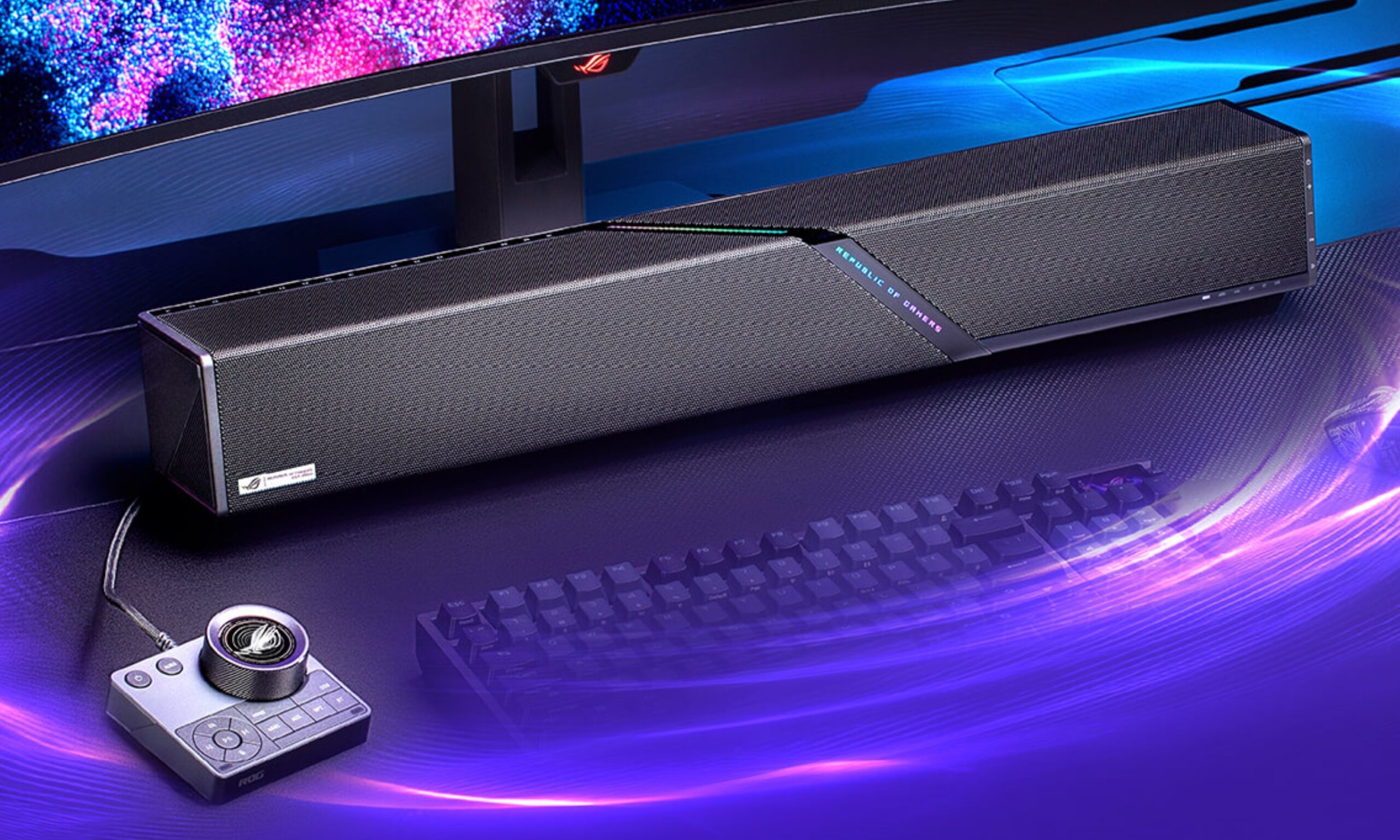
The ROG Gjallar packs Dolby Atmos in a compact form factor, but its US debut is still under wraps
Asus' new ROG Gjallar gaming soundbar brings Dolby Atmos and a wireless subwoofer to your desk.
Electronics, Speaker

Asus unveiled the ROG Gjallar back in early July 2026, as the first speaker system under the ROG brand. However, at the time, the company stayed quiet on pricing and availability. That's changed now. 

So what's actually inside the ROG Gjallar?

Read more