1. Home
  2. Cars
  3. Legacy Archives

Chevrolet to offer Z/28 performance packages for other Camaro models

Add as a preferred source on Google

It may not be apparent from its Nurburgring lap time, but the Chevrolet Camaro Z/28 poses an unusual problem.

Because it’s essentially a Camaro with some go-fast parts, there’s always the possibility that people will clone a z/28, ruining the investment of those willing to shell out $75,000 for one.

Recommended Videos

That’s why initially, Chevy wasn’t going to allow non-Z/28 owners to buy most of the parts that make this car a hero on the track. However the Bowtie brand has reversed its decision, according to Car and Driver.

Chevy will reportedly offer nine Z/28 performance packages for non-Z/28 models, offering more owners the chance to enjoy the fruits of its engineers’ labor.

The packages will include several items that aren’t available individually to non-Z/28 owners, including the spool-valve dampers and helical limited-slip rear differential.

Other goodies include the Z/28’s brake cooling ducts, cold-air intake, and exhaust manifolds (for V8 models). The car’s Recaro sport seats are already available on 2014 Camaro models, and on 2012 and later cars through the General Motors performance catalog.

Chevy will even apparently offer a Z/28 aero kit, giving lesser models most of the car’s bespoke styling. A front splitter, bolt-on wheel arches, rear spoiler, and underbody tray will be included. Buyers may not be able to get the nifty “Flowtie” aerodynamic grille badge, though.

One item that won’t be hard to get is the Z/28’s 7.0-liter LS7 V8, which has been available as a crate motor for a few years. It produces a mighty 505 horsepower and 481 pound-feet of torque.

Stephen Edelstein
Stephen is a freelance automotive journalist covering all things cars. He likes anything with four wheels, from classic cars…
Your next car’s software update could become its biggest security risk
Your next car could receive updates like your smartphone. That's also becoming a cybersecurity nightmare.
OTA technology allows manufacturers to remotely deliver software updates.

Modern cars are no longer machines that stay the same after they leave the showroom. Increasingly, they're becoming software-defined vehicles that receive new features, bug fixes, and security patches wirelessly, much like smartphones. But while over-the-air (OTA) updates have made vehicle maintenance easier and cheaper, cybersecurity experts are warning that the same technology could also become one of the automotive industry's biggest security challenges.

Researchers and policymakers are now calling for stronger oversight as connected vehicles become increasingly dependent on remote software updates. Their concern isn't just about hackers stealing personal data. It's about someone potentially interfering with the operation of a moving vehicle.

Read more
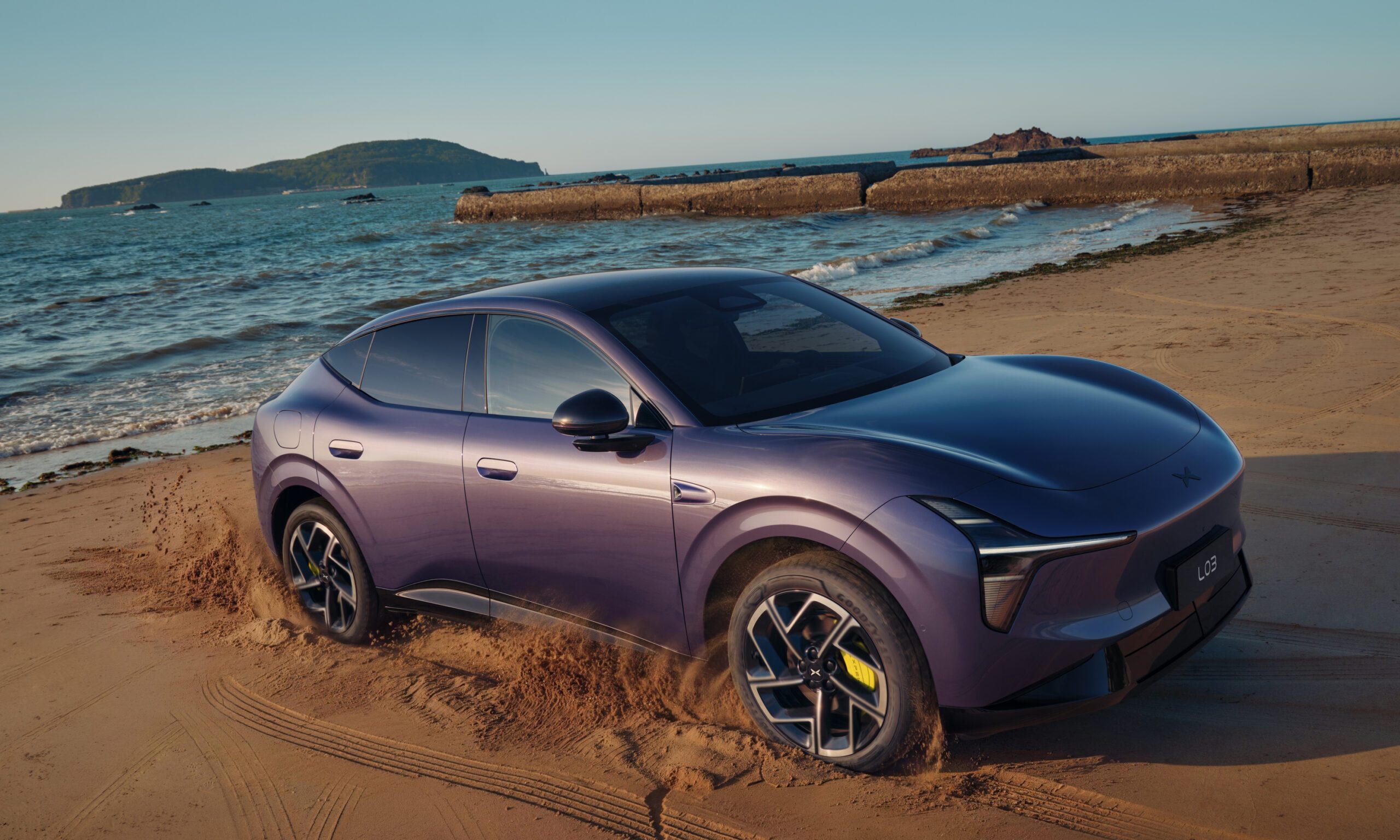
This sleek Chinese EV pairs supercar styling with three AI brains
The Xpeng L03 is an AI supercomputer disguised as a stylish family SUV
Xpeng L03

Xpeng’s latest electric vehicle carries enough processing power to make the term "smart car" actually sound more realistic than it actually is. The new Xpeng L03 debuted simultaneously in Europe and China on July 16, with the company presenting it across 65 markets. Available as a fully electric vehicle and an L03 Power X range-extender, the coupe-SUV is Xpeng’s most internationally focused model so far. Market-specific prices and sales dates remain unannounced.

Three AI chips and Google Maps built right in

Read more
A new sodium battery posts wild four-minute charging numbers, but don’t expect it in an EV yet
The breakthrough could improve fast charging and battery life, but the study hasn’t demonstrated those results in a production-sized pack
EV Charger

A new sodium-metal battery has posted a charging number that makes today’s EVs look painfully slow. In laboratory testing, the cell operated at a 15C rate, equivalent to completing a charge or discharge in roughly four minutes.

That doesn’t mean researchers plugged in an electric car and watched it fill up before the driver finished buying coffee. The result came from a small experimental cell using a new quasi-solid electrolyte, while the larger pouch-cell prototype delivered far less dramatic performance.

Read more