Like a creepy Santa Claus, Panasonic’s newest 4K Viera televisions will detect when you and your family walk nearby. They may not know whether you’re naughty or nice, but they can tell whether you’re into dramas or comedies.
Announced Wednesday by the consumer electronics giant, the new lineup of six models offer a new twist on smart technology, including cameras and proximity sensors that can detect when a specific individual is near. Users can build profiles for up to five people, the company says, and the set will auto-tweak the TV interface for each one.
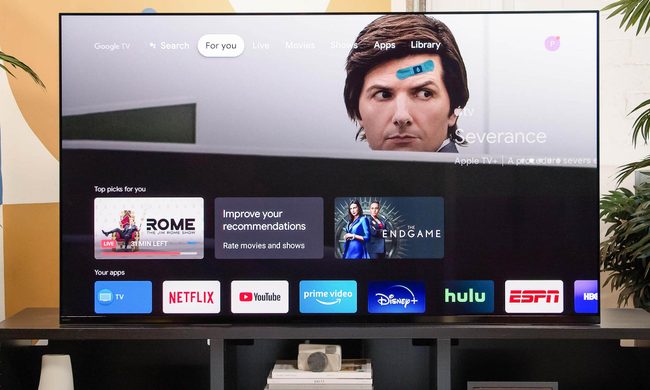
Once they recognize you, these new sets won’t just feed you online video from a variety of sources, they’ll also customize it for you. The Panasonic Viera TC-65AX800U could offer you an on-screen button for that Game of Thrones chatroom you and your YouTube buddies created (you are SUCH a dork); your wife and daughter will see their favorite channels and shows instead, letting them bypass you and your weird friends.
It’s just one part of Life + Screen, Panasonic’s latest efforts to smarten up your living room. In a briefing in New York City on Wednesday, the company said it was moving beyond “smart TVs” that present online content through Hulu and Netflix to systems that uses the cloud to tailor feeds to your preferences, an acknowledgement that what consumers are watching is morphing from what the cable company provides to the wealth of other types of content out there, from photos and video on demand to Internet-only shows. Can you say “House of Cards”?
This system includes a new app for iPhone and Android phones that will let you fine tune the contrast and brightness of your set, just as you would from your remote. Even the remote control itself is smart, featuring a touch control, a microphone to let you control your set with your voice, and a “my button” that lets you save a video feed to your individual profile.
The new lineup includes advanced video features as well (of course) – some so advanced they’re unlikely to benefit most consumers, at least for the time being, although your next-door neighbor will surely turn green with envy.
A new HEXA processing engine with a dual-core processor decodes HEVC (High-Efficiency Video Coding) and enables playback of H.265 content – in other words, streaming 4K content won’t be a problem in the future. And the chipset supports a number of advanced connections, notably DisplayPort 1.2a, which lets you send 4K 60p signals from your PC to your set. Should you stumble across a 4K video source today – congrats! – it’s a 30p signal. The new connections support twice as many frames, and looked wonderful in some demos from game companies like Slightly Mad Studios and Nvidia.
You’ll almost never see this format in the wild, and 30p 4K is rare enough; you’re more likely to create it at present with a new digital camera than you are to see it. Still, this takes “keeping up with the Joneses” to a new level. It also upconverts lower resolution formats like Blu-ray into 4K by matching individual frames against a database of 120,000 patterns built into the chipset.
Also of note is a move by Panasonic to support the DCI 98% color space, a relatively unknown acronym short for Digital Cinema Initiative that boasts a much wider color gamut than last year’s 4K sets, Panasonic explained. The spec is being pushed by Hollywood, and notably features much more vibrant reds and better black levels than in the past. Panasonic supports it by using new phosphors in the backlighting.
Panasonic argues that these models compare well with plasmas – from what I saw in a brief demo, I tend to agree. A scene from Harry Potter that Japanese engineers view as a torture test (for the dark hues, not the banal dialog) boasted far richer colors and deeper blacks than ordinary LCDs.
But will they perform in your living room? Stay tuned to find out.