  1. Home
  2. Cars
  3. Legacy Archives

Mercedes-Benz envisions a plug-in-centric future for hybrid vehicles

Add as a preferred source on Google

Electric vehicles are often lumped together into a sparking, sizzling clump, but they can be just as varied and diverse as their gas-powered cousins.

There are gas-electric hybrids, which use power from combustion and electrical generation to move their wheels. All-electric cars siphon power from a variety of sources to charge their batteries, including specialized stations and standard 120-volt outlets. There are also hydrogen fuel cell vehicles, which generate electricity through a chemical reaction.

Recommended Videos

As you can see, electric vehicles cannot be simply painted over with a broad brush.

For Mercedes, though, plug-in hybrids are the clear choice. They act like standard hybrids for the most part, but can be charged with an external power source such as a household outlet. This allows them to function perfectly within the current infrastructure, a major selling point for Mercedes. Thomas Weber, Mercedes’ head of development, expressed his company’s interest in plug-ins in a report by Autocar.

“For C-Class upwards, the only way to go as we near 2020 and beyond is plug-in hybrid electric vehicles,” he said. “We will have a plug-in S-Class in September, and later in the life cycle of the C-Class we will have one too.”
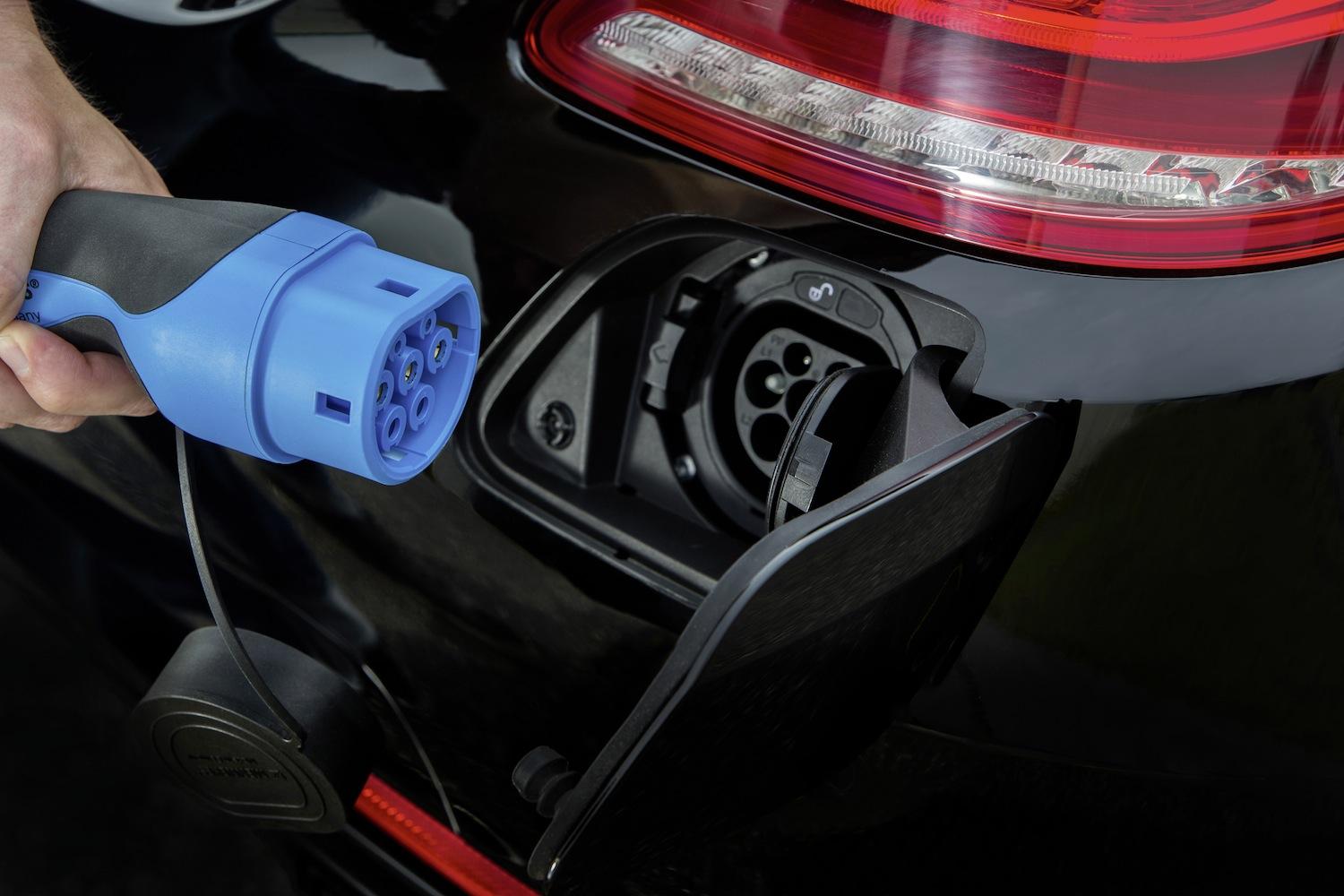
2015 S500 PLUG-IN HYBRID_ (7)
Image used with permission by copyright holder

Such a large influx of new technology would normally require serious overhauls in the company’s model lineup, but luckily Mercedes’ new Rear-drive Architecture makes it possible for the company to “go for plug-in hybrids across the range,” explained Weber. 

While Mercedes favors plug-in hybrid technology, companies like Honda and Toyota are leaning toward hydrogen fuel cell science. Instead of using an electric motor in conjunction with a gas engine, vehicles like the Honda Clarity use a hydrogen/oxygen chemical reaction inside a fuel cell to generate electrical power.

Weber doesn’t believe that these methods are mutually exclusive, however. He affirms that fully electric vehicles, fuel cell cars, and standard hybrids have a place in the automotive world’s future.

“We still believe electric vehicles based on fuel cells will be part of the story, and for the large vehicles, we will see a growing share of plug-in hybrids,” said Weber. “I’m still optimistic that in the coming years this kind of technologies will see at least a stronger growth rate than we see today.”

Andrew Hard
Andrew first started writing in middle school and hasn't put the pen down since. Whether it's technology, music, sports, or…
Volvo is rolling out Apple Music to over 2 million cars with a simple OTA update
Your Volvo may soon get Apple Music without needing CarPlay
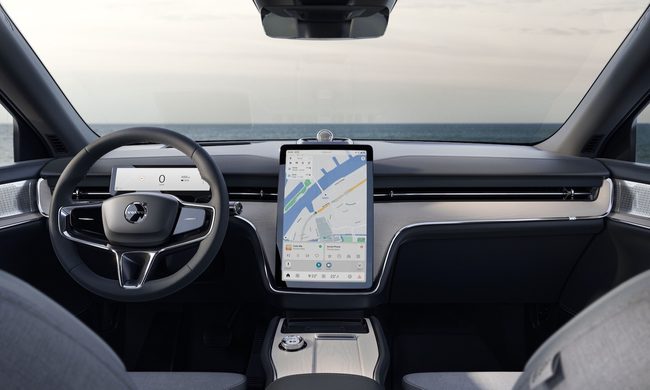
Interior view of the 2024 Volvo EX90.

The line between your smartphone and your car continues to blur. Volvo has announced that it is rolling out an over-the-air software update that brings Apple Music directly to the infotainment systems of more than 2 million vehicles worldwide. Instead of relying on Apple CarPlay or plugging in an iPhone, eligible drivers will be able to stream music natively from their car's built-in system, making Apple Music another integrated feature of Volvo's software experience.

The update is arriving for a wide range of Volvo models, including the EX90, ES90, XC90, S90, V90, XC60, S60, V60, XC40, EX40 and EC40, covering model year 2020 onwards. Availability, however, may vary depending on the vehicle.

Read more
Chery’s latest EV packs flagship tech for the price of a base Tesla, but you can’t buy it
Here's everything packed into Exeed's 2027 Exlantix ES, from its 27-sensor autonomous driving suite to its 860 km range, all starting under $31,000.
Car, Transportation, Vehicle

Chery's premium arm just dropped a sedan that makes you wonder why American EVs cost twice as much for half the tech.

Exeed's 2027 Exlantix ES ships with a driver-assist system called Falcon 700. It is built around an Nvidia Orin-Y chip and a genuinely stacked sensor suite.

Read more
A new AI model wants self-driving cars to think before they swerve
Forget guessing games, this self-driving AI actually shows its work.
Self driving car

Self-driving cars have gotten pretty good at driving. The harder problem is teaching them to drive safely in situations nobody planned for. We have heard horror stories of self-driving cars, behaving erratically in emergency situations, often times delaying first responders from reaching the scene.

A team at Seoul National University, led by professor Jun Won Choi from the Department of Electrical and Computer Engineering, thinks they have cracked part of that puzzle with a new AI model called SafeDrive. The research was recently selected as a highlight paper at CVPR 2026, a distinction that goes only to roughly 3% of all submissions.

Read more