1. Home
  2. Wearables
  3. News

Apple wants AR glasses that fit you, not the other way around

A forward hinge and a frame-fixed optics housing aim to preserve image geometry while improving comfort.

Add as a preferred source on Google
Representative Image of Smart Glasses
Unsplash

Apple has a practical AR glasses problem to solve before anything feels everyday: the moment you adjust the fit, the image can shift. According to Patently Apple, the new patent lays out a smart glasses structure designed to keep key display parts in precise alignment, even as the arms move like normal eyewear.

The filing describes a rigid electronics housing near the display frame. That fixed section can hold components like projectors, waveguides, speakers, processors, and batteries while maintaining a constant distance and angle between the projector and the transparent display window. Basically, the optics stay put, so the visuals should stay consistent.

Recommended Videos

Apple pairs that with a hinge positioned forward, closer to the frame, where the securement arm attaches. The arms can rotate for comfort and fit without disturbing the optical path, unlike Meta Glasses.

Why AR gets blurry when you refit

Many smartglasses designs put electronics into the arms. That’s an efficient place to stash hardware, but it also means fit adjustments can flex or rotate parts that need to stay precisely positioned for a stable image. Even small shifts can change projection geometry and force recalibration.

Apple’s patent tackles that by separating fit from optics. The arms move, the optics do not.

The hinge placement is the trick

The forward joint is doing more than making the glasses easier to adjust. By putting the hinge near the front housing, Apple can keep the sensitive display system in a rigid module while still letting the arms accommodate different head shapes. Biasing members like springs or cantilever elements can pull the arms inward for a secure fit, without tugging on the aligned components.

What this suggests about Apple’s priorities

This doesn’t confirm a product or a timeline. It does show where Apple is spending design effort: wearability, clean aesthetics, and optics that behave predictably when you make real-world adjustments. If Apple’s AR glasses ever ship, this kind of architecture points toward eyewear-like comfort paired with display alignment that doesn’t drift when you refit the frame.

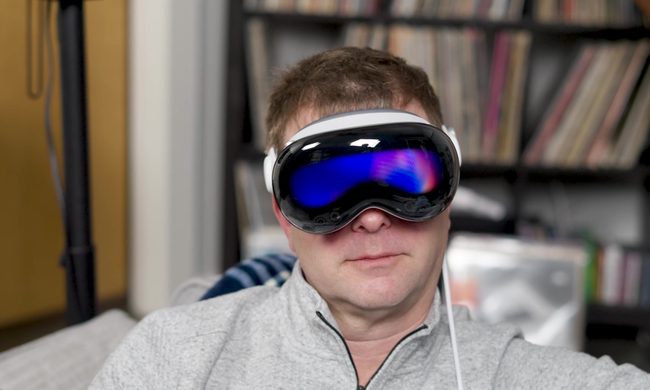
The Apple Vision Pro, released in 2024, could be said to be a precursor of things to come. If Apple learns from the Vision Pro’s rollout, it’s new AR glasses could place it

Paulo Vargas
Paulo Vargas is an English major turned reporter turned technical writer, with a career that has always circled back to…
I took this Oppo smartwatch swimming, and it tracked everything except my excuses
The Oppo Watch X3 caught every lap, stroke, and my poolside talking breaks
Wristwatch, Arm, Body Part

I recently covered a report suggesting that people who use fitness trackers and smartphone apps tend to stay more physically active. While my experience sits far outside the scope of that study that involved cardiovascular disease, I now understand how a wearable can turn an ordinary workout into something you want to repeat.

I have been trying to get back into swimming, and the Oppo Watch X3 arrived at the perfect time.

Read more
Your dog can run, but Fi’s new Starlink satellite-backed tracker makes sure you can still find them
Fi Ultra borrows Starlink satellites to find pups that wander off the grid
Fi Ultra dog tracker

A runaway pup can race into a forest or across miles of open countryside, leaving its owner with a GPS tracker that suddenly has no way to report its location. But Fi is looking to solve that problem with the Fi Ultra, which is a new dog tracker that falls back on SpaceX’s Starlink network whenever cellular coverage disappears. The company describes it as the first dog tracker powered by T-Mobile’s T-Satellite with Starlink service. It is available now in the US for $199, plus a $20 activation fee and a $189 annual membership.

Your dog just got a satellite connection

Read more
Still waiting for a cheaper Vision Pro? New report brings bad news
Another nail just landed in the cheaper Vision Pro’s coffin
Apple Vision Pro

After bouncing around rumors and reports, the cheaper Vision Pro dream might be dead. We've seen delays, a supposed cancellation, and even a possible revival over the last couple of months. But a new supply chain report suggests it may finally be time to stop waiting.

Apple has reportedly suspended development of a lower-cost display intended for a lighter, more affordable Vision headset. Samsung Display plans to formally terminate the project in September, according to Korean outlet The Elec. Apple has made no public announcement about canceling the headset, although losing its purpose-built display makes an eventual launch look increasingly improbable.

Read more