
With gas prices in most parts of the United States well past $4.00 a gallon, and edging ever upward, interest in finding an alternative fuel source has never been higher. Ethanol, bio-diesel and gasoline-electric hybrids have all already shown up on the market in one form or another, but the auto industry’s darling, hydrogen fuel cells, have for the most part been confined to magazine covers and car expos.
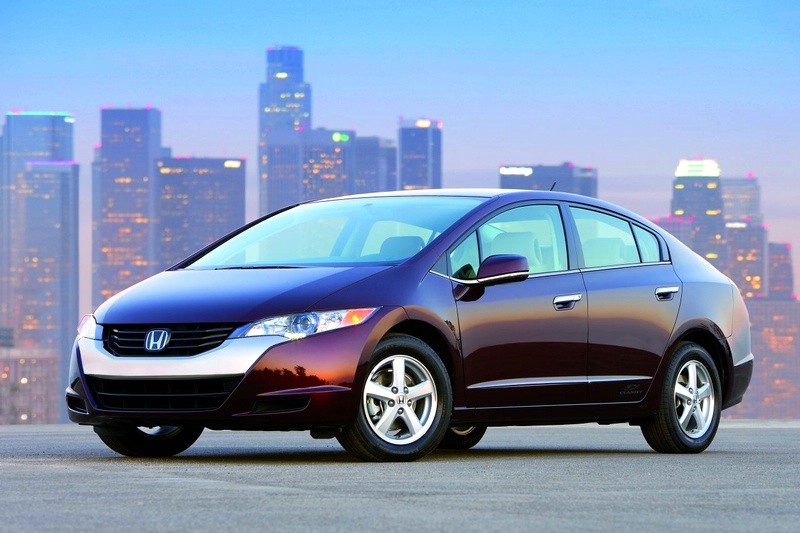
That may change with Honda’s 2008 FCX Clarity, one of the first hydrogen fuel cell vehicles to reach the hands of consumer in the U.S. Beginning in July, the Clarity will move hydrogen technology out of car company labs and onto the streets, when customers begin leasing some of the first publicly available models.
Like all hydrogen fuel cell vehicles, the Clarity generates electricity by combining hydrogen and oxygen, the byproduct of which is pure, drinkable water that dribbles out of a tailpipe. Electricity from the fuel cell powers an electric motor, which drives the car forward much like a typical electric vehicle, but without the weight of lead-acid or nickel-cadmium batteries.
When the tank runs low after about 270 miles of driving, Clarity drivers can swing by hydrogen refueling stations (if available in your area). Much like refilling a gasoline car, Honda promises that filling up Clarity only takes a few minutes. Right now, filling stations have only cropped up in Southern California, and are even rare there, but Honda is developing a fuel station that will make it possible to produce hydrogen from natural gas right at home.
Astute students of history will notice that these vehicles are powered by the same gas that lifted (and roasted) the Hindenburg, but Honda insists the FCX is safe for on-road use thanks to a number of safety features that have been built in. Hydrogen sensors positioned all around the car, for instance, will detect leaks and shut down supply lines automatically, while check valves in the filling system ensure that the high-pressure gas can only go in, and not out.
The Clarity adopts the same 110-inch wheelbase as its gasoline-powered cousin, the Accord, but sheds its muscular profile for more decidedly aerodynamic shape that’s more reminiscent of the now-iconic Toyota Prius. The frame has also been lightened with aluminum to accommodate for the extra weight of the fuel cell package, bringing curb weight to 3582 pounds, about average for a sedan of its size.
As for how fast the Clarity will go, Honda makes no bold performance claims. The Clarity’s electric motor will deliver just 134 horsepower and 189 foot-pounds of torque, although it’s slightly unfair to compare electric motors with gasoline engines because they vary so significantly in power characteristics (they deliver maximum torque right from 0 RPM, for instance.) Even so, we wouldn’t expect the Clarity to put your neighbor’s Mustang, or even Malibu, to shame.
The FCX concept has existed in various incarnations since 1999, but as the lack of public knowledge about the models would suggest, none have ever reached mainstream production. The FCX Clarity will be a step forward, but its distribution could still hardly be called “broad”: Honda plans to produce only about 200 of them over the next three years, and the first five will go to pre-selected high-profile customers whose driving habits match up well with the FCX’s capabilities. (In other words, they won’t be going far from home.)
And although seemingly every automaker has its PR department working hard to make sure hydrogen vehicles throw off a green glow in the public’s eye, many current methods of actually producing the clean-sounding fuel still rely on the old standard – fossil fuels. The gas at most filling stations is reformed from natural gas, a fossil fuel piped out of the ground much like petroleum. And though hydrogen can be produced from water, it requires huge amounts of electricity, which primarily comes from coal-burning power plants in the United States.
Honda hasn’t fully sketched out what hoops U.S. customers will have to jump through to get behind the wheel of one of the few Claritys that will appear here, but at the moment, we do know that only those in Southern California will have a shot, due to the fueling stations there. As for price, Honda will lease them for $600 a month, about the same you might pay for a BMW 335i coupe. It does, however, include insurance – since the technology is so new that most ordinary insurance companies probably wouldn’t touch them. But such is the price of progress.
For more information, check out Honda’s detailed FCX Web site.


