  1. Home
  2. Emerging Tech
  3. News

ChatGPT’s upcoming erotic chat mode risks exposing millions of kids to adult content

ChatGPT is going adult, but the people hired to keep it safe are not on board.

Add as a preferred source on Google
ChatGPT running on a phone
Rachit Agarwal / Digital Trends

Sam Altman wants ChatGPT to get spicy. OpenAI is planning to release an “adult mode” that would allow users to have explicit text conversations with the chatbot. It sounds straightforward enough, but the rollout has been anything but smooth.

In October, Altman posted on X that the feature would launch in December. However, the release was delayed after OpenAI stated that the company was facing issues with age verification.

Recommended Videos

A new report by WSJ states that it might only be part of the story. When Sam Altman made that announcement, he hadn’t told his own staff. The announcement blindsided OpenAI employees and executives alike, and the promised December launch quickly fell apart. 

Is ChatGPT actually ready for this?

OpenAI assembled an advisory council of psychologists and neuroscientists to help guide responsible AI development. When the council found out the company was forging ahead with adult mode despite their objections, they were not happy.

Their biggest worry was emotional over-reliance on the chatbot. One council member pointed to cases where users had taken their own lives after forming intense bonds with AI and warned that OpenAI risked creating a “sexy suicide coach.” That’s a phrase nobody expects to hear anywhere, yet here we are.

There’s also a more practical problem. The age verification system OpenAI built to keep minors away from adult content was misclassifying them as adults around 12% of the time. With roughly 100 million users under 18 each week, that’s potentially millions of kids slipping through the cracks every single week.

What happens now?

OpenAI has delayed the launch without a confirmed new date, stating that it needs more time to refine the experience. When it does arrive, the company plans to limit adult mode to text, with no erotic images, voice, or video generation.

The company also stated that it trains its models to discourage users from forming exclusive relationships with the chatbot and to remind them that they should form real-world relationships. Whether that’s enough to silence the growing chorus of internal and external critics remains to be seen.

Personally, I want the AI models to stay as far away from erotic content generation as possible until there are active safeguards in place. We have already seen what havoc Grok created when it allowed users to undress anyone. We don’t want to see a repeat of something similar or worse.

Rachit Agarwal
Rachit is a seasoned tech journalist with over ten years of experience covering the consumer technology landscape.
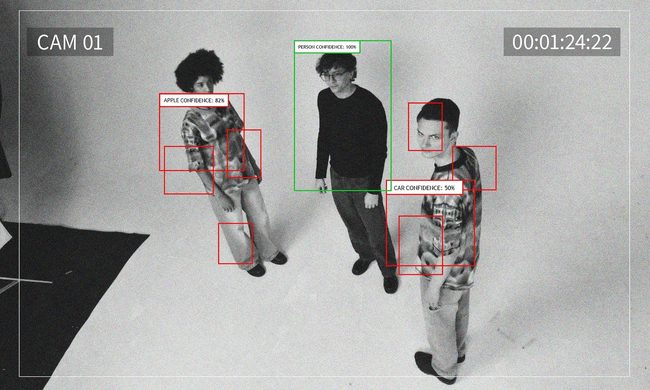
Anti-surveillance clothing is getting cheaper, but don’t expect an invisibility cloak
Affordable shirts now claim to confuse facial recognition, although their protection depends heavily on the camera and software watching you
Chart, Plot, Adult

Anti-surveillance clothing is starting to look less like an art-school experiment and more like something you could actually wear outside. Shirts designed to confuse facial recognition systems now cost about as much as ordinary streetwear, although buying one won’t make you disappear.

The Guardian reports that designers are using face-like prints, unusual cuts and infrared lights to interfere with computer vision. These techniques target specific weaknesses, so their success depends on what happens to be watching you.

Read more
This spinning drone hides in plain sight using a visual illusion
This drone doesn't turn invisible. It tricks your brain into thinking it has.
Phantom Twist

For decades, engineers have chased the dream of an invisible drone. The usual approaches have involved transparent materials, camouflage coatings, or complex optical systems that bend light around an object. Researchers at Northwestern University decided to take a completely different route. Instead of hiding the drone itself, they chose to fool the human eye.

The result is Phantom Twist, an experimental drone that spins so rapidly it almost disappears into the background. It's not technically invisible, but to anyone watching, it looks more like a faint blur than a flying machine.

Read more
This smart knitted fabric can flip switches, count your steps, and even change shape
Grandma's knitting just entered its Iron Man era
Representative Image

For most of us, knitting brings to mind sweaters, scarves, and perhaps an ambitious grandmother determined to make winter more fashionable. Researchers at Harvard University, however, have a far more futuristic vision. They've transformed ordinary knitted fabric into a programmable material capable of changing shape, acting as an electrical switch, sensing movement, and potentially forming the foundation of tomorrow's wearable technology.

The research, published in Advanced Functional Materials by scientists at the Harvard John A. Paulson School of Engineering and Applied Sciences (SEAS), demonstrates how machine-knitted textiles can "snap" between multiple stable shapes without relying on motors or rigid mechanical parts.

Read more