  1. Home
  2. Emerging Tech
  3. Legacy Archives

Bang and Olufsen Olufsen BeoTime Alarm Clock

Add as a preferred source on Google


How you improve an alarm clock when adding nature sounds, CD players and extraneous features like Bluetooth capability has already been done? Shape it like a flute and make it control your home theater, of course.

That’s the route Bang & Olufsen has taken with the BeoTime, an alarm-clock-cum-remote-control inspired – according to the company’s own PR – by the conflict between night and day in Mozart’s opera The Magic Flute. A polished aluminum tube comes topped with three tiny square LCD displays to do the time telling, a pop-out lever in one end to activate and deactivate the disarm, and accelerometers within to fire up the backlight with a nudge at night, or trigger the snooze in the morning.

Bang & Olufsen BeoTime Alarm Clock

But that’s all the same stuff your Sony Dream Machine did 15 years ago. The real draw for existing Bang & Olufsen customers will be the integrated control pad, which allows the remote to tie into home stereo systems as a remote. It can even be programmed to activate the stereo, TV or lights in the morning to wake you up, or shut them down after a preprogrammed delay at night, like the sleep button on a television.

Recommended Videos

Like most of the Danish company’s design-savvy fare, the BeoTime carries a rather lofty price tag. It will retail for $375 when it begins showing up in Bang & Olufsen showrooms in August. More information can be found at Bang & Olufsen.

Nick Mokey
As Digital Trends’ Editor in Chief, Nick Mokey oversees an editorial team covering every gadget under the sun, along with…
AI security cameras may soon recognize your walk before they recognize your face
A new AI gait system tracks body motion through skeletal keypoints, aiming at long-range identity checks where face scans and fingerprints fall short.
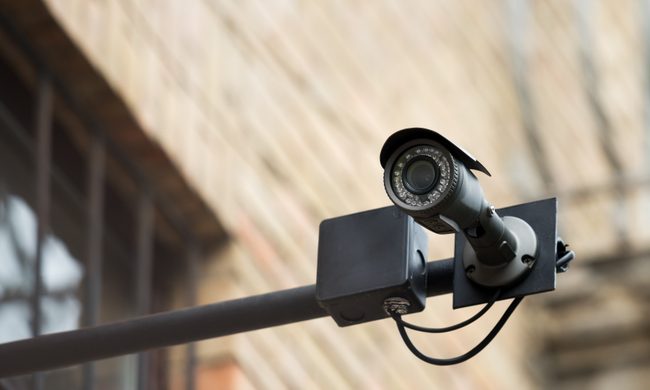
Security cam

Security cameras are built to look for faces. New research suggests they may soon have another target, the small habits buried in the way someone walks.

A paper published in the International Journal of Reasoning-based Intelligent Systems describes SKDMap-Net as a gait recognition system designed to identify people from walking video, even when the camera doesn’t get a clean look at their face. Instead of relying on a close-up scan, it studies how a body moves from frame to frame.

Read more
A 20-second 3D printer breakthrough comes with exactly the kind of catch science loves
The process can create complex microstructures far faster than some laser-based methods, but full 3D control is still a work in progress.
Aluminium, Smoke Pipe

A 3D printer that can make a structure in about 20 seconds sounds like a lab claim wearing a cape. The clever bit is real. The catch arrives before anyone starts dreaming about instant replacement parts.

University of Utah researchers have demonstrated a holographic 3D printing technique that hardens tiny structures in one exposure instead of building them layer by layer. That one-shot approach could avoid the weak, leaky seams that stacked printing can leave behind. For now, though, this is a tool for microstructures, not a shortcut to printing whatever object pops into your head.

Read more
Amazon is full of copycats and shady brands. This Chrome extension lets you avoid them.
Advertisement, Poster, Text

Shopping on Amazon used to be simple. You searched for a product, compared a few familiar brands, and checked out. These days, it often feels like you're scrolling through an endless parade of names that look like someone leaned on a keyboard before hitting publish. That's exactly the problem Knockoff is trying to solve.

Created by developer Josh Pigford, the Chrome extension doesn't promise to expose counterfeit products or magically tell you what's good. Instead, it tackles something arguably more annoying: the flood of unfamiliar, mass-produced brands that dominate Amazon search results.

Read more