1. Home
  2. Audio / Video
  3. News

You’re wasting money on audiophile cables, new tests suggest

A $7 cable matched a $4,000 option in lab measurements and listening tests.

Add as a preferred source on Google
A woman wearing headphones with her eyes closed.
VinzentWeinbeer / Pixababy

You’re wasting money on audiophile cables, new tests suggest. A controlled comparison between a budget RCA cable and a boutique model priced in the thousands found no real change in sound quality.

That conclusion comes from lab-grade measurements paired with listening checks. The findings push back on a long-held belief that pricier cables unlock better audio.

Recommended Videos

In this test, a roughly $7 Amazon Basics RCA cable went up against a high-end option costing over $4,000. Despite the huge gap in price, both delivered the same results in measurements and listening scenarios.

Lab tests show identical performance

The clearest evidence comes from controlled measurements using professional analyzer hardware. Both cables were evaluated for distortion, noise, and frequency handling under the same conditions.

With a 4 kHz signal, each cable introduced only minimal distortion, with no meaningful separation between them. The more expensive option even picked up slightly more electrical noise in that run, though the difference didn’t matter in real use.

Across a wider range, the pattern held steady. Frequency response matched, phase behavior stayed aligned, and signal transitions showed no practical difference. Even highly zoomed-in analyzer graphs failed to show any real deviation between the two.

Jitter testing followed the same trend. The cheaper cable showed a tiny increase, but it was measured in extremely small units and came with a caveat, it was also longer than the premium cable.

Why the myth still sticks

So why does this belief keep circulating? Much of it comes down to perception and expectation.

Listeners can feel like they hear differences during casual listening, especially when they know which product they’re using. But those impressions tend to fade in blind comparisons, where bias is removed.

There’s also the appeal of premium materials and technical language. High-end cables highlight features like silver conductors or specialized insulation, which sound convincing but didn’t produce audible gains here.

Some design choices can even add downsides. The expensive cable in this test used a locking connector that adds complexity and potential risk without improving signal delivery.

Where your money matters more

If cables aren’t the problem, the rest of your system likely is.

The results reinforce that RCA cables already operate comfortably within their limits. They carry audio with low noise, low distortion, and wide bandwidth, so they aren’t holding your setup back.

Real improvements come from other parts of the chain. Speakers, amplifiers, room acoustics, and source quality have a far greater impact on what you actually hear.

Spending thousands on a cable doesn’t just bring diminishing returns, it brings none in measurable terms. That makes it one of the least effective upgrades you can make.

Stick with a reliable, well-built cable and put the rest of your budget into gear that actually changes the listening experience.

Paulo Vargas
Paulo Vargas is an English major turned reporter turned technical writer, with a career that has always circled back to…
Stop joining group projects with a blurry laptop webcam and buy one of these instead
Your laptop webcam is sabotaging your first impression. These five can fix it
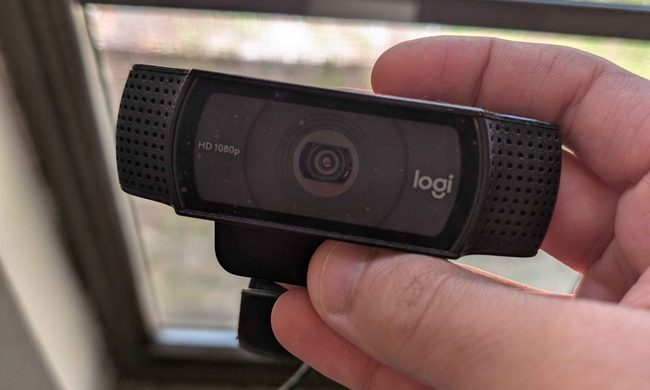
I'm holding my Logitech C920 1080p webcam in my hands.

The webcam built into your laptop might be good enough for a quick call with friends and family. But its shortcomings become much harder to ignore when you are presenting a semester project, interviewing for an internship, or maybe if you're planning to stream for fun.

Laptop cameras also tend to sit far too low, especially when the computer is placed directly on a desk. Meanwhile, a dedicated webcam lets you position the camera closer to eye level. This improves the framing and brings larger sensors, better microphones, and more effective low-light processing.

Read more
I desperately want a new classic Walkman, but Sony probably can’t give me one
Tech minimalism is begging for a new Walkman. Though rebuilding it may be close to impossible
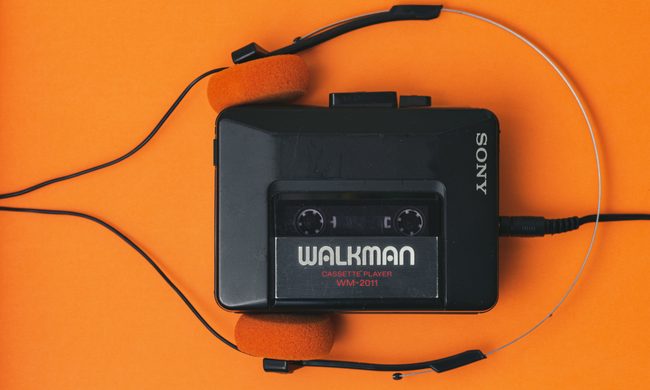
Sony Walkman WM2011

Every few months, another piece of tech that seems obsolete crawls out of a drawer and becomes cool again. The age of minimalism has revived the popularity of iPods among younger buyers. Dumbphones have become an escape hatch from endless notifications. Similarly, digital cameras are dangling from bags again. Physical media keeps attracting people who want something they can actually hold instead of another frustrating subscription.

All of this makes it the perfect time for Sony to bring back the classic Walkman, which was a phenomenon during the 80s and 90s. I would love one. Give me a compact cassette player, physical buttons, and wired headphones. Keep the apps, notifications, and algorithms that shape your taste of music. No more AI assistants or personalzied feeds, just you and your Walkman. There is only one problem though. Recreating the Walkman that people love and remember, would be far harder than putting an old design back into production.

Read more
Proton reveals how smart TVs track you and the escape situation is pretty grim 
Modern smart TVs fingerprint your screen content at the chipset level.
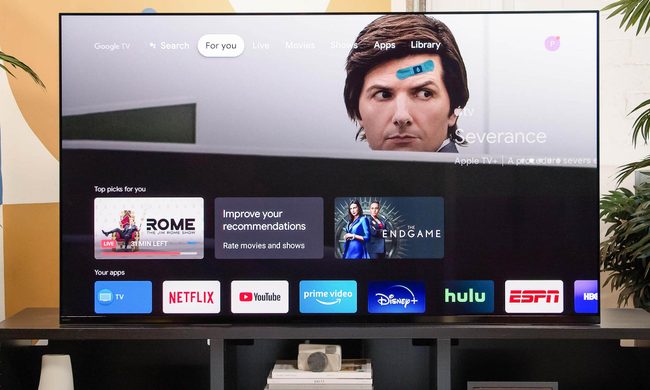
Google TV applications on the Sony A95K TV.

Your smart TV may know far more about your viewing habits than you realize, even if you rarely use its smart features. In a new privacy explainer, Proton warns that many modern TVs quietly collect data about everything displayed on the screen and share it with manufacturers, advertisers, and analytics companies.

The worrying part is that escaping this tracking is becoming increasingly difficult because many privacy controls are buried deep in settings or enabled by default. Proton argues that buying a smart TV today often means accepting a level of surveillance that most people never knowingly signed up for.

Read more