1. Home
  2. Audio / Video
  3. News

Anker’s Soundcore Liberty 5 earbuds use AI to fix the worst part of wireless earbuds

Liberty 5 Pro series lean hard into practical AI features

Add as a preferred source on Google
Soundcore earbuds
Anker Soundcore

Anker has added two new earbuds to its audio lineup called the Soundcore Liberty 5 Pro and Liberty 5 Pro Max. The regular Liberty 5 already made a strong impression in our review, where we praised Soundcore for getting most of the basics right, even if pricing left it under pressure from cheaper rivals.

Now, Anker is pushing the Liberty 5 line into more AI-focused territory, with the Thus AI chip powering clearer calls, smarter noise cancellation, voice commands, translation, transcripts, and meeting summaries.

Anker is using AI to clean up calls

The main upgrade is Anker’s new Thus AI chip, which appears in both Liberty 5 Pro models. It works with eight microphones and two bone-conduction sensors, along with an AI model, to separate the wearer’s voice from traffic, wind, office chatter, and other background noise.

Soundcore says the Liberty 5 Pro earned a Guinness World Records certification in April 2026 for the highest speech quality score for true wireless earbuds. The Liberty 5 Pro Max uses the same earbud units, so call performance should be similar across both models.

Recommended Videos

The same AI system also improves noise cancelling. Both earbuds use Adaptive ANC 4.0, which processes noise data up to 384,000 times per second and adjusts in real time. Soundcore says it can reduce noise from streets, subways, and offices. The Thus chip also enables 20 built-in voice commands, allowing users to adjust playback, volume, and ANC modes without using a phone.

The Pro Max case doubles as an AI note-taker

The Liberty 5 Pro Max gets the bigger case upgrade. It has a 1.78-inch AMOLED display and an AI Note-Taker that can record meetings and conversations. The Soundcore app can then generate transcripts, summaries, speaker labels, and action items.

Both models also support translation in more than 100 languages. On the Liberty 5 Pro, translation works through the earbuds, while the Liberty 5 Pro Max adds translation through both the earbuds and the case.

The regular Liberty 5 Pro has a smaller 0.96-inch TFT touchscreen for switching ANC modes, using transparency controls, activating Dolby Atmos, and adjusting EQ settings. Both models also support HearID 5.0, which creates a custom EQ profile after a short hearing test.

Core specs include 9.2mm wool-paper diaphragm drivers, Bluetooth 6.1, LDAC support, three-device pairing, Google Fast Pair, Apple Find My, IP55 dust and water resistance, wireless charging, and up to 6.5 hours of battery life with ANC on, or 28 hours with the case. The Liberty 5 Pro costs $169.99, while the Liberty 5 Pro Max is priced at $229.99.

Sudhanshu Kumar Mangalam
I’ve got about 4 years of experience, mostly covering gaming, PC hardware, and smartphones. In my free time, I like…
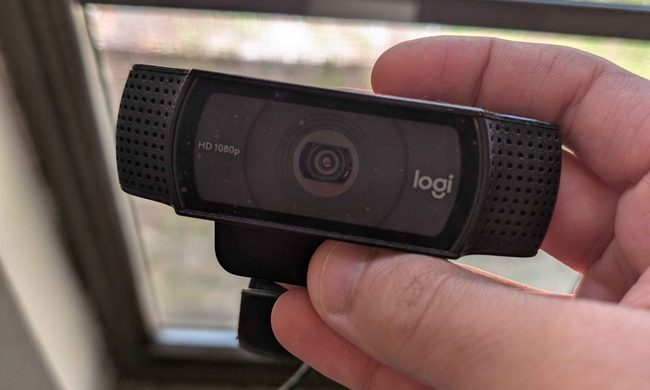
Stop joining group projects with a blurry laptop webcam and buy one of these instead
Your laptop webcam is sabotaging your first impression. These five can fix it
I'm holding my Logitech C920 1080p webcam in my hands.

The webcam built into your laptop might be good enough for a quick call with friends and family. But its shortcomings become much harder to ignore when you are presenting a semester project, interviewing for an internship, or maybe if you're planning to stream for fun.

Laptop cameras also tend to sit far too low, especially when the computer is placed directly on a desk. Meanwhile, a dedicated webcam lets you position the camera closer to eye level. This improves the framing and brings larger sensors, better microphones, and more effective low-light processing.

Read more
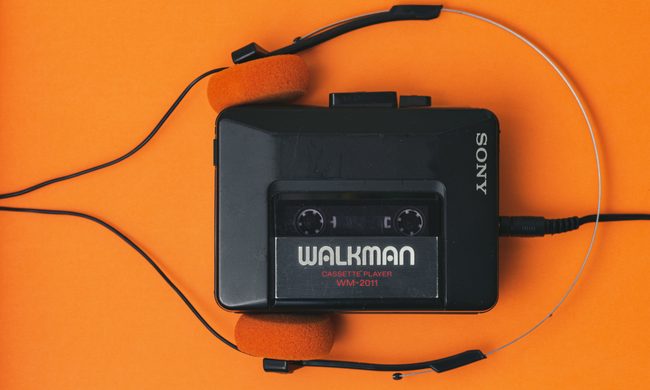
I desperately want a new classic Walkman, but Sony probably can’t give me one
Tech minimalism is begging for a new Walkman. Though rebuilding it may be close to impossible
Sony Walkman WM2011

Every few months, another piece of tech that seems obsolete crawls out of a drawer and becomes cool again. The age of minimalism has revived the popularity of iPods among younger buyers. Dumbphones have become an escape hatch from endless notifications. Similarly, digital cameras are dangling from bags again. Physical media keeps attracting people who want something they can actually hold instead of another frustrating subscription.

All of this makes it the perfect time for Sony to bring back the classic Walkman, which was a phenomenon during the 80s and 90s. I would love one. Give me a compact cassette player, physical buttons, and wired headphones. Keep the apps, notifications, and algorithms that shape your taste of music. No more AI assistants or personalzied feeds, just you and your Walkman. There is only one problem though. Recreating the Walkman that people love and remember, would be far harder than putting an old design back into production.

Read more
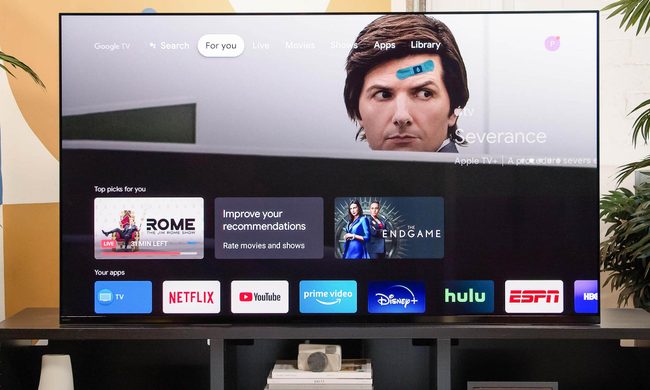
Proton reveals how smart TVs track you and the escape situation is pretty grim 
Modern smart TVs fingerprint your screen content at the chipset level.
Google TV applications on the Sony A95K TV.

Your smart TV may know far more about your viewing habits than you realize, even if you rarely use its smart features. In a new privacy explainer, Proton warns that many modern TVs quietly collect data about everything displayed on the screen and share it with manufacturers, advertisers, and analytics companies.

The worrying part is that escaping this tracking is becoming increasingly difficult because many privacy controls are buried deep in settings or enabled by default. Proton argues that buying a smart TV today often means accepting a level of surveillance that most people never knowingly signed up for.

Read more