1. Home
  2. Computing
  3. News

Google wants your app code so badly, it’s willing to pay for it

Google is paying for app code, and the reason is exactly what you think.

Add as a preferred source on Google
Google Logo
BoliviaInteligente / Unsplash

Google has been quietly reaching out to Android developers with an offer to buy access to their code. As reported by 404 Media, the company sent emails to a select group of Google Play developers, inviting them to join what it calls a “confidential content offer pilot.” 

The email frames it as a revenue opportunity, saying developers can “get paid for sharing the code powering your apps, as well as your archived projects.” Google adds that developers retain their intellectual property rights and that the license is non-exclusive.

So what does Google actually want the code for?

According to the report, the email never mentions artificial intelligence, but a link buried in it leads to a page titled “partnerships to improve our AI products.” On that page, Google openly states that it is paying for “non-public content in a range of media formats” to improve its AI models.

Recommended Videos

Connecting the dots isn’t hard. Google’s Gemini is excellent at image and text generation but has been falling behind in AI coding tools, while Anthropic has ridden the success of Claude Code to a valuation higher than OpenAI

OpenAI has also launched its own Codex app, focusing on developers. At the recently concluded Google I/O, the company showcased its Antigravity 2.0 IDE that can create entire apps. 

It seems that Google wants to train its AI with real code to improve its coding capabilities, so it can compete with the likes of Claude Code and ChatGPT’s Codex. Buying real-world code from developers is a shortcut to closing that gap.

Is there anything wrong with this?

While the long-term impact can be detrimental to developers, this approach from Google is not inherently wrong. At least it’s better than training AI on hundreds of thousands of books and online publications without permission, which is something most AI companies have done.

Developers retain their IP, the license is non-exclusive, and they get paid. That said, the lack of transparency in the email is worth noting. Framing an AI data acquisition program as a simple “revenue opportunity” without mentioning AI at all feels like Google is hoping developers won’t ask too many questions.

Rachit Agarwal
Rachit is a seasoned tech journalist with over ten years of experience covering the consumer technology landscape.
Samsung’s secret AI chip could finally cool down Exynos phones
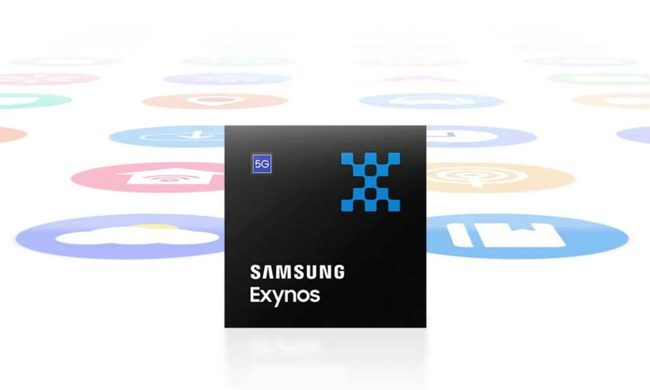
Samsung's GAIA AI chip is landing in laptops first, but its shared DNA with Exynos hints at a real fix for phones down the line.
Samsung Exynos chip illustration.

If you've ever owned an Exynos-powered Galaxy phone, you already know the drill: heavy tasks like capturing back-to-back pictures or photos for a while, heavy gaming, or rendering videos turn your device into a hand warmer. 

In such a situation, the battery bar drops faster than usual as well. Turns out, Samsung might be working on the fix, and it's coming in a way nobody expected.

Read more
Buying a monitor? This Mac app can expose problems before the return window closes
Your new monitor may look perfect, but it doesn't hurt to double check.
Screen Test v1.1

Making a brand-new tech purchase doesn't always carry the guarantee of a perfectly functioning unit. But a tiny Mac app called Screen Test can help you find a defect before it gets too late. Screen Test (version 1.1) is a native macOS utility containing more than 25 patterns and diagnostic tools for evaluating built-in and external displays. It can help reveal dead or stuck pixels, backlight bleeding, and other issues. The app works completely offline, so you don't have to rely on browser tabs or an internet connection.

Every pixel gets scrutinized

Read more
The old internet built a museum for dying tech sounds, and it’s somehow still alive
The wonderfully dated site has outlasted many of the noisy gadgets it was created to preserve
Camera, Electronics, Art

Before our gadgets became silent glass rectangles, they complained constantly. Dial-up modems screeched through every connection, while dot-matrix printers sounded like they were slowly chewing through the desk.

The Museum of Endangered Sounds keeps that irritating soundtrack alive. It first appeared in 2012, but the site is still online 14 years later, inviting visitors to hear technology that has mostly disappeared from everyday life.

Read more