  1. Home
  2. Cars
  3. Photo Galleries
  4. Legacy Archives

The ‘Black Crystal’ is a Russian-tuned Mercedes GL-Class fit for the KGB

Add as a preferred source on Google

If you own a Mercedes-Benz, there’s no shortage of tuners, like Brabus, that want to get their hands on it.

Now, you can even get a tuned Merc from America’s Cold War adversary. Russia’s Larte Design hopes to break into the U.S. market with the Black Crystal, which is based on the GL-Class.

The Black Crystal gets a new front fascia with a massive grille and LED daytime running lights with “crystal-shaped edges.” Widened fenders accommodate custom 22-inch alloy wheels, and the whole vehicle is blacked out. It looks like the preferred transportation of some highly sinister government agency.

At the back, there’s a Formula One-style center brake light and rear diffuser, which look a bit out of place on this giant Mercedes.
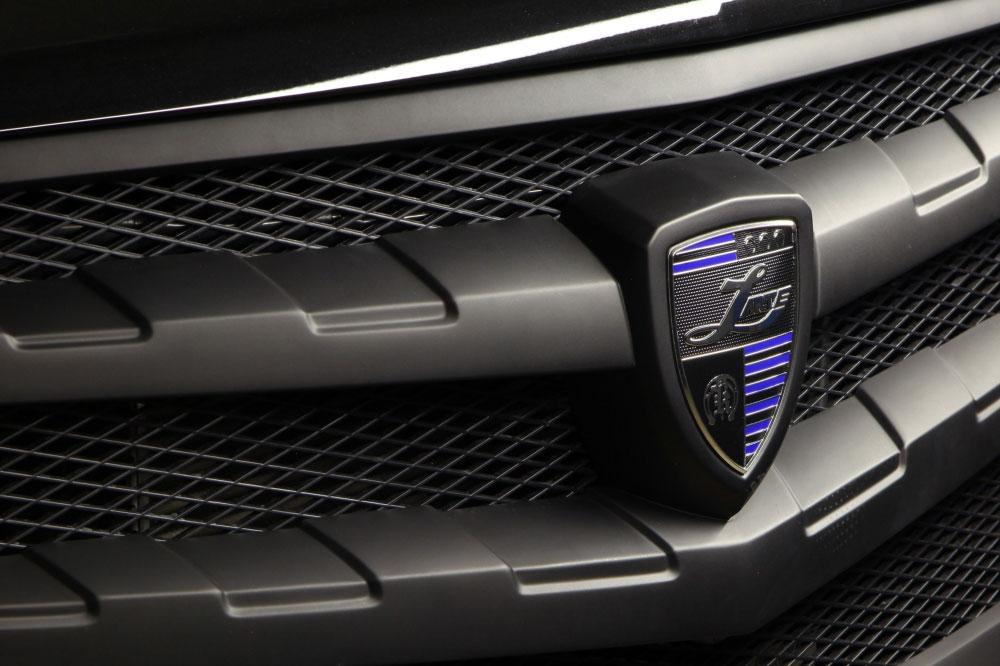
Larte Design Mercedes-Benz GL black crystal
Image used with permission by copyright holder

The version seen here is powered by a European-spec 3.0-liter turbo diesel V6 that produces 290 horsepower and 508 lb-ft of torque, thanks to upgrades from Germany’s Wetterauer and a new exhaust system from Remus.

That’s a healthy increase over the stock 258 hp and 457 lb-ft, or the U.S.-spec GL350 BlueTec’s 240 hp and 455 lb-ft. While impressive, it would be great to see a GL550 or GL63 AMG get the full Black Crystal treatment. Considering this tuned SUV’s menacing looks, a rumbling gasoline V8 soundtrack would seem more appropriate than diesel thrum.

Larte hasn’t announced its next model, but it says it already has kits for other luxury SUVs, including the Land Rover Range Rover Evoque and Infiniti QX80.

Stephen Edelstein
Stephen is a freelance automotive journalist covering all things cars. He likes anything with four wheels, from classic cars…
Volvo is rolling out Apple Music to over 2 million cars with a simple OTA update
Your Volvo may soon get Apple Music without needing CarPlay
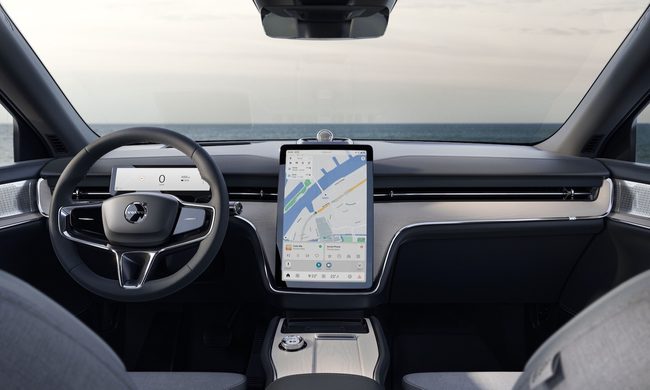
Interior view of the 2024 Volvo EX90.

The line between your smartphone and your car continues to blur. Volvo has announced that it is rolling out an over-the-air software update that brings Apple Music directly to the infotainment systems of more than 2 million vehicles worldwide. Instead of relying on Apple CarPlay or plugging in an iPhone, eligible drivers will be able to stream music natively from their car's built-in system, making Apple Music another integrated feature of Volvo's software experience.

The update is arriving for a wide range of Volvo models, including the EX90, ES90, XC90, S90, V90, XC60, S60, V60, XC40, EX40 and EC40, covering model year 2020 onwards. Availability, however, may vary depending on the vehicle.

Read more
Chery’s latest EV packs flagship tech for the price of a base Tesla, but you can’t buy it
Here's everything packed into Exeed's 2027 Exlantix ES, from its 27-sensor autonomous driving suite to its 860 km range, all starting under $31,000.
Car, Transportation, Vehicle

Chery's premium arm just dropped a sedan that makes you wonder why American EVs cost twice as much for half the tech.

Exeed's 2027 Exlantix ES ships with a driver-assist system called Falcon 700. It is built around an Nvidia Orin-Y chip and a genuinely stacked sensor suite.

Read more
A new AI model wants self-driving cars to think before they swerve
Forget guessing games, this self-driving AI actually shows its work.
Self driving car

Self-driving cars have gotten pretty good at driving. The harder problem is teaching them to drive safely in situations nobody planned for. We have heard horror stories of self-driving cars, behaving erratically in emergency situations, often times delaying first responders from reaching the scene.

A team at Seoul National University, led by professor Jun Won Choi from the Department of Electrical and Computer Engineering, thinks they have cracked part of that puzzle with a new AI model called SafeDrive. The research was recently selected as a highlight paper at CVPR 2026, a distinction that goes only to roughly 3% of all submissions.

Read more