  1. Home
  2. Emerging Tech
  3. News

AI security cameras may soon recognize your walk before they recognize your face

A new AI gait system tracks body motion through skeletal keypoints, aiming at long-range identity checks where face scans and fingerprints fall short.

Add as a preferred source on Google
Security cam
Godlikeart / Shutterstock

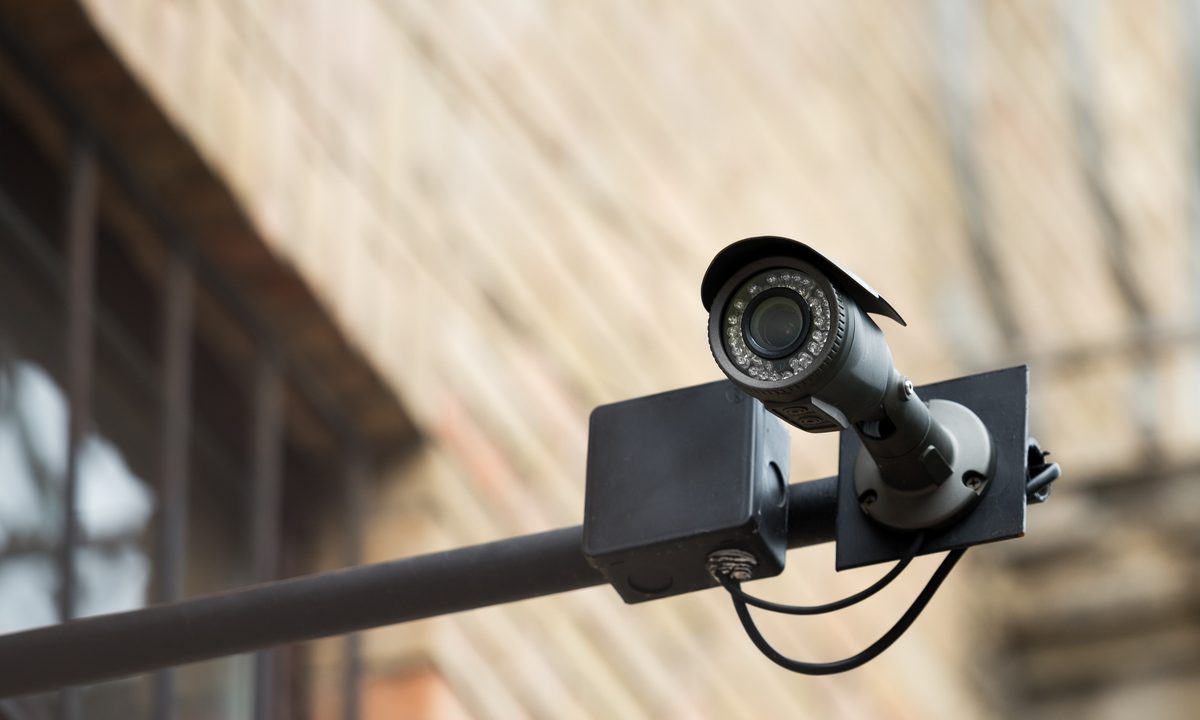
Security cameras are built to look for faces. New research suggests they may soon have another target, the small habits buried in the way someone walks.

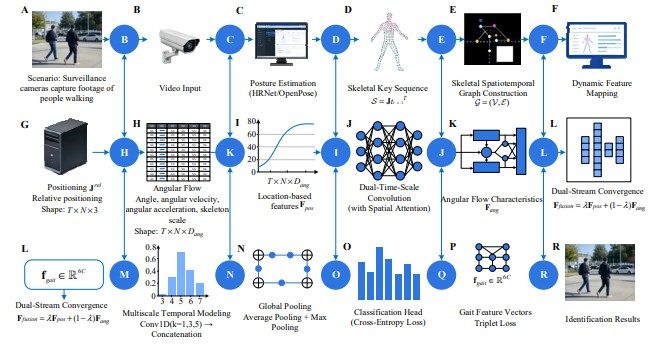
A paper published in the International Journal of Reasoning-based Intelligent Systems describes SKDMap-Net as a gait recognition system designed to identify people from walking video, even when the camera doesn’t get a clean look at their face. Instead of relying on a close-up scan, it studies how a body moves from frame to frame.

Recommended Videos

That’s useful and uncomfortable in equal measure. If someone is far away, turned sideways, or partly hidden, their walk may still be enough for an identity check. The model reached 95.8% accuracy on one major gait dataset and 83.7% Rank-1 accuracy on a harder real-world dataset.

Why a walk can travel farther

Faces, fingerprints, and irises all hit the same practical wall. They need a close, clear capture, which is exactly what many security cameras don’t get.
Walking gives the system more room to work. A camera doesn’t need someone standing still under perfect lighting. It can study movement patterns shaped by stride, timing, and limb motion.

That is why gait recognition keeps showing up in security research. It gives long-range cameras another identity signal when a face is blurry, angled away, or too small to trust.

How the AI reads motion

SKDMap-Net doesn’t treat walking as a flat outline. Multiple factors like a bad camera angle can make that outline messy fast.

Instead, the system breaks the body into moving points and tracks how those points behave over time. It studies how joints bend, how quickly they rotate, and how that rhythm changes during a walk.

That helps when the view gets worse. If the lower body is blocked, the model can put more weight on upper-body movement instead of guessing from missing legs. It’s watching motion, not shape alone.

Where privacy gets awkward

There is a cleaner version of this future where cameras process skeletal data instead of storing raw video. That could reduce how much identifiable footage moves through a security system.

It doesn’t make the idea harmless. Gait is still a behavioral biometric, which means a walking pattern can be used to re-identify someone even when a face is removed.

Better long-range security checks could also make public movement easier to track. The tech needs strict rules around storage, access, and deployment before “walk normal” becomes terrible privacy advice.

Paulo Vargas
Paulo Vargas is an English major turned reporter turned technical writer, with a career that has always circled back to…
A 20-second 3D printer breakthrough comes with exactly the kind of catch science loves
The process can create complex microstructures far faster than some laser-based methods, but full 3D control is still a work in progress.
Aluminium, Smoke Pipe

A 3D printer that can make a structure in about 20 seconds sounds like a lab claim wearing a cape. The clever bit is real. The catch arrives before anyone starts dreaming about instant replacement parts.

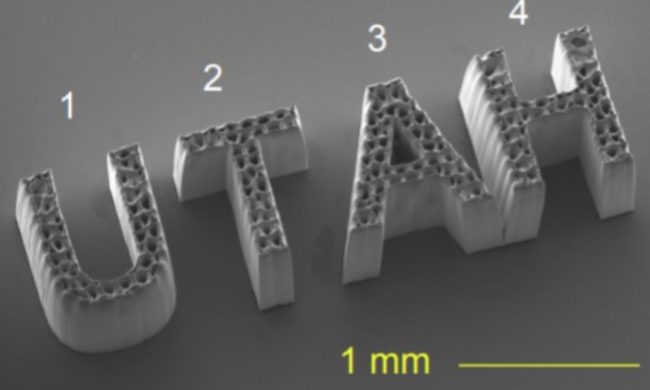
University of Utah researchers have demonstrated a holographic 3D printing technique that hardens tiny structures in one exposure instead of building them layer by layer. That one-shot approach could avoid the weak, leaky seams that stacked printing can leave behind. For now, though, this is a tool for microstructures, not a shortcut to printing whatever object pops into your head.

Read more
Amazon is full of copycats and shady brands. This Chrome extension lets you avoid them.
Advertisement, Poster, Text

Shopping on Amazon used to be simple. You searched for a product, compared a few familiar brands, and checked out. These days, it often feels like you're scrolling through an endless parade of names that look like someone leaned on a keyboard before hitting publish. That's exactly the problem Knockoff is trying to solve.

Created by developer Josh Pigford, the Chrome extension doesn't promise to expose counterfeit products or magically tell you what's good. Instead, it tackles something arguably more annoying: the flood of unfamiliar, mass-produced brands that dominate Amazon search results.

Read more
AI agent reportedly carried out an entire ransomware attack on its own
AI didn't just write malware. It apparently clocked in for work.
Cybersecurity

Cybersecurity researchers say they have documented what could be the first ransomware attack carried out almost entirely by an autonomous AI agent, marking a significant shift in how cyberattacks could be conducted in the future. According to cloud security firm Sysdig, they have uncovered a ransomware operation dubbed JadePuffer that appears to have relied on a large language model (LLM) agent to perform nearly every stage of the attack without continuous human intervention.

If confirmed, the incident suggests AI is moving beyond writing malicious code and into actively planning, adapting, and executing cyberattacks in real time.

Read more