  1. Home
  2. Computing
  3. News

Meta’s detection tool fails to identify photos generated by its own Muse Image AI

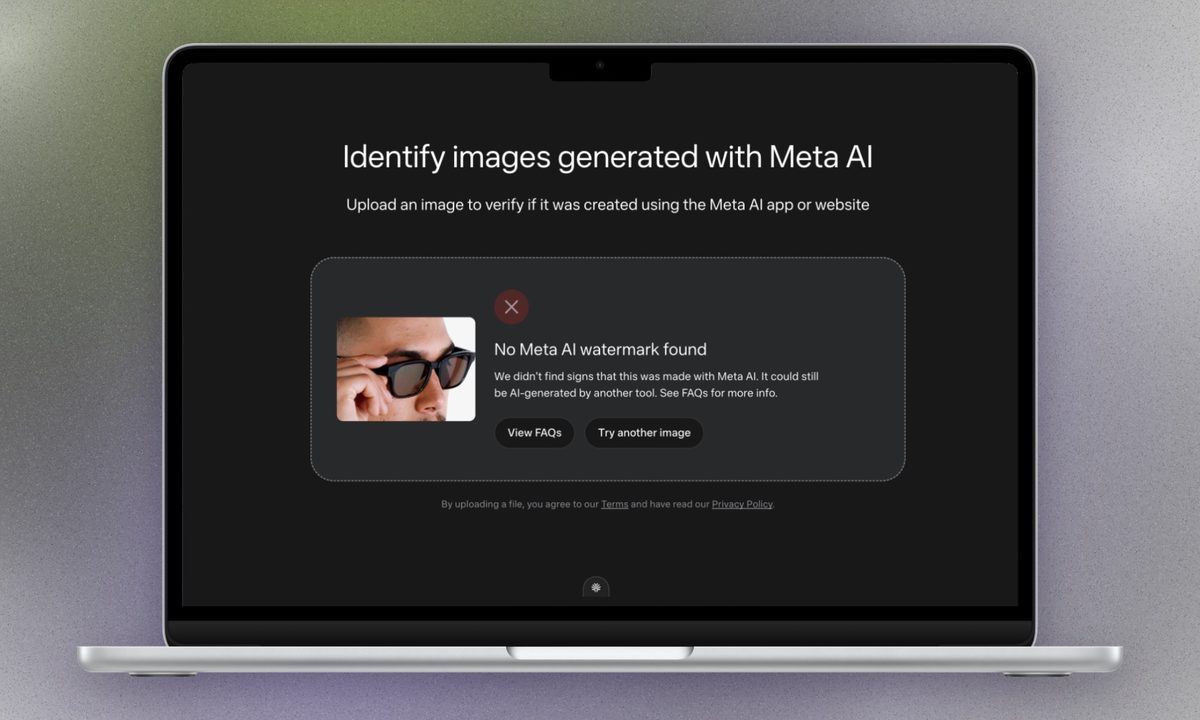
Meta has created an invisible watermarking tool called Content Seal that is embedded in all images generated by the Muse Image AI.

Add as a preferred source on Google
Meta AI identification tool.
Nadeem Sarwar / Digital Trends

Earlier this week, Meta announced two new AI products, namely, Muse Image and Muse Video. As the name suggests, these are generative AI tools for making photos and video clips using natural language text prompts. Soon after their rollout commenced, these tools sparked controversy because Meta had automatically opted in Instagram users, allowing others to use their publicly posted media and convert them into remixed AI content. But it appears that Meta courted another loss on its side of the court.

What’s the problem?

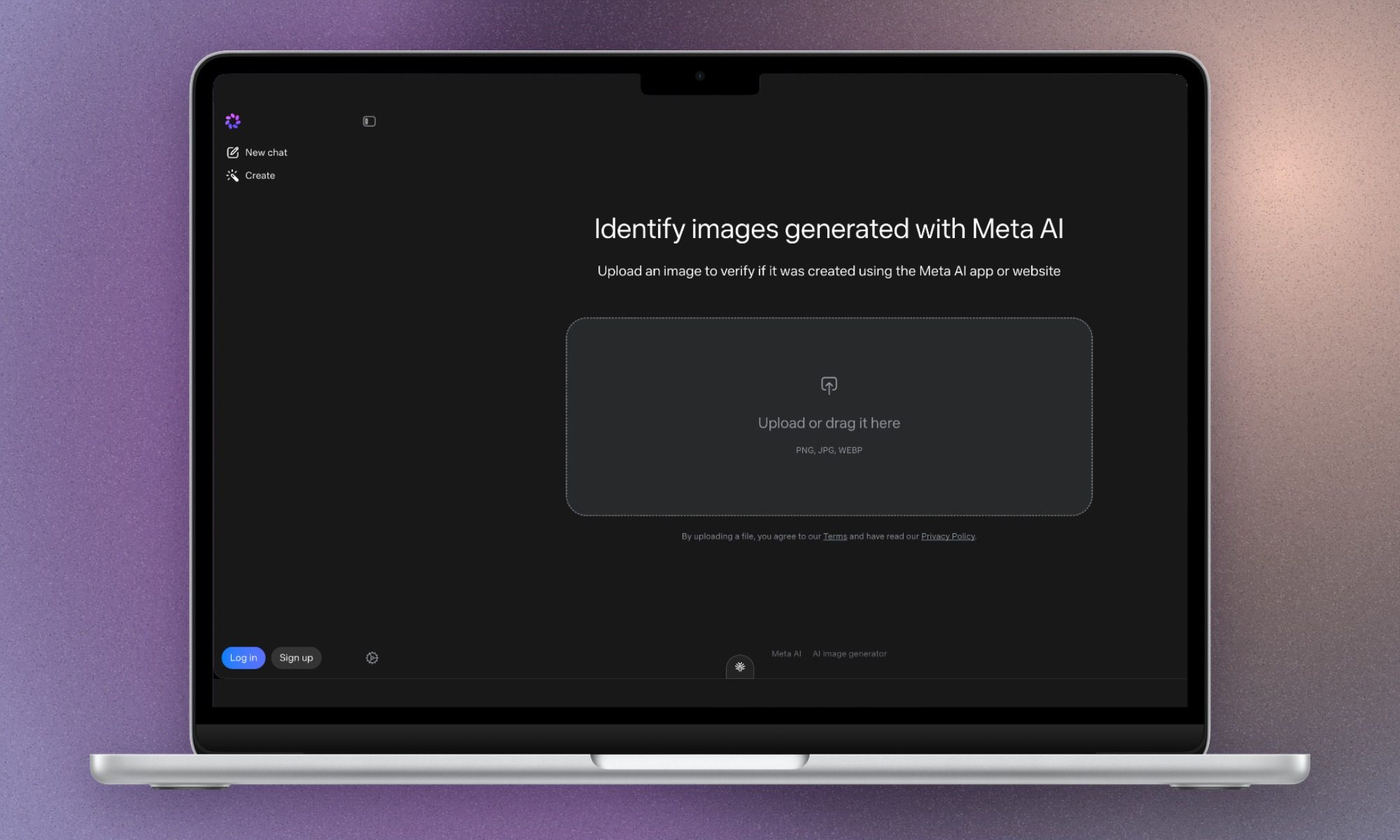
Alongside its new AI tools, Meta introduced something called Content Seal, which serves as an invisible watermarking system. Technically, all the images created by the Muse Image AI carry a hidden signal that can be used to identify whether they were made using AI or not. To go with it, the company also launched its own AI identification tool that can read this invisible Content Seal watermark. But it appears that Meta’s AI sniffing tool is not as accurate as the company claims.
According to an analysis by Reuters, images made using the company’s Muse Image AI cannot be reliably detected as AI-generated by Meta’s AI identification software. The outlet analyzed 40 images that were created by Muse Image, but in only 45% of the cases was it able to identify that they were created using AI. In the remaining 55% of the cases, when the images were cropped to one-third or one-fourth of their original size, the AI detection tool developed by Meta simply failed.

Oh, yikes. That’s embarrassing!

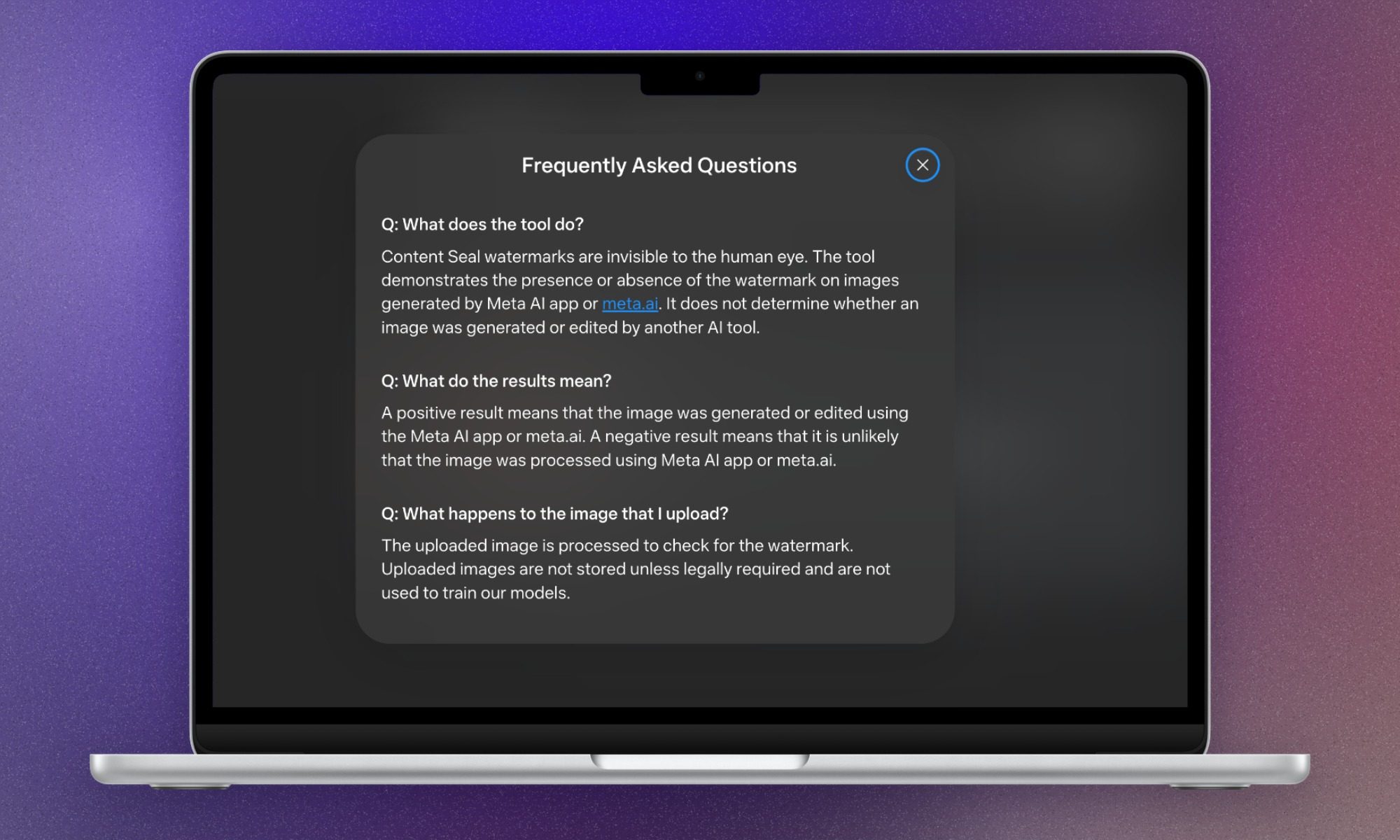
That’s a notable flub. On its website, Meta claims that the Content Seal system carries a “hidden provenance signal that stays intact — even when cropped, compressed, resized, or screenshotted.” Following Reuters’ analysis, Meta told the outlet that its AI detection tool is still in preview and that it can’t work reliably when a photo is “heavily cropped.” On an FAQ page available on its AI detector site, Meta also makes it clear that if an image has been generated using a third-party AI product instead of Muse Image, the detection tool will not work.
Meta won’t be the only AI giant that has created a system like Content Seal. Google already has an AI image detection and watermarking system called SynthID in place. It has been adopted by the likes of OpenAI as well. That means if an image is generated using ChatGPT or Gemini, it carries the invisible SynthID watermark and can be detected using Google’s own AI identification tool, which is now available on Google Search, as well. However, Google also makes it clear that SynthID is not 100% foolproof.

Nadeem Sarwar
Nadeem is the Managing Editor at Digital Trends.
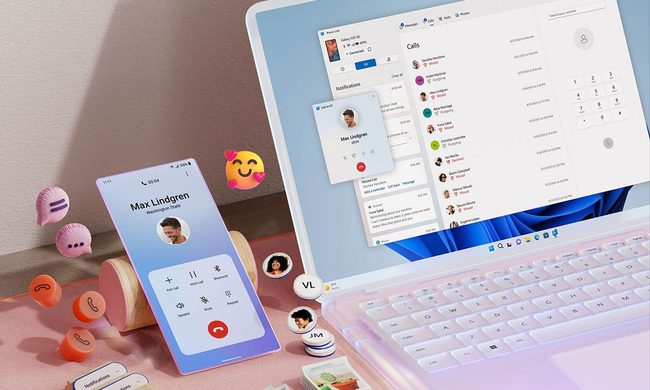
Microsoft wants Windows 11 and your phone to become best friends
Microsoft's latest plans reportedly focus on making the PC and smartphone experience feel seamless.
Windows 11 PC with Android Phone

For years, Phone Link has felt like that one app everyone knows exists but rarely remembers to open. Microsoft apparently wants to change that. According to a report from Windows Central, the company is working on a major overhaul of how smartphones integrate with Windows 11, making phones feel like a native part of the operating system instead of something users access through a separate app.

Phone Link is coming out of hiding

Read more
What are Copilot+ PCs? Everything you need to know
Copilot

Walk through a laptop aisle in 2026 and the Copilot+ PC branding is highlight for most Windows laptops. From Microsoft's own surface to other PC makers like Samsung, HP, and Dell, you can find notebooks that carry this badge to convey that they are AI-ready. At a glance, the name sounds like it refers to a computer with a better version of the Copilot chatbot, which only explains a small part of it.

A Copilot+ PC is a Windows 11 computer that meets Microsoft’s hardware standard for advanced on-device AI features like a compatible processor with a dedicated NPU. You also need a certain amount of RAM and storage, all of which brings access to Windows features such as Recall, Click to Do, and much more. Many of these experiences use the NPU to process information locally, reducing their reliance on cloud servers and helping them run more efficiently in the background.

Read more
ASUS expands its ProArt lineup with a compact keyboard and a smart creator mouse
The new ProArt KD300 and MD301 are designed to make life easier for designers, editors, and creators.
ASUS ProArt Keyboard KD300 and ProArt Mouse MD301

Creators have long had plenty of powerful laptops and monitors to choose from. Keyboards and mice? Not so much. ASUS is looking to change that with the expansion of its ProArt accessory lineup. Leading the announcement is the new ProArt Keyboard KD300, a compact low-profile keyboard that's designed to work alongside the ProArt Mouse MD301, giving creators a matching desktop setup built specifically for productivity instead of gaming.

A compact keyboard that doesn't sacrifice functionality

Read more