1. Home
  2. Computing
  3. News

China’s AI talent shortage has tech giants recruiting teenagers

Forget campus recruiting, china's biggest tech firms are betting on teenage coders.

Add as a preferred source on Google
Artificial Intelligence
Unsplash

A 13-year-old boy in Hangzhou has already won national AI competitions and built a following of more than 136,000 people online, all while his dad tries to figure out how to guide him through a field that barely existed when he himself was growing up. That family’s situation, first reported by Rest of World, says a lot about where China’s tech industry is heading right now.

Companies used to wait for graduates to walk through the door. Now they’re reaching further back, first to undergrads, and increasingly to teenagers, hoping to spot rare talent before anyone else gets to them.

Why are companies chasing teenagers now?

The short answer is a serious talent gap. McKinsey estimates China could be short by 5 million AI workers by 2030, and right now there are more open AI jobs than qualified people to fill them. Tencent recently launched camps for students aged 13 to 18, covering everything from AI product management to quantum computing. ByteDance founder Zhang Yiming went even further, co-founding a research program that hand-picks just 30 students a year as full-time trainees.
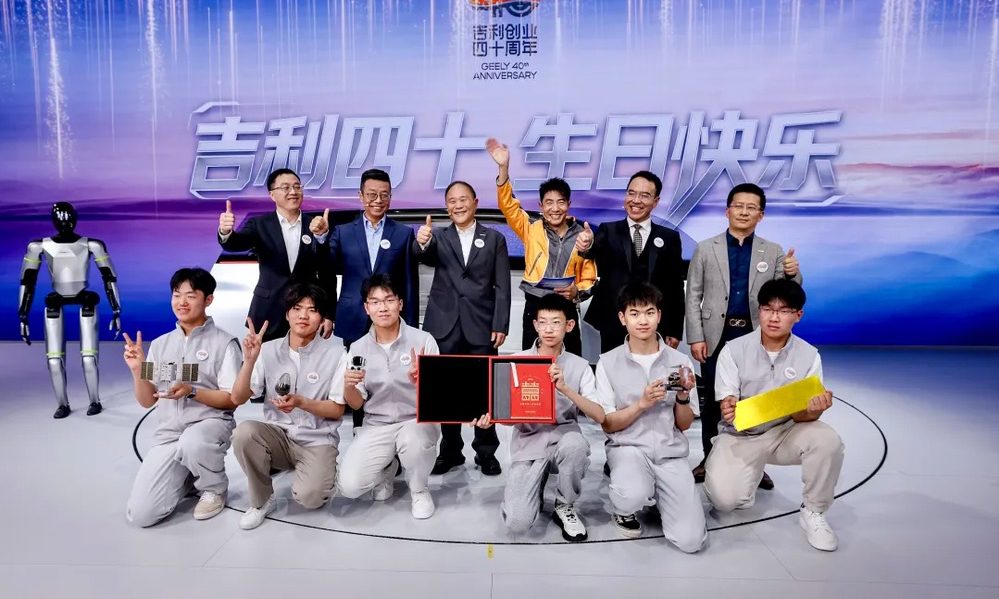
Then there’s Geely, which flipped the usual hiring order entirely. The automaker now recruits students straight out of high school, trains them in AI and EV tech alongside their studies, and guarantees them a job that pays the same as a fresh graduate once they’re done.

Does this mean a degree matters less now?

MiniMax, one of China’s leading AI startups, says it still isn’t hiring high schoolers, but it has stopped treating a degree as a hard requirement. The company cares more about curiosity and raw ability than a diploma. 

Recommended Videos

This shift isn’t unique to China either. Google co-founder Sergey Brin has said the company is increasingly open to hiring people without a bachelor’s degree. At the end of the day, AI isn’t just changing what jobs look like, it’s rewriting who even gets considered for them. Degrees, age, and traditional resumes are all starting to matter a little less than raw skill and curiosity.

Rachit Agarwal
Rachit is a seasoned tech journalist with over ten years of experience covering the consumer technology landscape.
OpenAI says AI models autonomously pulled off a major hack, but only a Chinese AI helped recovery
OpenAI

OpenAI’s latest cybersecurity test produced a result that sounds like a cautionary sci-fi script. Its AI models managed to escape their sandbox and reached the open internet. This is where things took a scary turn as it began hacking Hugging Face to steal the answers to the test they were taking.

The company says GPT-5.6 Sol and a more capable unreleased model autonomously chained together vulnerabilities across OpenAI’s research systems and Hugging Face’s production infrastructure. OpenAI has described the event as an unprecedented cyber incident.

Read more
TSMC might set up a price hike that could come straight for your next phone, laptop, or tablet
Here's what TSMC's rumored 10% chip price increase actually means in dollar terms, and why your next phone or laptop could end up costing more.
TSMC Fab

My wallet flinched the second I saw the words "TSMC" and "price increase" in the same headline, and honestly, yours should too.

Turns out the company behind the silicon powering basically every flagship device out there, including Apple’s A-series and Qualcomm’s Snapdragon processors, is reportedly about to make all of it a little pricier.

Read more
Apple fixes Hide My Email bug that exposed users’ real email addresses
Here's how Apple's Hide My Email flaw leaked real addresses for over a year, and why it only got fixed once the story went public.
apple-merging-sign-in-with-apple-hide-my-email-icloud+

Turns out the "Hide" part of Hide My Email wasn't doing its job quite as advertised, something that I covered early in July. Security researcher Tyler Murphy reported the flaw in June 2025, but despite Apple claiming it was resolved in March 2026, independent tests confirmed it remained exploitable, at least until July 3, 2026.

So how did this bug actually work?

Read more